Advertisement






The Gulf conflict has disrupted global supply chains, pushed...
REITs have changed the way commercial real estate is owned a...
What really powers the cloud? Behind every Google search, A...
What really powers the cloud? Behind every Google search, A...
Luxury real estate is one of the most talked-about segments ...
06 Oct 2026
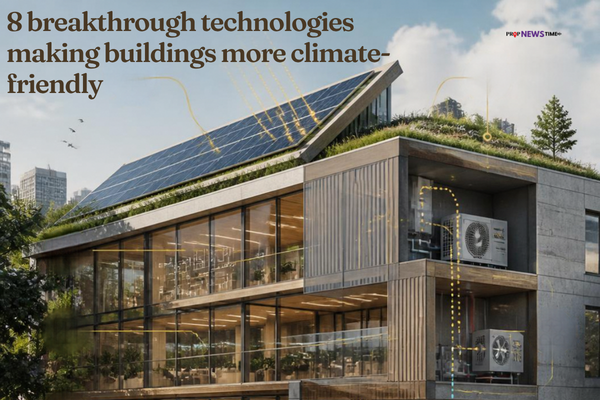
Buildings are increasingly being designed not only around energy efficiency but also around the carbon impact of materials, construction methods and building operations. The buildings and construction sector consumes about 32% of global energy and contributes 34% of global CO2 emissions, according to the United Nations Environment Programme. Cement and steel, widely used across the built environment, account for a significant share of these emissions. This has increased interest in technologies that can reduce material-related emissions, improve energy performance, store carbon or reduce construction waste. From concrete that incorporates captured carbon to timber structures, smart glazing, thermal storage and modular construction, several technologies are being developed and adopted across different parts of the built environment.Read more
05 Oct 2026
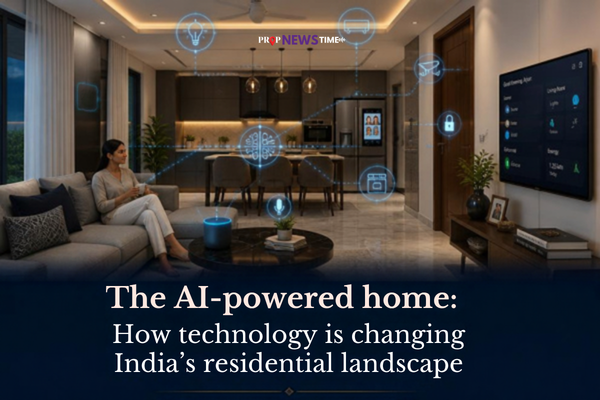
Artificial Intelligence is pushing residential real estate beyond conventional smart-home features towards buildings that can continuously monitor, learn and respond to changing conditions. AI-powered systems can combine Internet of Things sensors, predictive analytics and edge computing to optimise energy use, anticipate equipment failures, strengthen security and automate building operations. Instead of relying primarily on residents or facility teams to operate individual systems, autonomous buildings can analyse occupancy, weather, equipment performance and other real-time inputs to determine appropriate responses. This shift could influence how developers design projects, how societies manage assets and how residents experience everyday living.Read more
04 Oct 2026
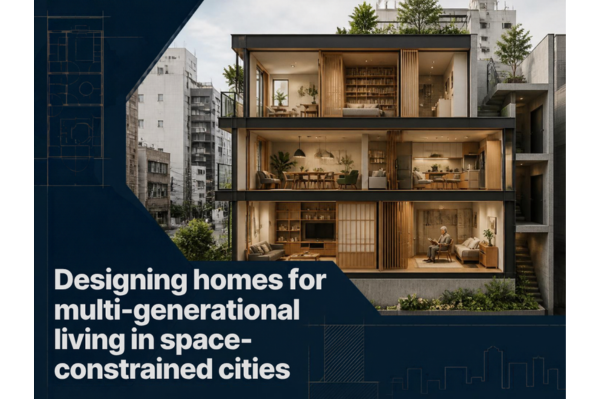
Multi-generational housing is becoming increasingly relevant as families seek to accommodate ageing parents, working adults and younger members under one roof while maintaining individual privacy. Effective design must balance shared living with personal autonomy through careful zoning, accessibility and flexible layouts. Architects are increasingly using separate private quarters, acoustic buffers, universal-design features and independent secondary suites to reduce everyday friction between generations. Ground-level accommodation for older family members, adaptable bathrooms and kitchens, and shared courtyards or communal areas can help create homes that remain functional as household needs change over time.Read more
03 Oct 2026
Section 1031 exchanges have become an important strategy for US real estate investors seeking to defer recognition of gains when moving from one investment property to another. The process, however, is governed by strict rules covering eligible property, identification deadlines, qualified intermediaries and the structure of replacement investments. Delaware Statutory Trusts can provide another route for investors seeking fractional interests in institutional-grade real estate while maintaining potential 1031 eligibility. Understanding the timelines, transaction structure and risks is therefore critical before proceeding with an exchange.Read more

02 Oct 2026
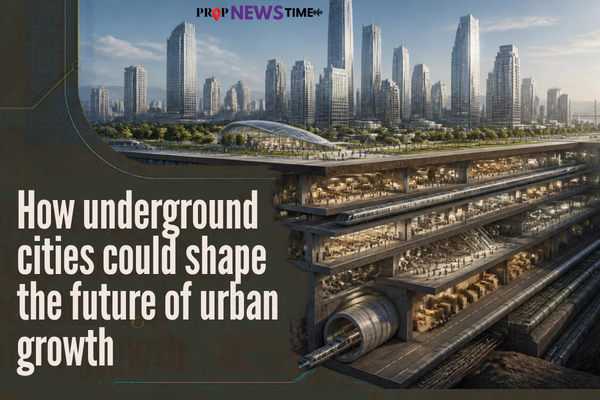
As cities become denser and surface land becomes increasingly expensive, planners are looking below ground for additional space. Underground infrastructure can accommodate transport, utilities, storage, pedestrian networks, commercial uses and other functions while freeing valuable surface land for housing, parks and public spaces. Cities such as Singapore and Helsinki are already using master planning to coordinate subterranean development rather than treating it as a collection of isolated projects. Advances in mapping, engineering and digital planning could further expand the role of underground space in future urban development, resilience and real estate.Read more
Advertisement






01 Oct 2026
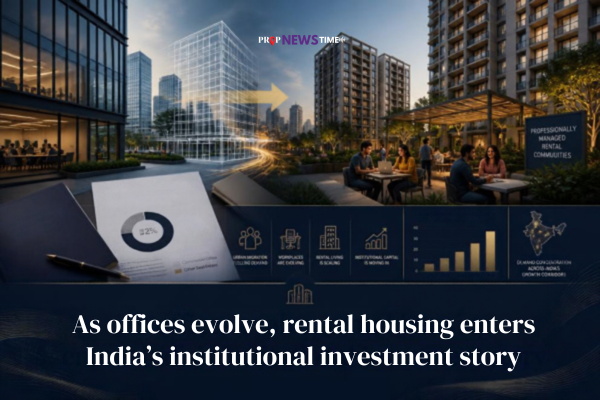
India’s institutional real estate market is entering a phase of greater diversification, with investors looking beyond traditional office assets towards residential and other operational real estate formats. Unlike the US, where institutional investors have sharply reassessed older office stock, India continues to record strong office leasing, led by Global Capability Centres, technology companies and financial services. At the same time, rising housing prices, urban migration and demand for professionally managed rental accommodation are creating opportunities in rental housing. Mumbai, Bengaluru, Delhi-NCR and Hyderabad are likely to see this shift play out differently, depending on office demand, housing affordability, land availability and the depth of institutional investment.Read more
30 Sep 2026
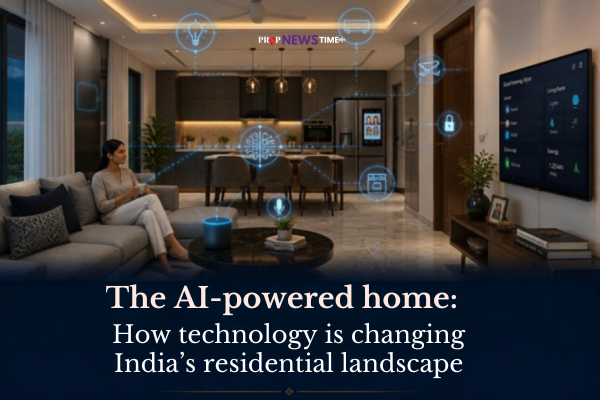
Artificial Intelligence is beginning to move residential real estate beyond connected appliances and app-controlled systems towards buildings that can analyse conditions, predict requirements and automate operations. In India, the shift is still at an emerging stage, but developers and technology providers are increasingly exploring AI, IoT sensors, building management systems and predictive analytics for energy management, security and maintenance. As residential projects become more technology-led, AI could change not only how homes are operated but also how buildings are designed, maintained and valued, particularly in large urban markets where energy efficiency and operational costs are becoming increasingly important.Read more
29 Sep 2026
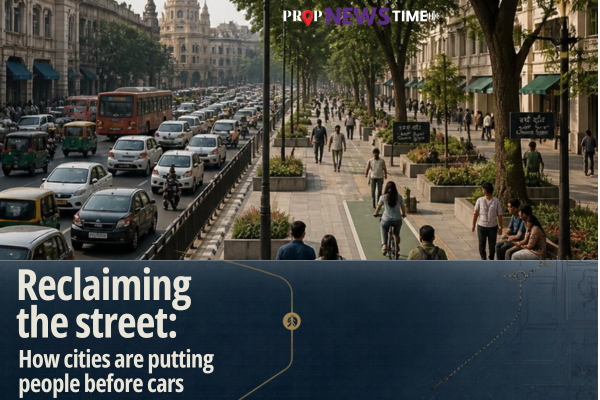
Cities across the world are moving beyond temporary car-free experiments towards permanent street redesigns that prioritise pedestrians, cycling and public spaces. London is advancing the pedestrianisation of Oxford Street, Paris has transformed hundreds of streets and expanded its cycling network, while Barcelona continues to develop its Superblock model. Several US cities are also making pedestrian zones and bike networks permanent. The shift is increasingly relevant to urban planning and real estate as streets are treated not only as traffic corridors but as public spaces that can influence footfall, accessibility, local commerce and the way neighbourhoods develop.Read more
28 Sep 2026
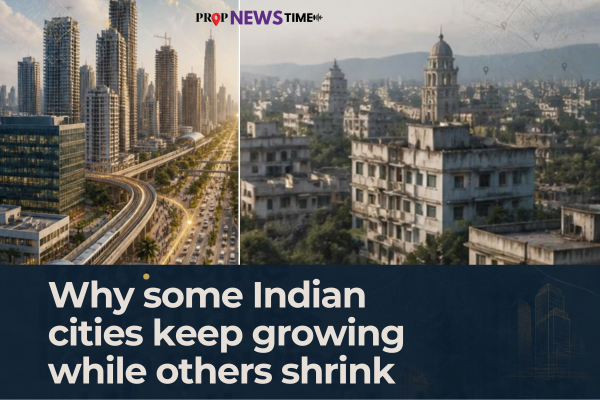
India’s urban growth is becoming increasingly uneven, with employment, technology, infrastructure and migration concentrating population and real estate activity in a limited number of cities. Bengaluru and Hyderabad are among the strongest growth centres, supported by IT, Global Capability Centres, manufacturing, pharmaceuticals and infrastructure investment. At the same time, research has found that roughly one in nine Indian urban centres is experiencing population decline, driven by factors including low population density, lower fertility and ageing populations. As migration remains concentrated towards major employment hubs, the divergence could increasingly influence housing demand, land values and development patterns across India.Read more
27 Sep 2026
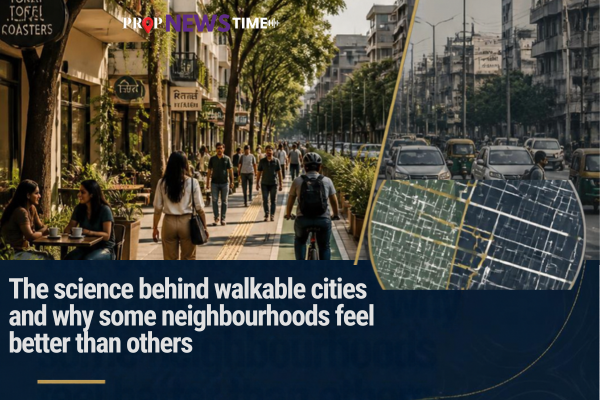
Why do some neighbourhoods feel inviting while others feel difficult to navigate, even when both offer similar amenities? The answer often lies in walkability. Research on urban design shows that connected streets, mixed land uses, pedestrian comfort, greenery, safety and access to public transport can influence how people experience a place. Walkability also carries real estate implications, with studies linking pedestrian-friendly neighbourhoods to stronger residential, retail and office performance. As Indian cities expand, designing places that encourage walking is becoming an increasingly important urban and property-market consideration.Read more
Advertisement








