Advertisement






The Gulf conflict has disrupted global supply chains, pushed...
REITs have changed the way commercial real estate is owned a...
What really powers the cloud? Behind every Google search, A...
What really powers the cloud? Behind every Google search, A...
Luxury real estate is one of the most talked-about segments ...
06 Sep 2026
As investors look beyond conventional office, retail and residential properties, a broader range of specialised real estate assets is emerging as an institutional investment opportunity. Data centres, life sciences facilities, senior living, student accommodation and other alternative formats are benefiting from structural demand drivers linked to digitalisation, demographics, healthcare and changing consumption patterns. In India, the trend is particularly relevant as specialised real estate sectors become more institutionalised and operators develop assets tailored to specific occupier needs.Read more

05 Sep 2026
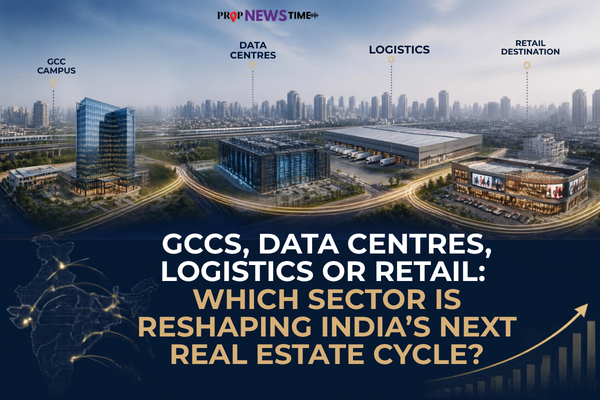
India's next real estate cycle is being shaped by multiple structural demand drivers, with Global Capability Centres (GCCs), data centres, logistics and warehousing, and retail emerging as key growth engines. GCCs are strengthening office demand, data centres are creating specialised infrastructure requirements, logistics is expanding alongside manufacturing and consumption, while retail is moving towards experience-led formats. With investment, infrastructure and occupier strategies evolving across cities, the next phase of India's property market could be defined less by one dominant sector and more by the convergence of these demand drivers across emerging commercial and urban corridors.Read more
04 Sep 2026
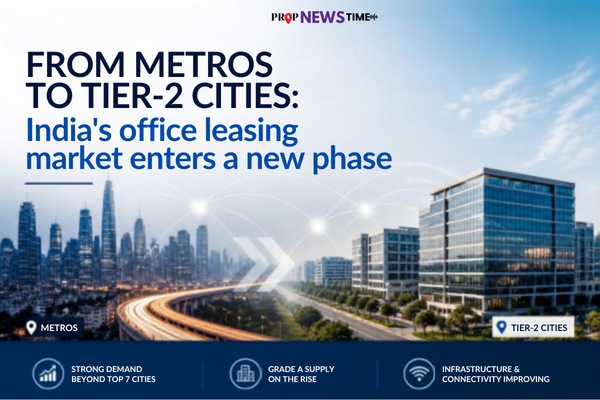
India's office market remains dominated by major metropolitan centres, but Tier-2 cities are increasingly emerging as the next frontier for occupiers seeking talent, cost efficiency and scalable expansion. Cities such as Ahmedabad, Jaipur, Kochi, Coimbatore, Chandigarh, Indore and Bhubaneswar are attracting interest from GCCs, flexible workspace operators, technology companies and other businesses. Improving infrastructure, growing talent pools and lower occupancy costs are strengthening their appeal. As companies adopt distributed and hub-and-spoke workplace strategies, smaller cities could account for a growing share of India's future office demand.Read more
03 Sep 2026
India's retail real estate market is moving beyond the conventional shopping mall, with developers and retailers experimenting with high streets, mixed-use developments, transit-linked destinations, experiential formats and technology-enabled stores. Retail leasing reached a record 8.9 million sq ft across major Indian cities in 2025, according to CBRE, while demand in H1 2026 remained resilient at about 3.9 million sq ft. The shift is being supported by changing consumer behaviour, D2C brands moving offline, premiumisation and demand for spaces that combine shopping, dining, entertainment and lifestyle.Read more

02 Sep 2026
India's changing lifestyles are influencing not just what people buy, but also the kinds of spaces they want to live, work and spend time in. Rising urbanisation, smaller households, hybrid work, experience-led consumption and growing demand for convenience are pushing developers to rethink conventional residential and commercial formats. From managed living and mixed-use developments to senior housing, co-living and amenity-rich communities, real estate is increasingly being designed around evolving patterns of everyday life. The result is a market where flexibility, convenience, community and access to services are becoming increasingly important alongside location and physical space.Read more

Advertisement






01 Sep 2026
Global real estate investors rarely choose a city based on property prices alone. They look at the wider ecosystem: economic growth, infrastructure, population, talent, transparency, regulation, liquidity and the ability to generate reliable returns over time. A city with strong fundamentals can attract capital even when entry costs are high, while weak governance or limited liquidity can deter investors despite cheaper assets. Here are 10 factors that can determine whether a city makes it onto the global real estate investment map.Read more

31 Aug 2026
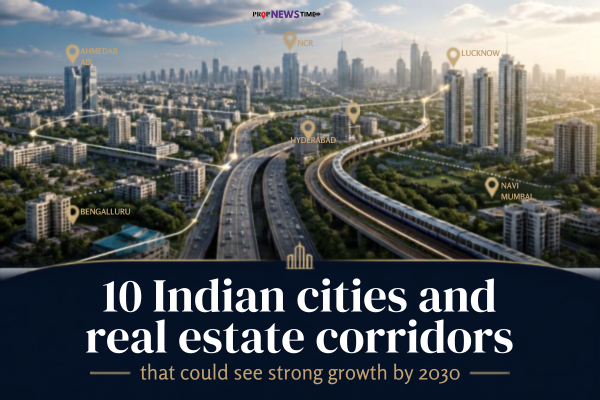
India’s next phase of real estate expansion is increasingly being shaped by infrastructure investment, airport-led development, technology and GCC activity, industrial corridors and tourism. From Ayodhya’s pilgrimage economy and the Greater Noida–Jewar corridor to Navi Mumbai’s airport-led expansion, Hyderabad’s western growth axis and North Bengaluru’s airport corridor, several markets are attracting developers and investors. Emerging Tier-2 centres such as Lucknow, Indore, Coimbatore and Kochi are also gaining attention as connectivity, employment and urban infrastructure improve. The following 10 markets highlight the principal factors likely to influence their real estate trajectories through 2030.Read more
30 Aug 2026
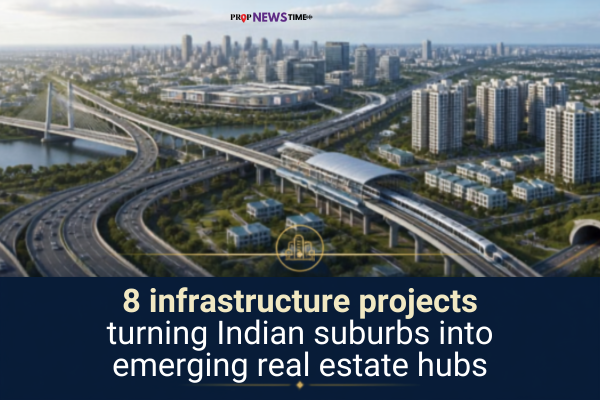
Large transport projects are changing the development profile of several Indian suburban and peripheral markets by improving connectivity to established employment centres, airports, ports and city cores. Projects such as the Thane-Borivali Twin Tunnel and Goregaon-Mulund Link Road in Mumbai, Bengaluru’s suburban rail network, Hyderabad’s Regional Ring Road and the Chennai Peripheral Ring Road are extending the reach of urban infrastructure. In Pune and Delhi-NCR, ring roads, metro extensions and interchange projects are supporting development beyond established centres. The resulting opportunities span residential townships, plotted developments, logistics, warehousing and industrial housing.Read more
29 Aug 2026
Cheaper home loans have not made buying easier, as property prices in India's metros have climbed faster than the rate cuts could offset. Rental yields across major cities remain as low as 2–4%, often below fixed deposit returns, while price-to-rent ratios in Mumbai and Delhi have moved well past global benchmarks that favour ownership. Career mobility, the opportunity cost of a down payment, and the rise of tier-2 buying markets are reshaping what was once considered a simple, emotional decision into a city-specific financial calculation for India's 25-to-40 population.Read more
28 Aug 2026
India's alternative real estate segments are drawing serious institutional attention, with co-living and senior living emerging as the two most-watched bets. Co-living inventory is projected to more than triple to nearly 1 million beds by 2030, while the market value could grow roughly fivefold to 20,000 crore. Senior living, meanwhile, is expanding even faster in percentage terms, with one estimate putting its market at a 25.9% compound annual growth rate through 2031, though it starts from a far smaller organised base of just over 22,000 units against a demand pool running into millions. Both sectors remain under 5% penetrated, making the real question not whether they'll grow, but which one gets there faster.Read more

Advertisement








