Advertisement






The Gulf conflict has disrupted global supply chains, pushed...
REITs have changed the way commercial real estate is owned a...
What really powers the cloud? Behind every Google search, A...
What really powers the cloud? Behind every Google search, A...
Luxury real estate is one of the most talked-about segments ...
The Bhubaneswar Development Authority (BDA) has proposed an additional floor area ratio (FAR) incentive for landowners who voluntarily merge their plots under town planning schemes (TPS), and a new City Infrastructure Impact Fee for developments outside notified scheme areas that rely on roads built under the schemes. The proposals are in the draft BDA (Planning and Building Standards) Second Amendment Regulations, 2026, published in an extraordinary issue of the Odisha Gazette. The draft replaces Chapter IX, Regulations 77 to 79, of the 2018 regulations. Merged-plot owners would get an FAR Incentive Certificate valid for 10 years. The regulations have not been finalised.
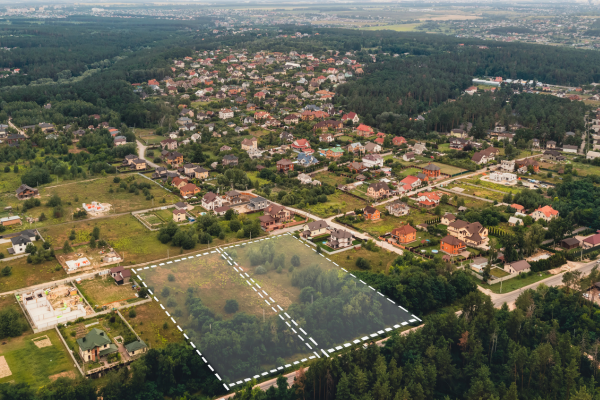
The Bhubaneswar Development Authority (BDA) has proposed additional floor area ratio (FAR) incentives for landowners who voluntarily merge their plots under town planning schemes (TPS), along with a new City Infrastructure Impact Fee, according to reports of 14 November.
The proposals are included in the draft BDA (Planning and Building Standards) Second Amendment Regulations, 2026, published in an extraordinary issue of the Odisha Gazette. The draft would replace Chapter IX of the existing BDA (Planning and Building Standards) Regulations, 2018, which covers Regulations 77 to 79, with new provisions.
Under the draft, owners who voluntarily merge their plots would receive extra floor area. An FAR Incentive Certificate would be issued to keep track of the extra development rights given to eligible owners, and it would remain valid for 10 years from the date on which the final town planning scheme is notified. One report gives the example that a 4,000-square-metre plot could receive an equal amount of extra floor space. Owners would have to use this incentive before looking for any other way to obtain extra floor area, such as buying FAR.
The second proposal is the City Infrastructure Impact Fee, which would apply to developments outside the notified boundaries of town planning schemes that depend on roads developed under those schemes. The draft also lets the BDA impose impact fees on development approved for town planning infrastructure. The reports I found do not give the fee rates or the table of fees. Once finalised, the provisions could affect plot amalgamation, building permissions and infrastructure-related charges across Bhubaneswar’s developing areas.
Town planning schemes are the BDA’s main tool for opening up land at the edge of the city. Under them, landowners pool their plots, the authority builds roads and services and takes back a share for them, and owners receive developed plots in return. In May, the BDA issued a draft procedure for land reconstitution under several schemes, under which owners who combine plots receive 60 per cent of the land after a 40 per cent deduction for infrastructure and amenities. In June, the state’s Housing and Urban Development Department notified the “Samruddha Sahar” scheme, under which the BDA has begun preparing 45 town planning schemes along a proposed 64.934-km ring road.
Developers in Odisha already pay for extra floor area. A 2025 amendment to the state’s planning rules fixed the charge for purchasable FAR at one-fourth of the benchmark value of land per square metre of built-up area, to be deposited in the authority’s infrastructure development fund. The new incentive would offer another route to extra floor area.
The reports do not say how much extra FAR merged plots would get, how long the public has to send objections and suggestions, or when the regulations are likely to be finalised. Earlier BDA amendment drafts allowed 15 days for objections.
Source: BDA
16th Nov, 2026

10th Nov, 2026

9th Nov, 2026




28th Oct, 2026

27th Oct, 2026


Advertisement









 Facebook
 Whatsapp

