Advertisement






The Gulf conflict has disrupted global supply chains, pushed...
REITs have changed the way commercial real estate is owned a...
What really powers the cloud? Behind every Google search, A...
What really powers the cloud? Behind every Google search, A...
Luxury real estate is one of the most talked-about segments ...
India has 998 km of additional metro lines under construction across the country, Union Minister of State for Housing and Urban Affairs Shri Tokhan Sahu said at the 19th Urban Mobility India Conference and Exhibition 2026 in Bhubaneswar. The announcement comes as India's operational metro network has expanded to more than 1,185 km across 26 cities. The government has also approved nine metro projects covering approximately 174 km since December 2025, with an investment of more than INR 59,000 crore. Discussions at the conference focused on integrated transport planning, accessibility and sustainable urban mobility.
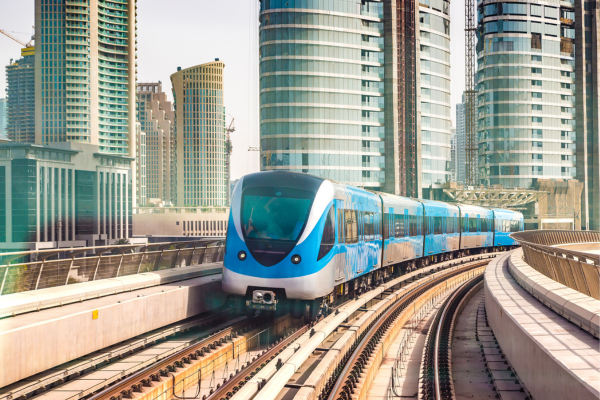
India has an additional 998 km of metro rail lines under construction across the country, Union Minister of State for Housing and Urban Affairs Shri Tokhan Sahu said on October 23, 2026, during the inauguration of the 19th Urban Mobility India Conference and Exhibition in Bhubaneswar, Odisha.
The ongoing construction forms part of the country's wider expansion of urban rail infrastructure. India's operational metro network has grown from 248 km in 2014 to more than 1,185 km across 26 cities, reflecting the increasing role of metro systems in urban public transport. The 998 km figure refers to lines under construction and should be distinguished from projects that have received approval or corridors that are already operational.
Shri Sahu highlighted the importance of making urban transport safer, more accessible and convenient for different sections of society, including women, children, senior citizens and persons with disabilities. He said urban development should be assessed in terms of how effectively people can travel to workplaces, educational institutions, healthcare facilities and other essential services.
The minister also referred to initiatives such as the National Common Mobility Card, QR-based ticketing and the PM e-Bus Sewa scheme. These measures form part of efforts to improve public transport access and convenience while supporting more sustainable mobility options. Integrating metro services with buses and other modes of transport, alongside better first- and last-mile connectivity, remains an important consideration for cities expanding their public transport networks.
The two-day conference, held on October 23 and 24, 2026, was organised by the Ministry of Housing and Urban Affairs through the Institute of Urban Transport (India), with support from the Government of Odisha. It brought together policymakers, urban planners, transport professionals and industry representatives to discuss challenges and opportunities in urban mobility.
The conference theme, Urban Accessibility and Liveability in the Digital Age, covered integrated transport and land-use planning, technology-led traffic management, sustainable mobility and improved connectivity between public transport systems. Odisha Housing and Urban Development Minister Dr. Krushna Chandra Mahapatra also emphasised the need to translate discussions on urban mobility into practical measures that improve accessibility and quality of life.
At the conference's concluding session on October 24, Union Minister for Housing and Urban Affairs and Power Shri Manohar Lal highlighted recent progress in metro infrastructure. He said nine metro projects covering approximately 174 km, with a combined investment of more than INR 59,000 crore, had been approved since December 2025. An additional 102 km of metro network had become operational during the same period.
The expansion of metro infrastructure will require coordination between central and state governments, urban authorities and project implementing agencies. The available announcement did not provide a city-wise breakdown, individual project costs or completion schedules for the 998 km currently under construction. These details would be needed to assess the expected timelines and the distribution of new metro capacity across cities.
As urban populations and travel demand increase, the development of metro corridors alongside bus services and other transport modes is expected to remain an important part of India's urban mobility planning.
Source PIB

17th Nov, 2026

17th Nov, 2026


17th Nov, 2026




17th Nov, 2026


17th Nov, 2026
Advertisement








 Facebook
 Whatsapp

