Advertisement






The Gulf conflict has disrupted global supply chains, pushed...
REITs have changed the way commercial real estate is owned a...
What really powers the cloud? Behind every Google search, A...
What really powers the cloud? Behind every Google search, A...
Luxury real estate is one of the most talked-about segments ...
15 Nov 2026
Indian homebuyers are increasingly evaluating 3BHK and 4BHK apartments based on their suitability for multi-generational households, where elderly parents, working couples and children share living spaces. Beyond bedroom count and carpet area, factors such as privacy, accessibility, storage, ventilation and flexible room configurations are influencing residential planning. For developers, this requires balancing apartment layouts with household requirements, affordability and project positioning. A 2026 developer sentiment survey found that 43% of developers identified 3BHK apartments as a priority configuration for residential launches, while 24% focused on 4BHK homes. The findings highlight the importance of understanding buyer preferences, local market requirements and the usability of residential spaces when determining apartment configurations.Read more

14 Nov 2026
The long-term relevance of a commercial building depends on more than its architectural appearance. Adaptability, façade engineering, evolving building infrastructure, occupant comfort and operational efficiency play an important role in determining how well a property performs over time. As business requirements, workplace expectations and technologies change, commercial developments need flexible floor plans, high-performance glazing, upgrade-ready digital infrastructure and efficient building management systems. In cities such as Mumbai, façade design must also account for heat, humidity and heavy rainfall. Equally important are accessibility, circulation, natural daylight, maintenance provisions and material durability. Integrating these considerations at the design stage can help developers create commercial assets that remain functional, efficient and relevant over their lifecycle.Read more

09 Nov 2026
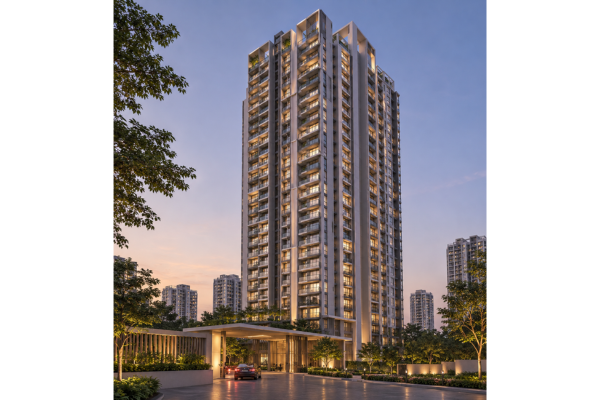
The future of high-rise housing depends on designing residential developments that balance urban density with liveability, accessibility and long-term adaptability. As cities face increasing land constraints, vertical development offers a way to accommodate population growth while improving the quality of residential environments. This article examines how building design can support this objective through better-planned circulation spaces, communal areas that encourage everyday social interaction, flexible apartment layouts and provisions for residents across different age groups and mobility needs. It also highlights the importance of durable construction materials, accessible building services, maintenance planning and integrated landscaping in ensuring that high-rise developments remain functional, comfortable and sustainable throughout their lifecycle.Read more
08 Nov 2026
India’s residential real estate sector is expected to deliver a record 540,400 homes across the top seven cities in 2026, up from 519,000 in 2025. However, rising labour and material costs, procurement delays and execution challenges are putting pressure on developers to meet committed handover timelines. With Bengaluru, Hyderabad and Chennai accounting for a significant share of projected completions, the focus is shifting towards stronger project monitoring, construction planning, supply chain coordination and technology-led execution. The article examines how developers can translate rising housing delivery volumes into timely project completions while addressing cost pressures, stalled developments and homebuyer expectations.Read more

07 Nov 2026
The growing interest in overseas property markets is changing the role of real estate advisors, shifting their responsibilities beyond property discovery, viewings and negotiations towards informed, client-focused guidance. Buyers exploring international markets increasingly require advice on investment suitability, rental prospects, currency exposure, ownership regulations, financing, taxation and exit strategies. The article examines how digital platforms, geopolitical developments, generational preferences and cross-border transactions are reshaping advisory services. It also highlights the importance of local market expertise, transparent communication, professional accountability and technology in supporting international buyers. As real estate firms expand across markets, the ability to understand individual client requirements, assess risks and provide guidance throughout the ownership journey will become increasingly important in building long-term trust.Read more

Advertisement






01 Nov 2026
Technology is improving commercial construction by strengthening coordination, design accuracy, project monitoring and delivery management. Digital platforms and building information modelling help architects, consultants, contractors and site teams work with consistent information, identify design conflicts early and reduce avoidable delays. Digital surveying, laser scanning and monitoring tools enable teams to compare site conditions with approved designs, while integrated schedules and progress updates improve the management of procurement, construction sequencing and installation. Maintaining digital records also supports the transition from construction to building operations by improving documentation, commissioning and maintenance planning. However, effective adoption depends on trained personnel, reliable information, clear responsibilities and disciplined execution. Technology can improve efficiency and reduce errors, but its success ultimately relies on engineering judgement, skilled workers and coordinated project management.Read more

01 Nov 2026
Buying a home in Mumbai requires buyers to consider more than the property's price, size and appearance. With redevelopment reshaping established neighbourhoods and new housing projects entering the market, factors such as connectivity, social infrastructure, access to workplaces, schools, hospitals and recreational spaces play an important role in choosing a home. Buyers must also assess whether a neighbourhood can meet their family's changing needs over the next 10 to 20 years. Balancing personal priorities with practical considerations and long-term financial commitments can help homebuyers make informed property decisions.Read more

01 Nov 2026
Mumbai’s growing reliance on vertical development and redevelopment is reshaping its residential landscape as developers seek to optimise limited urban land while meeting changing homebuyer expectations. In established neighbourhoods such as Bandra, Khar and Vile Parle, redevelopment offers opportunities to replace ageing buildings with modern homes, updated safety systems and contemporary amenities. The article examines the factors influencing high-rise residential development, including apartment layouts, natural light, ventilation, privacy, building safety and long-term maintenance. It also highlights the role of transport infrastructure, including Metro Line 1, improvements at Chheda Nagar Junction and the proposed Elevated Eastern Freeway Extension, in strengthening connectivity across Mumbai’s suburbs. Effective land use, functional design and access to essential services remain central to creating practical, well-planned residential environments.Read more

31 Oct 2026
Infrastructure development is influencing real estate investment returns across India, with the Yamuna Expressway corridor illustrating the difference in appreciation between apartments and plotted developments. According to RealX Stats, average apartment prices along the corridor increased by 158.2% between 2020 and 2025, from INR 3,950 to INR 10,200 per sq. ft., while plotted land prices rose by 536.3%, from INR 1,650 to INR 10,500 per sq. ft. Vishal Raheja, founder and managing director of InvestoXpert Advisors, examines how connectivity, employment generation and planned infrastructure can influence property values, while highlighting the importance of assessing project execution, approvals, developer credibility and sustainable demand before investing.Read more

31 Oct 2026
Home elevators are becoming an increasingly common feature in India’s luxury villas and bungalows, driven by demand for convenience, accessibility and modern living. The growth of multi-storey residences, holiday homes and gated communities across destinations such as Karjat, Alibaug, Lonavala, Goa, Pune, Bengaluru and Delhi NCR is contributing to this trend. Homeowners are also prioritising age-friendly designs that accommodate senior citizens and multi-generational families. Advances in elevator technology, including compact configurations, glass cabins, touchless controls and smart home integration, are expanding design possibilities. Developers and architects are increasingly incorporating elevator provisions at the planning stage to improve space utilisation and functionality. As luxury homebuyers place greater emphasis on comfort, aesthetics and long-term usability, residential elevators are emerging as both a practical feature and a lifestyle differentiator.Read more

Advertisement








