Advertisement






The Gulf conflict has disrupted global supply chains, pushed...
REITs have changed the way commercial real estate is owned a...
What really powers the cloud? Behind every Google search, A...
What really powers the cloud? Behind every Google search, A...
Luxury real estate is one of the most talked-about segments ...
Home elevators are becoming an increasingly common feature in India’s luxury villas and bungalows, driven by demand for convenience, accessibility and modern living. The growth of multi-storey residences, holiday homes and gated communities across destinations such as Karjat, Alibaug, Lonavala, Goa, Pune, Bengaluru and Delhi NCR is contributing to this trend. Homeowners are also prioritising age-friendly designs that accommodate senior citizens and multi-generational families. Advances in elevator technology, including compact configurations, glass cabins, touchless controls and smart home integration, are expanding design possibilities. Developers and architects are increasingly incorporating elevator provisions at the planning stage to improve space utilisation and functionality. As luxury homebuyers place greater emphasis on comfort, aesthetics and long-term usability, residential elevators are emerging as both a practical feature and a lifestyle differentiator.
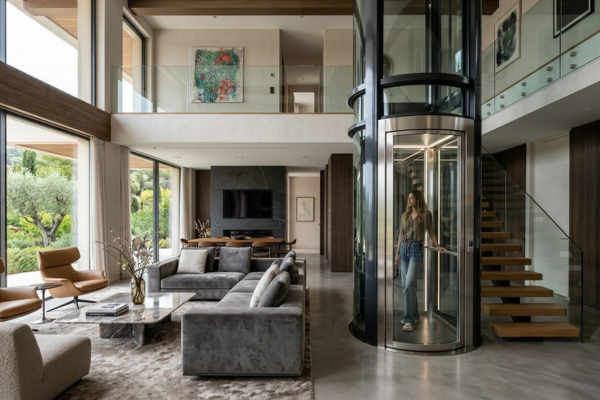
Luxury housing in India is witnessing a significant transformation as home elevators are rapidly becoming an integral part of premium villas and bungalows. Once considered a niche luxury feature reserved for ultra-high-end residences, home elevators are now increasingly being adopted by affluent homeowners seeking convenience, accessibility, aesthetics, and future-ready living solutions.
The rise of spacious villas, holiday homes, and gated luxury communities across destinations such as Karjat, Alibaug, Lonavala, Goa, Pune, Bengaluru, and Delhi NCR has played a major role in driving this trend. Modern luxury homes today are being designed with multiple floors, expansive layouts, rooftop leisure spaces, private entertainment zones, and wellness areas, making seamless vertical mobility a necessity rather than merely a premium addition.
Another key factor fuelling demand is the growing preference for age-friendly and accessible living. Many homeowners are increasingly planning long-term residences that can comfortably accommodate senior citizens and multi-generational families. Home elevators provide improved accessibility, ease of movement, and enhanced convenience for elderly residents while also adding long-term functional value to the property.
The modern home elevator market has also evolved significantly in terms of design and technology. Today’s residential elevators are compact, energy-efficient, aesthetically customisable, and capable of blending seamlessly with luxury interiors. Homeowners can choose from a wide range of premium finishes, glass cabins, touchless controls, smart automation systems, and space-saving configurations tailored to individual architectural requirements.
Technology integration is further enhancing the appeal of residential elevators. Smart home ecosystems are increasingly incorporating elevators into centralised home automation systems, enabling remote monitoring, access control, and voice-command operations. Developers and architects are also proactively planning elevator provisions during the design stage itself to maximise space efficiency and improve overall functionality.
In addition to convenience and accessibility, home elevators are also emerging as a lifestyle and status symbol within India’s luxury real estate market. Premium buyers today prioritise comfort, exclusivity, and future-ready infrastructure, making elevators an increasingly important differentiator in high-end residential developments. As aspirations continue to evolve and luxury housing expands across urban and second-home markets, the demand for sophisticated home elevator solutions is expected to grow substantially in the coming years.
Disclaimer:
The views, opinions, and information expressed in this article are solely those of the author and do not necessarily reflect the views of Prop News Time. The content has not been independently verified or endorsed by Prop News Time. Readers are advised to exercise their own discretion and seek professional advice if required.

17th Nov, 2026

17th Nov, 2026


17th Nov, 2026




17th Nov, 2026


17th Nov, 2026
Advertisement








 Facebook
 Whatsapp

