Advertisement






The Gulf conflict has disrupted global supply chains, pushed...
REITs have changed the way commercial real estate is owned a...
What really powers the cloud? Behind every Google search, A...
What really powers the cloud? Behind every Google search, A...
Luxury real estate is one of the most talked-about segments ...
Odisha has submitted a proposal to the Centre for 290 additional public electric vehicle (EV) charging stations across 13 cities under the second phase of the PM Electric Drive Revolution in Innovative Vehicle Enhancement (PM E-DRIVE) scheme. The proposed network includes sites at tourism department-managed wayside amenity centres and along national and state highways. Bharat Heavy Electricals Limited (BHEL) will assess the identified locations before the proposal receives final approval. The expansion is being pursued alongside a separate state-led plan for more than 500 charging stations.
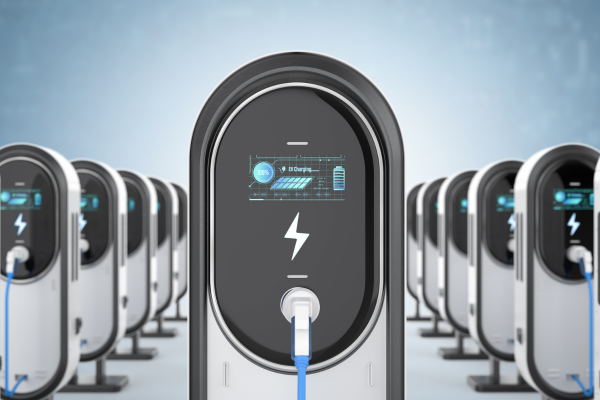
The Odisha government has proposed setting up 290 additional public electric vehicle (EV) charging stations across 13 cities under the second phase of the Centre’s PM Electric Drive Revolution in Innovative Vehicle Enhancement (PM E-DRIVE) scheme. The proposal has been submitted to the Union government as the state seeks to expand charging infrastructure across urban centres, industrial locations and major transport routes.
The proposal was submitted under the direction of Commerce and Transport Minister Bibhuti Bhushan Jena, officials said. The 13 cities identified for the proposed facilities are Rourkela, Talcher, Sambalpur, Paradip, Barbil, Belpahar, Berhampur, Brajarajnagar, Chhatrapur, Jharsuguda, Joda, Keonjhar and Rajgangpur. Charging locations have also been identified along various national and state highways.
Of the 290 proposed sites, 68 are located at wayside amenity centres managed by the state Tourism Department. Six additional locations have been identified along highways, including the Paradip-Barbil corridor, which is considered important for the movement of goods and industrial activity. The inclusion of highway locations is intended to extend public charging access beyond city centres and support electric vehicle users travelling between urban and industrial areas.
Bharat Heavy Electricals Limited (BHEL) has been appointed as the Project Implementation Agency for the central scheme. Before the proposed locations receive final approval and sanction, a team led by BHEL General Manager J K Pattanaik will conduct site surveys to assess their feasibility and suitability. The inspections will examine whether the identified sites have the infrastructure and other necessary requirements for installing charging facilities.
The proposal follows the first phase of PM E-DRIVE implementation in Odisha, under which the Centre has approved 170 public EV charging stations across seven major cities. Work on these facilities is currently under way, according to an official statement. The proposed 290 stations would therefore represent an additional phase of expansion, subject to the Centre’s approval and subsequent implementation.
Alongside the central scheme, Odisha is pursuing a separate programme to establish more than 500 additional EV charging stations through state government initiatives. Of these, 24 stations have already become operational in Bhubaneswar. The state is also developing charging facilities at important public locations, including Atal Bus Stands and truck terminals, to improve access for private vehicle owners and commercial transport operators.
The proposed expansion comes as the state continues to promote electric vehicle adoption through its Electric Vehicle Policy, which provides financial incentives and subsidies to eligible buyers. Increasing the availability of public charging points is expected to address one of the practical concerns associated with EV ownership, particularly access to charging facilities during longer journeys. However, the 290-station proposal remains subject to the Centre’s approval, while site assessments are expected to establish the readiness of the identified locations. The scale and timing of implementation will depend on the outcome of these processes.
Source- PTI

16th Nov, 2026

16th Nov, 2026




11th Nov, 2026

10th Nov, 2026
10th Nov, 2026


Advertisement








 Facebook
 Whatsapp

