Advertisement






The Gulf conflict has disrupted global supply chains, pushed...
REITs have changed the way commercial real estate is owned a...
What really powers the cloud? Behind every Google search, A...
What really powers the cloud? Behind every Google search, A...
Luxury real estate is one of the most talked-about segments ...
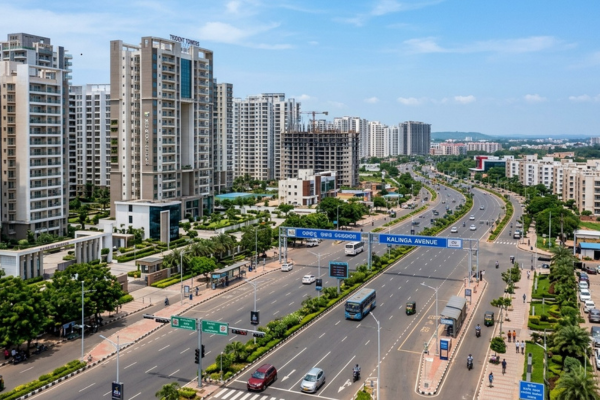
Bhubaneswar is gaining prominence as an emerging real estate market, with residential property prices in 11 high-potential Tier-2 and Tier-3 cities recording a compound annual growth rate (CAGR) of 8% between 2016 and 2026, compared with 4% across India’s eight major metropolitan markets. A joint report by the Confederation of Indian Industry (CII) and Knight Frank India, titled India’s Next Real Estate Markets, places Bhubaneswar among the cities benefiting from infrastructure development, economic activity and housing demand. Residential prices in the city range from INR 6,550 to INR 8,550 per sq. ft. The report also highlights the expansion of warehousing and logistics activity across emerging cities, supported by improved connectivity and infrastructure investment.
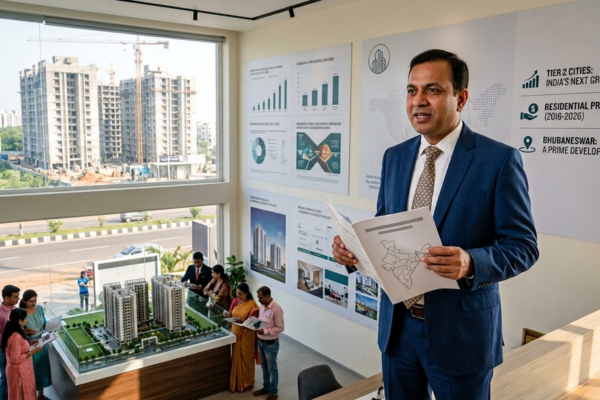
Bhubaneswar is emerging as a significant real estate market among India’s Tier-2 cities, as residential property prices across 11 high-potential emerging urban centres recorded an annualised growth rate twice that of the country’s eight major metropolitan markets between 2016 and 2026. A joint report by the Confederation of Indian Industry (CII) and Knight Frank India, titled India’s Next Real Estate Markets, reported a compound annual growth rate (CAGR) of 8% across the 11 cities, compared with 4% across the eight major metros.
The report identifies Bhubaneswar alongside cities such as Bhopal, Indore, Jaipur, Lucknow and Coimbatore as part of a broader shift in real estate activity towards emerging urban centres. Residential property prices in Bhubaneswar are estimated to range between INR 6,550 and INR 8,550 per sq. ft., reflecting the city’s position in the developing housing market.
Infrastructure development, state policies, the growth of micro, small and medium enterprises (MSMEs) and the availability of skilled workers are among the factors supporting Bhubaneswar’s real estate activity. The city’s expanding economic base is also contributing to demand from homebuyers and property investors looking beyond established metropolitan markets.
Rajesh Agarwal, director of Oriom Group, said the report reflected a shift in housing demand towards Tier-2 cities. He attributed Bhubaneswar’s growing appeal to its infrastructure, urban development and quality of life, adding that homebuyers and investors were increasingly considering markets that offered economic growth and opportunities for property appreciation. Through its Oriom Realty business, the group is targeting demand for residential and commercial developments in the city.
End-user demand supports residential market
Local property consultants have reported increased enquiries and transactions across Bhubaneswar’s high-growth corridors in recent quarters. Demand is being driven by end-users and non-resident Odias (NROs), with buyers showing interest in gated residential communities offering modern amenities and open spaces.
According to local market participants, this demand is supporting sales across mid-range and luxury housing segments. However, the pace of sales and price movements may vary between locations, project categories and individual developments.
The growing preference for planned residential communities reflects the importance of amenities and the surrounding infrastructure in homebuying decisions. For developers, the trend creates opportunities to cater to buyers seeking organised housing options outside the country’s established metropolitan markets.
Warehousing and logistics expand alongside housing
The CII-Knight Frank India report also highlights the expansion of commercial and industrial activity across emerging cities. Tier-2 markets recorded 11.2 million sq. ft. of warehousing lease transactions, of which 5.3 million sq. ft. was attributed collectively to key markets including Bhubaneswar, Lucknow, Jaipur, Nagpur, Indore and Coimbatore.
The growth of warehousing and logistics is being supported by improvements in connectivity and investment in infrastructure. These developments are strengthening the role of emerging cities in regional distribution networks and supply chains, alongside their expanding residential markets.
For Bhubaneswar, the parallel growth of housing and commercial activity could broaden the range of property demand beyond residential purchases. Industrial, logistics and other commercial requirements may also create opportunities for real estate development as economic activity expands.
Public investment supports emerging urban centres
Government capital expenditure on infrastructure has also increased in importance. According to the supplied report, infrastructure’s share of government capital expenditure rose from 39% in FY2015 to 55% in FY2026. An expanding pipeline of public-private partnership projects is expected to support further infrastructure development across emerging urban centres.
The report projects that India’s real estate output could reach USD 5.8 trillion by 2047, with emerging cities expected to account for a growing share of residential, retail and commercial demand. Bhubaneswar’s future performance will depend on the continued expansion of its economic base, infrastructure delivery, employment opportunities and the alignment of new property supply with actual demand.
The city’s position among emerging real estate markets reflects a wider decentralisation of property activity across India. Sustained growth, however, will depend on whether residential and commercial development keeps pace with the infrastructure and economic opportunities supporting demand.

16th Nov, 2026

10th Nov, 2026

9th Nov, 2026



28th Oct, 2026

27th Oct, 2026

Advertisement








 Facebook
 Whatsapp

