Advertisement






The National Real Estate Development Council (NAREDCO) has approached the Prime Minister, suggesting that his birthday be celebrated as 'Right to Housing Day' to acknowledge his efforts in advancing affordable housing in India. The industry body highlighted that under the Pradhan Mantri Awas Yojana, over four crore homes have been built, with further expansion expected through PMAY-U 2.0. NAREDCO also commended GST rationalisation and reforms such as RERA, which have strengthened transparency and professionalism in the real estate sector, pledging continued support for 'Housing for All'.Read more

India's eight largest cities have almost doubled their urban built-up areas over the past thirty years, reflecting a significant urban transformation. According to a recent report by Square Yards, these cities have added over 2,100 square km of urban structures since the mid-1990s. Pune recorded the fastest growth, while Hyderabad, Kolkata, and Bengaluru also saw substantial expansion. The report emphasizes that this growth is driven by population migration to urban centres, creating strong demand for new housing, infrastructure, and urban services, and reshaping how people live and work.Read more

Mumbai's housing sector is witnessing significant transformation through society redevelopment, with over 44,000 new homes expected to come up by 2030, valued at around INR 1.3 lakh crore, according to Knight Frank India. Since 2020, 910 housing societies have signed development agreements, unlocking more than 326 acres of potential land. Western suburbs are projected to account for the majority of these additions, while South Mumbai will see modest growth. With nearly 1.6 lakh societies eligible for redevelopment, and state revenues from free-sale units and GST projected at over INR 13,000 crore combined, redevelopment is proving to be a major driver of urban renewal.Read more
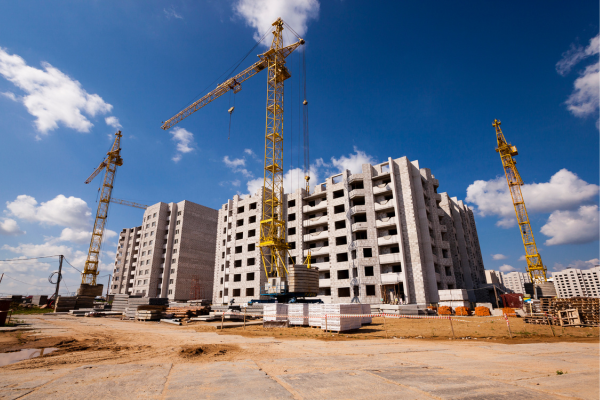
A recent survey by realty consultant Anarock reveals that over 90 per cent of prospective homebuyers are worried about escalating residential property prices. The survey, which included nearly 8,250 participants, found varying degrees of concern, with nearly half expressing high anxiety. Average residential prices have surged by more than 50 per cent over the past two years, prompting most buyers to either delay or reconsider their property purchases. Affordability constraints and limited budget-friendly options are cited as the primary reasons behind the cautious approach.Read more

Shri Piyush Goyal described the GST reforms as an important step towards India's self-reliance, calling for citizens to unite in making India a developed nation by 2047. At the India MedTech Expo 2025, policymakers, industry leaders, and global experts discussed initiatives to strengthen the MedTech and healthcare sectors, including regulatory easing, export expansion, and academia-industry collaboration. The three-day event highlights MSME and start-up innovations, state showcases, and government initiatives, attracting over 150 international buyers and leading industry associations, demonstrating India's growing role as a global hub for medical technology and healthcare services.Read more

Advertisement


The real estate sector has welcomed the GST Council's recent reforms, describing them as a landmark step that reduces construction costs, eases compliance, and supports housing affordability. Developers and industry leaders believe the reduction in tax on key construction materials such as cement, marble and granite will strengthen project economics, enable competitive pricing, and stimulate demand ahead of the festive season. With interest rates stabilising, the reforms are also expected to encourage new project launches, attract investments, and create fresh employment opportunities across housing and allied industries.Read more

The Central Advisory Council (CAC) under the Real Estate (Regulation and Development) Act held its fifth meeting in New Delhi to review eight years of RERA implementation. Union Minister of Housing and Urban Affairs Shri Manohar Lal Khattar launched the Unified RERA Portal, designed to create a national database of projects, enhance transparency, and share best practices across States and Union Territories. Discussions focused on stalled projects, homebuyer complaints, developers' concerns, and ways to strengthen regulatory processes. The council also recommended measures for faster dispute resolution and next-generation reforms in the real estate sector.Read more

India's real estate sector has welcomed the GST Council's recent rate rationalisation, which aims to reduce the tax burden on essential construction materials. Experts noted that lowering GST from 28% to 18% on cement and marble, and from 12% to 5% on granite blocks, will reduce housing costs and benefit homebuyers. Industry leaders highlighted that while construction materials form a portion of total project costs, the reforms are expected to make homes more affordable, stimulate demand, and encourage developers to accelerate projects, particularly ahead of the festive season.Read more

India's office real estate market is strengthening, with demand reaching 34.5 million sq ft in H1 2025, according to the CREDAI-CRE Matrix report. Vacancy rates fell by 210 basis points year-on-year, driven by Global Capability Centres (GCCs) and steady domestic absorption. Bengaluru, MMR, Delhi-NCR, and Hyderabad led activity, with IT/ITeS (24%), BFSI (20%), and co-working (19%) dominating leasing. Hyderabad accounted for 29% of co-working demand and is on track to surpass MMR in total stock. Pune and Hyderabad together supplied over half of new additions, while Pune and Bengaluru generated 40% of demand. Strong leasing in NCR and upcoming supply in Ahmedabad signal continued resilience.Read more

The National Housing Bank's latest housing price index shows residential values rising in 45 of 50 cities, with Bengaluru recording the steepest annual gains driven by its strong IT and economic base. Chennai, Ahmedabad, Pune, Mumbai, and Kolkata also posted solid growth, while only five cities saw declines, led by Howrah. On a composite level, prices rose 5.7% year-on-year, slightly slower than last year but reflecting market stabilisation after rapid increases. Quarterly data also showed continued growth, supported by a nearly 100-basis-point cut in home-loan rates earlier this year. The report highlights resilient demand in metro markets despite uneven performance in smaller cities.Read more

Advertisement