Advertisement






The Uttar Pradesh government will draft new lease agreements for 13 sports city projects following a recent High Court ruling mandating a review of earlier contracts. The move aims to resolve legal ambiguities and enable smooth progress on these key infrastructure developments. Spread across the state, the sports cities are intended to boost grassroots sports, attract major events, and support economic growth. Officials are working with developers and legal experts to ensure the new leases align with court directives and offer greater transparency. This step marks a shift from past delays caused by legal and bureaucratic hurdles. The initiative is part of the state's broader vision to diversify its economy, generate employment, and position Uttar Pradesh as a hub for sports infrastructure. Finalising the leases is expected to accelerate project completion and stimulate local development.Read more

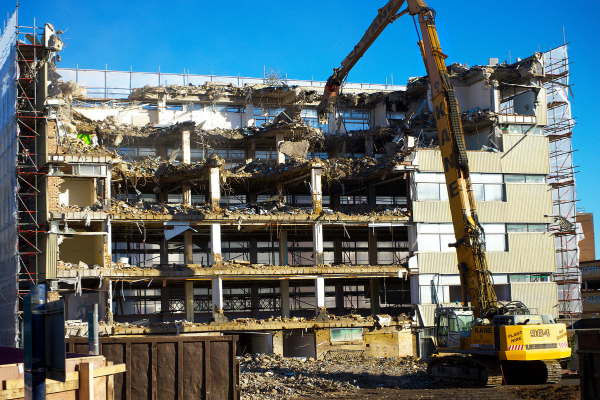
In a firm step toward enforcing urban development regulations, the Kalyan-Dombivli Municipal Corporation (KDMC) launched a demolition drive earlier this week in Titwala, targeting illegal plinths and unauthorised structures. Acting under directives from senior civic officials, the operation was carried out despite local resistance. This move follows a wider pattern of strict administrative action by KDMC, which had previously suspended municipal staff over delayed responses to illegal developments. With parallel efforts like green initiatives and sanitation reforms, KDMC aims to realign growth with compliance in fast-expanding suburban pockets.Read more
The Mysuru City Corporation (MCC) has initiated a unique revenue enhancement drive by enlisting women's self-help groups (SHGs) for door-to-door collection of property taxes and water charges across all 65 wards of the city. Eight SHGs have been selected for this initiative, based on their digital literacy, educational backgrounds, and computer skills. These groups, registered under the Deendayal Antyodaya Yojana-National Urban Livelihoods Mission (DAY-NULM), will not only boost the civic body's revenue collections but also create livelihood avenues for women. Simultaneously, six other SHGs have been assigned the maintenance of city parks, signalling a shift from contractor-based systems to community engagement models.Read more

The Odisha government has initiated disciplinary measures against nearly 300 district sub-registrars (DSRs) for unlawfully registering sub-plots without necessary approvals, breaching the provisions of the Registration (Odisha Amendment) Act, 2013. These irregularities, spanning from 2014 to 2024, have resulted in over three lakh illegal registrations. Some officials have already faced arrest and prosecution. The government is now adopting technological surveillance to prevent further violations. This initiative comes in the wake of an administrative review involving tehsildars and sub-collectors, underscoring the state's renewed focus on land governance reform.Read more

The Delhi Development Authority (DDA) has introduced a new parking allocation policy aimed at ensuring fair and adequate parking facilities in residential housing projects across Delhi. This policy mandates a minimum number of parking spaces per housing unit and promotes the adoption of mechanised parking systems, reflecting the city's growing need for efficient urban mobility solutions. The move addresses previous shortcomings in parking provision that left residents facing shortages and uneven distribution. With rising vehicle ownership and urban density, this policy is a crucial step toward streamlining parking management and supporting sustainable city living.Read more

Advertisement


The Pimpri-Chinchwad Municipal Corporation (PCMC) has taken a firm step by cutting water supply to housing societies with non-functional sewage treatment plants (STPs). Despite repeated notices, nearly 40 per cent of societies failed to activate their STPs, which are mandatory under local development regulations. Residents have raised concerns that many STPs were defective or inactive from the time of possession, blaming builders and lax civic oversight. PCMC underlines that operational STPs are vital for water conservation and environmental protection, especially given the city's rising water demand.Read more

The Navi Mumbai Municipal Corporation (NMMC) has flagged 527 buildings as dangerous following a recent survey under the Maharashtra Municipal Corporation Act. It has reiterated that structures over 30 years old must undergo a structural audit by a certified civil or structural engineer registered with the civic body. Property owners must submit proof of completed repairs and certification confirming the building's safety. A fine of INR 25,000 or the annual property tax whichever is higher may be levied on those failing to comply. Citizens have also been strongly advised to vacate unsafe premises immediately.Read more

In a recent ruling, the Maharashtra Real Estate Regulatory Authority (MahaRERA) rejected refund claims submitted by six homebuyers of a Chembur housing project who had defaulted on payment obligations during the pandemic. While five of them sought to withdraw from the project, one requested an extension. MahaRERA concluded that none were eligible under Section 18 of the RERA Act, as the defaults were on the buyers' part. However, one buyer was granted a refund in line with the terms of the agreement. The ruling underlines the regulator's position on payment discipline and its limited scope for leniency, even under pandemic-related hardships.Read more

Urban Adda, a platform by the National Institute of Urban Affairs (NIUA) and Ministry of Housing and Urban Affairs (MoHUA), recently brought together experts and young thinkers in Delhi to rethink how Indian cities are planned and experienced. The session focused on reshaping urban environments through inclusive planning, sustainable practices, and community-centric governance. Stakeholders stressed the need to empower citizens, especially youth, in decision-making to make cities more equitable and liveable. The event reflects an ongoing nationwide push to embed human values at the heart of urban transformation.Read more

The Karnataka State Pollution Control Board (KSPCB) now requires all new residential and commercial projects exceeding 20,000 sq m to include on-site solid waste processing units and sewage treatment plants. These must be planned from the outset, or projects will not receive environmental clearance. The move aims to address Bengaluru's ongoing environmental challenges, such as lake frothing and groundwater depletion, often linked to unregulated construction. Developers must also reuse treated wastewater within the premises and submit feasibility reports for approval. Compliance will be monitored through pre-construction checks and post-completion inspections. Industry bodies like CREDAI Karnataka are engaging with KSPCB to ensure developer-friendly implementation. The initiative responds to mounting judicial pressure on state agencies to enforce environmental regulations more rigorously, signalling a shift towards more sustainable urban development practices in Karnataka.Read more

Advertisement