Advertisement






The Mysuru City Corporation (MCC) has proposed an upgrade to a Grade 1 city corporation, a strategic move to unlock greater development opportunities and secure more central and state government grants. This proposal follows the abandonment of a "Greater Mysuru" plan due to insufficient population. The upgrade, which involves merging surrounding municipal councils and town panchayats, aims to boost tourism, trade, and job creation in Mysuru. This would position the city similarly to Hubballi-Dharwad, Karnataka's second-largest corporation, reflecting a push for accelerated urban growth and improved infrastructure in the region.Read more

Prayagraj has recently enforced new regulations making structural safety audits mandatory for all high-rise buildings exceeding 15 meters in height. Prompted by growing safety concerns and previous fire incidents, these structures will now require an initial audit ten years post-construction, followed by reviews every five years. Building owners, developers, or Resident Welfare Associations are responsible for promptly addressing any identified risks. Reconciliation may lead to authorities undertaking necessary repairs at the owners' expense, ensuring enhanced safety standards across the city.Read more

The Supreme Court has issued strict orders to curb unauthorized construction in Chandni Chowk in Delhi, directing police to arrest violators and enforce demolition orders where no legal stay exists. Patrolling teams must now actively prevent illegal building work, while residential properties are barred from commercial conversion. The court warned against collusion between builders and municipal officials, citing a case where an elderly woman's home was affected by illegal construction. The Delhi Police commissioner and local DCP must submit a compliance report. Petitioners may also submit videos or photos of violations, enhancing oversight. These directives reinforce an earlier court order issued in May.Read more

A CAG audit has uncovered serious lapses in Mumbai's building safety oversight, highlighting that only one of eight city divisions submitted a list of dilapidated structures. Even that list-from Kalachowki-was flawed, with 76 of 248 buildings already redeveloped or demolished. The report criticizes the Brihanmumbai Municipal Corporation (BMC) and MHADA's Mumbai Building Repairs and Reconstruction Board (MBR&RB) for failing to identify dangerous cessed buildings and relying on superficial inspections over structural audits. The MHADA Act mandates rigorous monitoring of these aging structures. In response, the government has directed MHADA engineers to obtain accurate building data from local ward offices to improve safety oversight.Read more

The Telangana Real Estate Regulatory Authority (TGRERA) recently mandated Sandstone Infra (India) to refund INR 38 lakh to a homebuyer and pay an additional penalty of INR 9 lakh. This action, following an order issued last week, stemmed from the developer's failure to register its Medchal layout project and marketing plots without mandatory regulatory approval. TGRERA declared the firm a defaulter for violating the Real Estate (Regulation and Development) Act, which strictly prohibits advertising or selling units in unregistered projects, underscoring the authority's commitment to ensuring transparency and protecting homebuyers' interests.Read more

Advertisement


Ahmedabad Municipal Corporation (AMC) has installed real-time air-quality sensors at over 100 major construction sites to monitor dust pollution, specifically PM10 levels. Although these sensors frequently trigger alerts when pollution thresholds are breached, no penalties have been issued, as enforcement lies with the zonal estate department, which has yet to act. The Centre had supported AMC under the National Clean Air Programme after the city achieved a 40% drop in PM10 levels through greening, EV infrastructure, smart parking, and cleaner crematoriums. AMC also partnered with the Centre for Environment Education on awareness drives. Still, construction-related pollution remains poorly regulated despite the progress.Read more

Following the Maharashtra cabinet's approval to merge civil areas of Pune and Khadki cantonments with the Pune Municipal Corporation (PMC), debate has sparked over Floor Space Index (FSI) norms for redevelopment. Currently capped at 0.5 in cantonment zones, proposed revisions to 1.0 still fall short of PMC's existing FSI range of 1.1 to 3.0. Residents and developers are urging clarity to ensure fair development post-merger. The process awaits final notification from the Centre and requires coordination among PMC, the Defence Ministry, and other agencies. The merger is part of a nationwide move to integrate cantonment civil areas with municipal bodies to streamline governance.Read more

The Supreme Court recently granted permission to the Central Bureau of Investigation (CBI) to file 22 criminal cases, equivalent to First Information Reports (FIRs), following initial findings of an "unholy nexus" between banks, builders, and development authorities in the National Capital Region (NCR). The probe primarily focuses on irregularities under the subvention scheme, where builders allegedly defaulted on EMI payments despite receiving loan disbursements directly from banks, leaving homebuyers burdened by delayed possession. This decisive judicial action aims for a thorough investigation across multiple developers and regions, seeking to bring accountability and provide clarity to affected homebuyers.Read more
The Navi Mumbai Municipal Corporation (NMMC) has taken decisive action against unauthorised constructions in Belapur, following non-compliance with prior demolition notices. Structures owned by Suresh Dharma Koli, Balkrishna Dharma Koli, and Ashok Koli in Diwale village were razed under the MRTP Act. The operation, led by the encroachment department under senior civic officials, involved a full deployment of manpower and equipment. NMMC has indicated that such intensified action will continue to deter encroachments in future.Read more
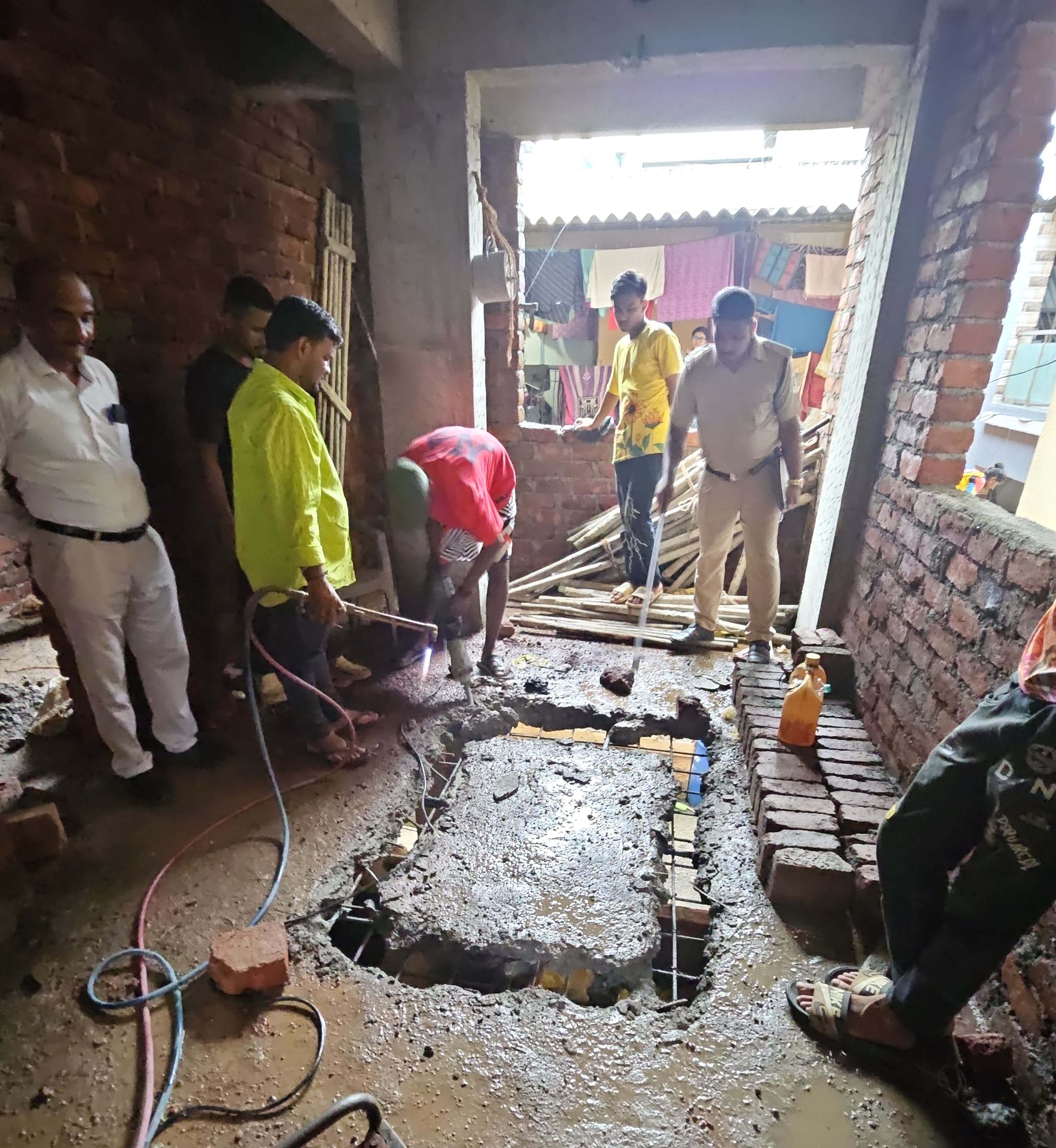
The Lucknow Development Authority (LDA) has begun approving compounding maps under the new 2025 Model Building Construction and Zoning Bylaws. This move allows property owners to legalize previously unauthorized constructions by aligning them with updated regulations, avoiding penalties. Announced during a Janata Adalat by LDA Vice Chairperson Prathamesh Kumar, the initiative assigns zonal officers specific targets-75 to 220 approvals per zone-to expedite processing. The new rules also permit greater land coverage and a higher Floor Area Ratio (FAR), offering more design flexibility. This framework aims to streamline regularization and improve public welfare through transparent and efficient building compliance processes.Read more

Advertisement





