Advertisement






The Gulf conflict has disrupted global supply chains, pushed...
REITs have changed the way commercial real estate is owned a...
What really powers the cloud? Behind every Google search, A...
What really powers the cloud? Behind every Google search, A...
Luxury real estate is one of the most talked-about segments ...
Panipat's real estate market is witnessing growing interest amid investments in regional rail and road infrastructure, an established manufacturing economy and increasing demand for organised residential developments. The proposed 136-km Delhi-Panipat-Karnal Namo Bharat corridor, estimated to cost INR 33,051 crore, along with the Jind-Gohana Greenfield Highway and proposed Gorakhpur-Panipat Expressway, is expected to improve the city's regional connectivity. Haryana also increased collector rates across Panipat district by 10% to 50% in August 2025, with some village areas recording increases of around 50%. Residential properties in Panipat are currently estimated to cost 25% to 50% less than comparable homes in established NCR markets. Developers and industry representatives identify infrastructure expansion, employment and changing housing preferences as key factors supporting the city's residential property market.
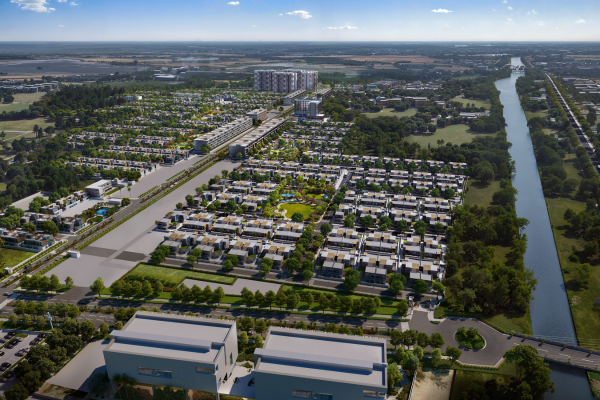
Panipat is witnessing increasing interest in its residential real estate market as infrastructure development, expanding regional connectivity and demand for organised housing contribute to its emergence as a residential destination. The proposed Delhi-Panipat-Karnal Namo Bharat corridor, new highway connections and growing preference for planned residential communities are supporting this shift, while the city's established textile and manufacturing industries continue to provide an economic base for housing demand.
Located approximately 90 km from Delhi along the Grand Trunk Road on NH-44, Panipat has traditionally been recognised for its textile manufacturing industry, including carpets, blankets, home furnishings and recycled textile products. Its industrial ecosystem supports manufacturing units, businesses and a substantial workforce, generating demand for residential properties, rental accommodation, commercial spaces and supporting services.
Connectivity improvements are expected to expand the city's accessibility across the National Capital Region (NCR). The Haryana Cabinet has cleared the 136-km Delhi-Panipat-Karnal Namo Bharat corridor, estimated to cost INR 33,051 crore, with Panipat included among its stops. The proposed rapid rail connection is expected to improve regional travel and make it more practical for professionals to reside in Panipat while accessing employment centres across the NCR. Haryana's Budget 2026-27 has also prioritised regional connectivity through proposed Regional Rapid Transit System (RRTS) corridors and other transport investments.
Road infrastructure is progressing alongside the proposed rail network. The recently inaugurated 40.6-km Jind-Gohana Greenfield Highway has reduced travel time between the two towns from approximately two hours to 40 minutes, improving connectivity towards Panipat, Rohtak and Delhi-NCR. Meanwhile, the National Highways Authority of India (NHAI) has initiated land acquisition for the proposed 747-km Gorakhpur-Panipat Expressway, which is planned to connect eastern Uttar Pradesh with Panipat through 22 districts.
The impact of infrastructure development is also reflected in property-related indicators. Haryana increased collector rates across Panipat district by 10% to 50% in August 2025. Village areas such as Chandoli, Ajijulapur and Kabri recorded increases of around 50%, with residential societies emerging in these locations.
Parvinder Singh, chief executive officer, Trident Realty, said the proposed Namo Bharat corridor could strengthen regional connectivity and support Panipat's long-term residential appeal. Referring to the broader housing market, he cited CRISIL Intelligence data indicating a 14% compound annual growth rate (CAGR) in residential demand across 10 Tier-II cities between FY2021 and FY2026. He attributed this growth to infrastructure development, urbanisation and increasing employment opportunities. He added that planned residential communities offering open spaces, security and everyday conveniences could address changing housing requirements in Panipat.
Robin Mangla, president, M3M India, said improving urban infrastructure, connectivity and economic diversification were contributing to Panipat's growing relevance as a real estate destination. He noted that homebuyers were increasingly considering properties offering modern amenities, improved living standards and long-term investment potential. He also highlighted the importance of planned developments and contemporary design in addressing demand from end-users and investors.
Residential properties in Panipat are estimated to cost approximately 25% to 50% less than comparable homes in established NCR markets. The relatively lower prices and availability of larger land parcels are attracting interest from professionals and families seeking more spacious housing. Demand is also extending towards integrated townships and gated communities featuring landscaped open spaces, clubhouses, wellness facilities, security and internal road networks.
The development of organised residential neighbourhoods is expected to support demand for complementary infrastructure, including retail outlets, educational institutions and healthcare facilities. Haryana's Vision 2047, which targets a USD 1 trillion economy and nearly 50 lakh additional jobs, provides a broader economic context for the state's development plans.
However, sustaining Panipat's residential expansion will also require housing development to progress alongside essential civic infrastructure, including roads, water supply, drainage and other public services. Coordinated urban planning will remain important as the city builds on its industrial base and infrastructure investments to accommodate its growing residential requirements.



4th Nov, 2026
30th Oct, 2026

29th Oct, 2026


30th Sep, 2026

22nd Sep, 2026
Advertisement








 Facebook
 Whatsapp

