Advertisement






The Gulf conflict has disrupted global supply chains, pushed...
REITs have changed the way commercial real estate is owned a...
What really powers the cloud? Behind every Google search, A...
What really powers the cloud? Behind every Google search, A...
Luxury real estate is one of the most talked-about segments ...
Only 15 of 2,013 active construction and demolition (C&D) sites across five Haryana districts had functional web-camera links during a remote monitoring exercise conducted by the Commission for Air Quality Management (CAQM) in June. The exercise, carried out through the Haryana State Pollution Control Board’s web portal between June 19 and 22, found working camera links at four sites in Faridabad, six in Gurgaon North and five in Gurgaon South, while Panipat and Sonipat had none. CAQM has repeatedly flagged issues with the monitoring system, including non-working links, incorrect login credentials and cameras remaining offline.
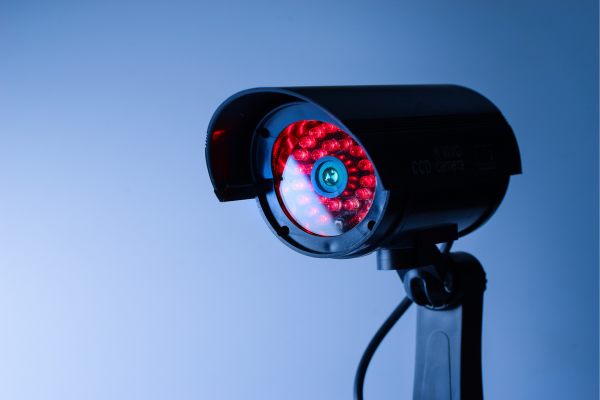
Only 15 of 2,013 active construction and demolition (C&D) sites across five Haryana districts had functional web-camera links when the Commission for Air Quality Management (CAQM) conducted a remote monitoring exercise in June.
The exercise was conducted between June 19 and 22 through the Haryana State Pollution Control Board’s (HSPCB) web portal. The review covered 213 active C&D sites in Panipat, 457 in Sonipat, 168 in Faridabad, 691 in Gurgaon North and 484 in Gurgaon South. Functional camera links were available at four sites in Faridabad, six in Gurgaon North and five in Gurgaon South. No functional links were reported for Panipat or Sonipat.
CAQM has been conducting sample-based remote monitoring of C&D sites through the HSPCB portal since 2024. During successive monitoring exercises, the commission has identified several issues, including incomplete or insufficient web-camera links, incorrect user IDs and passwords, links requiring users to install mobile applications and non-working web links.
The commission has also found instances where cameras remained offline despite successful login access. These deficiencies had been communicated to HSPCB on multiple occasions for corrective action. CAQM said the findings from the June exercise were specifically communicated to the state pollution control board on July 8, but there had been no substantial improvement.
CAQM had earlier advised HSPCB to deploy a dedicated team for effective remote monitoring through the portal. According to the commission, such a team had not been deployed.
The absence of functioning camera links limits the ability of authorities to remotely monitor construction activity and verify whether prescribed dust-control measures are being implemented. With more than 2,000 active sites across the five districts, physical inspections remain another mechanism for identifying violations.
Taking note of the continued discrepancies, CAQM termed HSPCB’s failure to address the monitoring gaps as “willful non-compliance”. The commission subsequently called the pollution control board for a review meeting and sought detailed information on the status of compliance and notices issued.
HSPCB subsequently apprised CAQM of the compliance status and the measures being undertaken to implement the statutory directions.
CAQM’s directions require C&D projects with a plot area of 500 sq m or more to be registered and equipped with functional video-monitoring systems connected to the state or Delhi government web portal. The system is intended to enable remote monitoring of dust-mitigation measures at construction and demolition sites.
Following the review, CAQM directed HSPCB to ensure strict compliance with its orders and statutory directions. It also called for corrective measures, including closure of sites that remain non-compliant.
The commission has also directed the concerned authorities to strengthen monitoring and enforcement mechanisms so that prescribed dust-control measures are implemented at C&D sites.
Yogesh Kumar, member secretary, HSPCB, told The Times of India that the board planned to ensure that all C&D sites display boards listing their compliance measures and that monitoring remains live.
The latest findings place greater emphasis on the functioning of the monitoring infrastructure rather than simply registering construction sites. For the system to provide continuous oversight, camera links need to remain accessible and operational through the designated portal.
The issue is particularly relevant to the NCR districts covered by the exercise, where construction and demolition activity is subject to dust-control requirements under CAQM directions.

17th Nov, 2026

17th Nov, 2026


17th Nov, 2026




17th Nov, 2026


17th Nov, 2026
Advertisement








 Facebook
 Whatsapp

