Advertisement






The Gulf conflict has disrupted global supply chains, pushed...
REITs have changed the way commercial real estate is owned a...
What really powers the cloud? Behind every Google search, A...
What really powers the cloud? Behind every Google search, A...
Luxury real estate is one of the most talked-about segments ...
Tata Power Delhi Distribution Ltd and the National Capital Region Transport Corporation (NCRTC) have signed a memorandum of understanding to relocate electrical utilities along the proposed 136.3-km Delhi–Panipat–Karnal Namo Bharat corridor. The shifting work is scheduled to be completed within a year of its commencement. The corridor is planned to have 21 stations across Delhi and Haryana, with trains designed for speeds of up to 180 kmph. The project involves relocating or adjusting transmission lines, transformers and other electrical equipment to enable construction while maintaining power supply reliability.
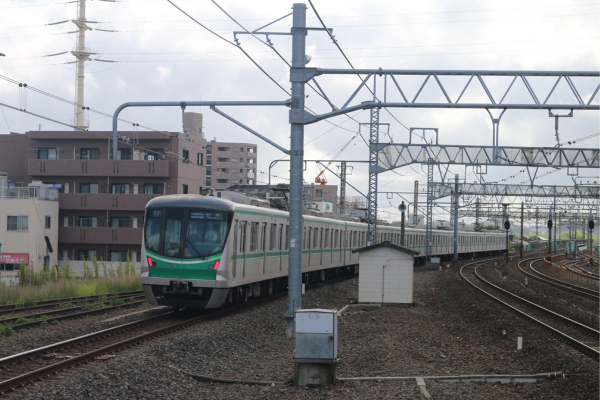
Tata Power Delhi Distribution Ltd (Tata Power-DDL) and the National Capital Region Transport Corporation (NCRTC) have signed a memorandum of understanding to shift electrical utilities along the proposed 136.3-km Delhi–Panipat–Karnal Namo Bharat corridor. The relocation work is scheduled to be completed within one year of its commencement.
Under the agreement, Tata Power-DDL will supervise the relocation of electrical networks and grant the necessary permissions to NCRTC. The work will have to comply with applicable safety requirements, reliability standards and statutory provisions.
The proposed corridor will have 21 stations, including six in Delhi and 15 in Haryana. It is planned as a rapid regional transport link connecting Delhi with towns in Haryana, including Sonipat, Panipat and Karnal. The trains are designed to reach a maximum speed of 180 kmph, with an operational average speed of 160 kmph.
The corridor will comprise 124.82 km of elevated track and 11.48 km of underground track. Train services are planned at intervals of five to 10 minutes, while the journey between Delhi and Karnal is estimated to take around 90 minutes.
The memorandum of understanding was signed by Kiran Gupta, chief of customer experience, commercial and corporate communications at Tata Power-DDL, and Vijay Kumar, company secretary at NCRTC. Senior officials from both organisations were present at the signing.
The project has been recognised as an initiative of national importance and is being monitored through the Central government's Project Monitoring Group portal.
Shifting the electrical infrastructure will require coordination across several voltage levels. The corridor alignment has 38 extra-high-voltage transmission lines operating at 765 kV, 400 kV, 132 kV and 66 kV. It also contains 33 kV, 11 kV and 415 V electrical lines, along with transformers and other equipment that will need to be adjusted or relocated to facilitate civil construction.
The electrical infrastructure along the route is managed by several agencies, including BSES, Tata Power-DDL, Uttar Haryana Bijli Vitran Nigam Ltd (UHBVNL), Haryana Vidyut Prasaran Nigam Ltd (HVPNL), Power Grid, Bhakra Beas Management Board (BBMB) and JKTPL.
Gupta said the collaboration would support the timely execution of the corridor while ensuring a reliable electricity supply for consumers during the utility-shifting work.
Tata Power-DDL is a joint venture between Tata Power and the Delhi government. It distributes electricity in North Delhi and serves around nine million people.
The relocation of electrical utilities is an important preparatory requirement for construction of the Delhi–Panipat–Karnal corridor. With transmission lines and distribution networks managed by multiple agencies, coordination will be necessary to move the affected infrastructure without compromising electricity supply or safety. The one-year completion timeline will be measured from the commencement of the shifting work. The progress of these activities will therefore be an important milestone to monitor as the proposed regional transport link advances towards construction.
Source PTI

17th Nov, 2026

17th Nov, 2026


17th Nov, 2026




17th Nov, 2026


17th Nov, 2026
Advertisement








 Facebook
 Whatsapp

