Advertisement






The Gulf conflict has disrupted global supply chains, pushed...
REITs have changed the way commercial real estate is owned a...
What really powers the cloud? Behind every Google search, A...
What really powers the cloud? Behind every Google search, A...
Luxury real estate is one of the most talked-about segments ...
Construction has begun on a INR 14 crore enclosed foot-overbridge on Velachery Main Road in Chennai, nearly a year after the project was originally delayed. The facility, being developed near the Velachery MRTS station and Nalli Silks, is planned with escalators, lifts and gently inclined staircases to provide safer access for pedestrians, including elderly people and persons with disabilities. The bridge will connect the eastern and western sides of the busy 100-Ft Road, where commuters currently have limited safe crossing options. The State Highways Department expects construction to be completed by the end of 2026.
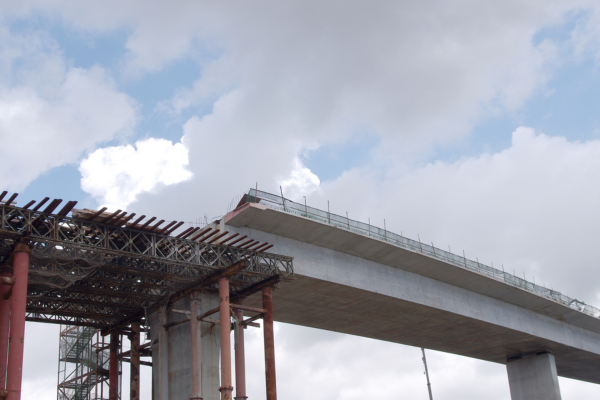
Construction has started on a INR 14 crore foot-overbridge on Velachery Main Road in Chennai after a delay of nearly one year. The project is being implemented by the Chennai Metropolitan Development Plan wing of the State Highways Department near the Velachery MRTS station and Nalli Silks, providing a dedicated pedestrian connection across the busy 100-Ft Road. The State Highways Department expects the facility to be completed by the end of 2026.
The proposed foot-overbridge is designed as a fully enclosed structure and will include escalators, lifts and gently inclined staircases. The combination is intended to make the facility accessible to elderly people, children and persons with disabilities, while providing a designated alternative to crossing the road at grade. The location also has a school and several commercial establishments nearby, resulting in regular pedestrian movement between the two sides of Velachery.
At present, commuters leaving the MRTS station may need to walk around 800 metres to reach a safer crossing point. Others have been crossing the road near the median despite the movement of vehicles along the busy corridor. The new FOB is expected to provide a direct pedestrian link between east and west Velachery and reduce the need for commuters to cross the carriageway at unsafe locations.
The project was delayed after bidders quoted rates higher than the amount provided in the tender. The proposal was subsequently placed before the Commissionerate of Tenders for approval, holding up the start of construction. State Highways Chief Engineer Palanivel said the delay was also linked to approvals pending from other departments and indicated that work can now proceed towards completion by the end of the year.
The need for a dedicated pedestrian facility has also been linked to continuing traffic violations around the junction. Traffic police have reported instances of wrong-side driving, jaywalking and signal jumping despite measures such as median barricading, deployment of personnel and periodic removal of encroachments. Better coordination between the highways department and other agencies, along with compliance by road users, has been identified as necessary to improve safety around the crossing.
The foot-overbridge is expected to serve commuters using the MRTS station as well as residents, students and customers travelling to nearby commercial establishments. Its enclosed design and provision of lifts and escalators are also intended to make the crossing more practical for a wider range of users than a conventional staircase-only foot-overbridge.
With construction now under way, the immediate target is completion by the end of 2026. The project will add a grade-separated pedestrian crossing to one of Velachery's busy road corridors, while its effectiveness will also depend on how commuters use the facility and how traffic movement is managed around its approaches.

17th Nov, 2026


15th Nov, 2026

14th Nov, 2026




13th Nov, 2026

Advertisement









 Facebook
 Whatsapp

