SBI Term Loan: RLLR: 8.15 | 7.25% - 8.55%
Canara Bank: RLLR: 8 | 7.15% - 9.85%
ICICI Bank: RLLR: -- | 8.5% - 9.65%
Punjab & Sind Bank: RLLR: 7.3 | 7.35% - 10.75%
Bank of Baroda: RLLR: 7.9 | 7.2% - 8.95%
Federal Bank: RLLR: -- | 7.35% - 9.6%
IndusInd Bank: RLLR: -- | 7.6% - 10%
Bank of Maharashtra: RLLR: 8.05 | 7% - 9.15%
Yes Bank: RLLR: -- | 7.4% - 10.54%
Karur Vysya Bank: RLLR: 8.8 | 8.5% - 10.65%
HDFC Bank: RLLR: -- | 7.75% - 13.2%
Axis Bank: RLLR: -- | 8% - 9.1%
IDBI Bank: RLLR: -- | 7.4% - 10%

PMK seeks faster execution of 19 pending railway projects in Tamil Nadu

#Infrastructure News#Infrastructure#India#Tamil Nadu
Synopsis

Pattali Makkal Katchi (PMK) president Anbumani Ramadoss has written to Union Railway Minister Ashwini Vaishnaw seeking accelerated implementation of 19 pending railway infrastructure projects across Tamil Nadu. The projects, comprising eight new railway lines, eight track-doubling works and three gauge-conversion schemes, have a combined estimated cost of INR 27,282 crore. As of April 1, 2026, cumulative expenditure stood at INR 8,811 crore, according to figures cited by Ramadoss. The eight new-line projects cover 811 km, but only 24 km has been completed. He attributed the delays to inadequate project-specific funding and pending land acquisition and proposed a dedicated committee comprising Union and state government officials, experts and district administrations to monitor implementation and submit monthly progress reports.
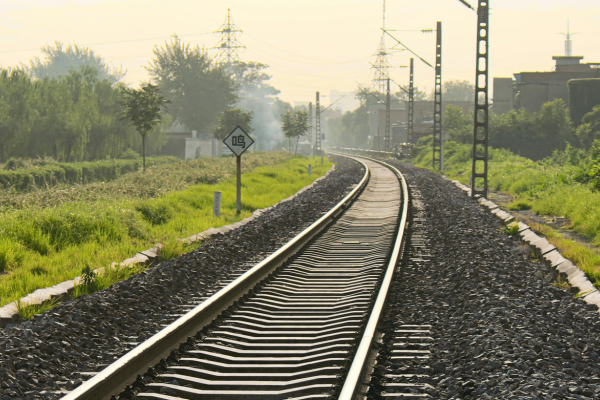
Pattali Makkal Katchi (PMK) president Anbumani Ramadoss has urged Union Railway Minister Ashwini Vaishnaw to expedite 19 pending railway infrastructure projects across Tamil Nadu, writing to the minister on November 10, 2026, to seek immediate intervention in their implementation. The projects, covering new railway lines, track doubling and gauge conversion, have a combined estimated cost of INR 27,282 crore, but expenditure and construction progress remain limited, according to figures presented by the PMK leader.


In his letter, Ramadoss acknowledged the Union government's allocation of INR 7,611 crore for railway infrastructure in Tamil Nadu for the 2026–27 financial year. However, he pointed out that the higher budgetary provision had not translated into corresponding progress on the ground. He called for greater project-specific funding and closer coordination between the railway authorities and the state administration.

The 19 pending projects, as of April 1, 2026, comprise eight new railway-line schemes, eight doubling works and three gauge-conversion projects. Of their total estimated cost, only INR 8,811 crore had been spent, representing less than 33% of the overall outlay.

The eight new-line projects account for 811 km and carry an estimated cost of INR 15,653 crore. Ramadoss said cumulative expenditure on these projects was only INR 1,514 crore, less than 10% of their estimated cost. Several had been announced more than two decades ago. Only 24 km of the proposed 811 km had been completed, representing approximately 2.95% of the total planned length.

He identified inadequate funding and delays in land acquisition as the principal constraints affecting execution. According to the figures cited in his letter, Tamil Nadu received INR 6,626 crore for railway projects in 2025–26, of which INR 617.76 crore was earmarked for new-line projects. Actual expenditure on the latter stood at INR 192.54 crore.

For 2026–27, the allocation for new railway lines was reduced to INR 497.57 crore despite the increase in the state's overall railway budget. Of this amount, INR 334.70 crore was allocated to the Tindivanam–Nagari project and INR 100 crore to the Sriperumbudur–Guduvancheri line. Together, the two projects accounted for approximately 88% of the new-line allocation.

Land acquisition has also affected construction schedules. The projects collectively require 4,612 hectares, of which 1,178 hectares had been acquired and handed over, leaving 3,434 hectares pending, according to Ramadoss's figures.

He highlighted the Tindivanam–Tiruvannamalai line, which requires 276 hectares but has secured only 33 hectares. Similarly, the Dharmapuri–Morappur project, intended to improve connectivity between Dharmapuri and Chennai, requires 93 hectares, of which 47 hectares had been acquired.

To address these constraints, Ramadoss proposed a dedicated committee comprising officials and experts from the Union and state governments, along with representatives of district administrations. The committee would coordinate funding and land acquisition, identify implementation bottlenecks and submit monthly progress reports.

He also emphasised the importance of improving rail connectivity to tier-II cities, stating that better connections with other parts of the country were necessary to support Tamil Nadu's economic development.

Discussion

Have something to say? Post your comment