Advertisement






The Gulf conflict has disrupted global supply chains, pushed...
REITs have changed the way commercial real estate is owned a...
What really powers the cloud? Behind every Google search, A...
What really powers the cloud? Behind every Google search, A...
Luxury real estate is one of the most talked-about segments ...
Karnataka is broadening its maritime development strategy beyond conventional port infrastructure, with the state inviting private investment through public-private partnerships for projects covering ports, logistics, shipbuilding, coastal shipping, tourism and inland waterways. The Karnataka Maritime Board is focusing on stronger road and rail connectivity, integration with industrial clusters and digital systems to improve cargo movement and reduce logistics costs. The state has approved maritime projects estimated at INR 8,437 crore, including a INR 6,925 crore multipurpose port and shipbuilding facility at Manki, while proposals for tourism, ecotourism and urban water transport are also part of the wider coastal development approach.
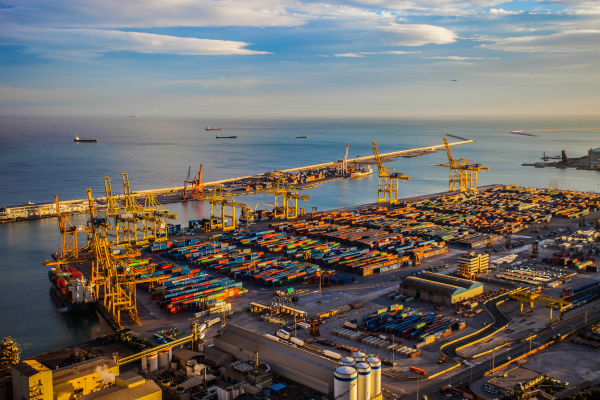
Karnataka is shifting its maritime infrastructure strategy from developing individual ports towards an integrated coastal network combining ports with logistics, transport connectivity, shipbuilding, tourism and inland waterways. The Karnataka Maritime Board has identified public-private partnerships as an important route for bringing private capital, technology and operational expertise into this expansion, with the approach aimed at improving cargo movement and lowering logistics costs along the state’s 343-km coastline. The strategy was outlined at the second edition of the CII Karnataka Port and Logistics Conference in Mangaluru, where Karnataka Maritime Board CEO Balachandra H.C. said future maritime development would need to extend beyond cargo handling and incorporate stronger links with the hinterland.
The state has approved maritime projects estimated at INR 8,437 crore, covering ports, logistics, shipbuilding, tourism, mobility, investment and employment. One of the largest projects is the proposed INR 6,925 crore multipurpose port and shipbuilding facility at Manki in Uttara Kannada. The wider project pipeline is being positioned as part of an effort to connect maritime infrastructure more closely with industrial activity and supply chains. The Karnataka Maritime Board has also highlighted the need for better road and rail connections between ports and inland markets, greater integration between ports and industrial clusters, and industry-specific logistics solutions. The objective is to improve cargo visibility, reduce turnaround time and provide more predictable movement of goods.
The proposed PPP-led development extends beyond conventional port operations. Karnataka is looking at coastal shipping and inland waterways, while initiatives along the Gurupura and Nethravati rivers include river tourism and urban water transport. The state has also proposed tourism and ecotourism development across 12 coastal islands and a financial assistance scheme for shipbuilding. Separately, the Karnataka Maritime Development Policy has identified 13 locations for maritime infrastructure development, including Karwar, Belekeri, Keni, Tadri, Pavinakurve, Honnavar, Manki, Bhatkal, Kundapur, Hangarkatta, Malpe, Padubidri and Old Mangalore Port. The policy covers areas such as greenfield port development, maritime-led tourism, fisheries, industrial development and near-shore renewable energy.
New Mangalore Port remains an important part of the state's maritime network, but the development strategy places greater emphasis on connectivity between ports and the hinterland rather than treating port capacity in isolation. The Karnataka Maritime Board has identified multimodal connectivity, private investment, coastal shipping, inland waterways and technology-enabled trade facilitation among its priorities. These measures are being aligned with national initiatives including PM Gati Shakti, the National Logistics Policy and the Sagarmala programme. The approach also reflects the growing role of maritime infrastructure in supporting industrial clusters, with the state seeking to create logistics systems that can serve specific cargo and manufacturing requirements along the coast.
For investors, the PPP structure is expected to bring private capital and operational capabilities into projects that require substantial infrastructure investment. The emphasis on shipbuilding, logistics, port development, tourism and water-based mobility creates a broader investment pipeline than conventional port development alone. The Maritime Gateway report also noted that industrial users such as Mangalore Refinery and Petrochemicals Limited have sought deeper port access capable of handling larger vessels and reducing logistics costs. The effectiveness of the wider strategy will therefore depend on project execution, connectivity with industrial and commercial centres and the ability of individual maritime facilities to address the requirements of cargo users.


16th Nov, 2026


14th Nov, 2026

13th Nov, 2026

13th Nov, 2026

13th Nov, 2026



Advertisement








 Facebook
 Whatsapp

