Advertisement






The Gulf conflict has disrupted global supply chains, pushed...
REITs have changed the way commercial real estate is owned a...
What really powers the cloud? Behind every Google search, A...
What really powers the cloud? Behind every Google search, A...
Luxury real estate is one of the most talked-about segments ...
The Navi Mumbai Municipal Corporation (NMMC) has secured the first position among India’s cleanest cities in the Swachh Survekshan 2025-26, conducted under the Swachh Bharat Mission–Urban. The award was presented by President Droupadi Murmu at a ceremony in New Delhi, where Mayor Sujata Patil received the recognition along with Deputy Mayor Dashrath Bhagat and Municipal Commissioner Dr Kailas Shinde. The civic body has also retained the seven-star Garbage-Free City rating and Water Plus certification under the open defecation-free category. Its performance has been supported by scientific processing of all daily municipal waste, wastewater recycling, digital monitoring systems, citizen participation and year-round cleanliness initiatives.
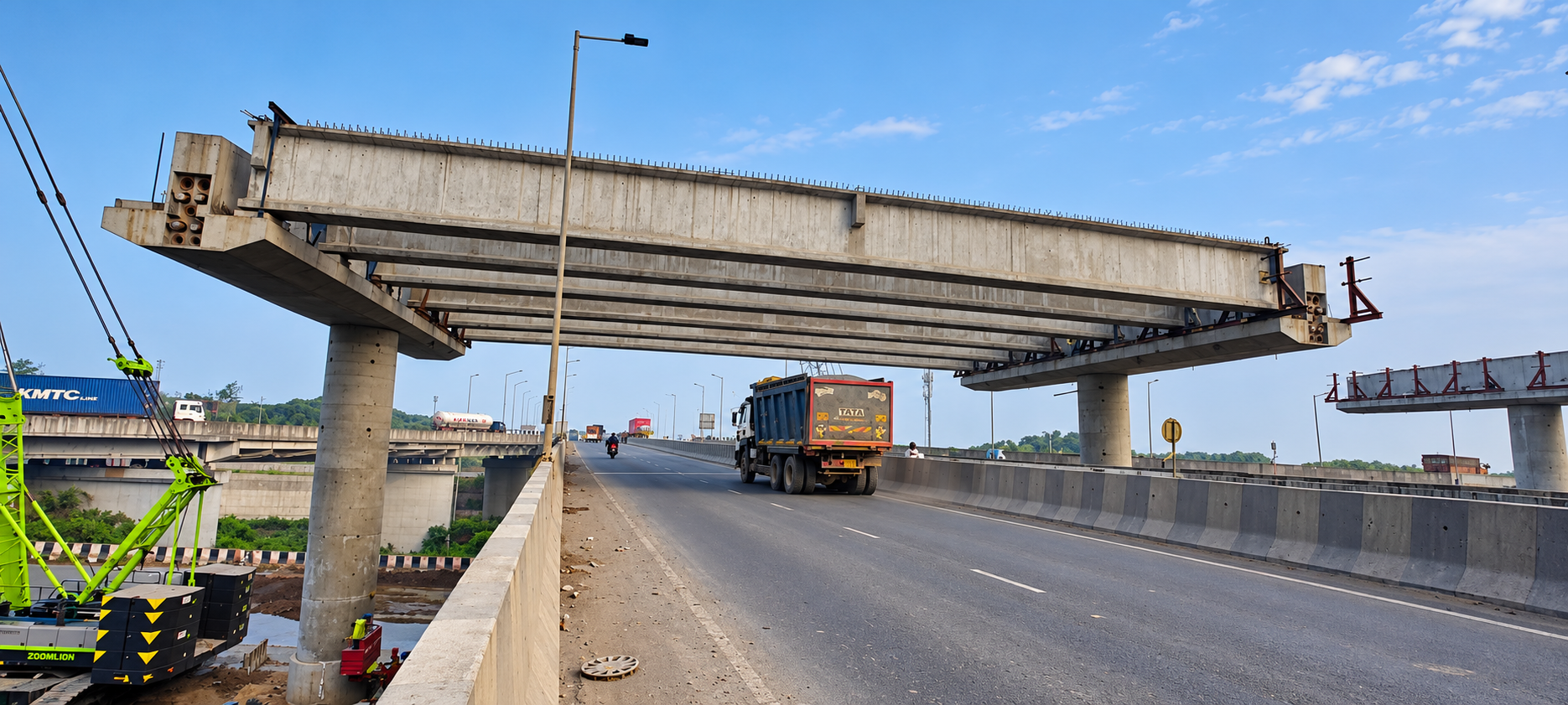
The Navi Mumbai Municipal Corporation (NMMC) has secured the first rank among India’s cleanest cities in the Swachh Survekshan 2025-26, marking an improvement on its previous performance in the Super Swachh League category. The award was presented by President Droupadi Murmu at a ceremony held at Vigyan Bhawan in New Delhi on November 12, 2026, where Mayor Sujata Patil received the recognition in the presence of Deputy Mayor Dashrath Bhagat, Municipal Commissioner Dr Kailas Shinde and City Engineer Shirish Aradwad.
Union Minister for Housing and Urban Affairs Manohar Lal Khattar, Minister of State Tokhan Sahu and ministry secretary Satyendra Singh were among the dignitaries present at the award ceremony. Additional Municipal Commissioner Sunil Pawar and Deputy Commissioner of the Solid Waste Management Department Dr Ajay Gadde also attended.
The recognition comes under the Swachh Bharat Mission–Urban and reflects the civic body's performance in solid waste management, sanitation, water conservation, technology-led municipal services and citizen participation. NMMC has also retained the highest seven-star rating under the Garbage-Free City assessment and the Water Plus certification under the open defecation-free category.
A key component of the city's performance is its solid waste management system, under which 100% of the daily waste collected is processed scientifically. The corporation has facilities to process 350 tonnes per day of wet waste and 400 tonnes per day of dry waste. Wet waste is converted into compost marketed under the ‘Harit’ brand, while dry waste is processed to produce refuse-derived fuel (RDF) for use by cement plants.
Among its initiatives is the Textile Recovery Facility (TRF), which collects discarded clothing and converts it into value-added products. The initiative, supported by the Ministry of Textiles and SBI Foundation, also provides employment opportunities for self-help groups and promotes a circular value chain for textile waste.
The corporation has introduced a Zero Waste Slum model in settlements such as Indira Nagar, Adavali village and Hanuman Nagar. Under this system, segregated waste is collected and processed locally, with the involvement of the Stree Mukti Sanghatana, which supports employment for women waste pickers.
Another initiative is Nisarg Udyan, developed on an 11.4-acre former landfill site in Koparkhairane. Following scientific remediation, the site has been converted into an urban forest with more than 1.3 lakh trees, alongside biodiversity restoration and public recreational facilities. NMMC is also recycling construction and demolition waste into paver blocks and aggregates, while plastic waste is being converted into public utility products such as benches and dustbins in collaboration with Project Mumbai.
Its Swachhata Park 1.0 and 2.0 facilities serve as interactive environmental education centres, promoting source segregation, composting and circular economy practices. More than one lakh citizens, particularly students, have been reached through these initiatives.
Water management is another significant component of the corporation's performance. Navi Mumbai receives its water supply from the Morbe Dam, which has a storage capacity of 190.89 million cubic metres and a daily lifting capacity of 450 million litres. The city operates a 1,398-km water distribution network monitored through a Supervisory Control and Data Acquisition (SCADA) system. Non-revenue water has been maintained below 20%, while the city has achieved the benchmark of 150 litres per capita per day.
Under the Atal Mission for Rejuvenation and Urban Transformation (AMRUT) 2.0, a 24x7 water supply system has been implemented in Belapur through 40 district metered areas, covering more than 15,000 consumers.
In wastewater management, NMMC treats 100% of the 260 million litres of sewage generated daily through seven modern sequencing batch reactor (SBR)-based sewage treatment plants and four tertiary treatment plants, with a combined capacity of 52.5 million litres. More than 30% of the treated wastewater is reused for industrial, gardening, construction and other non-potable purposes through a dedicated 177-km pipeline network. The corporation has also received the first rank in the sixth National Water Awards under the Best Urban Local Body category and recognition as Maharashtra's first Water Plus city.
Technology-led civic services have further supported the corporation's operations. NMMC has developed a digital service system comprising a Unified Citizen Service Portal, the My NMMC mobile application, a WhatsApp chatbot and an AI-enabled virtual assistant. These platforms provide single-window access to municipal services, reduce the need for physical visits to civic offices and improve transparency. An AI-based grievance intelligence system categorises complaints, assigns them to appropriate levels and converts them into actionable cases.
The Integrated Command and Control Centre (ICCC) monitors municipal sanitation operations through real-time GPS tracking of 246 vehicles operating across 291 routes. It also monitors waste segregation compliance through CCTV surveillance and generates alerts on service deficiencies.
During the year, the corporation conducted several cleanliness campaigns involving citizens, students and voluntary organisations. In September 2026, more than 2,000 National Service Scheme (NSS) students, municipal employees and volunteers participated in large-scale cleaning drives at creek-side locations, mangrove areas and water bodies, including Diwale Jetty, Sarsole Jetty, Vashi Jetty, Turbhe Lake, Ghansoli Jetty, Airoli Jetty, Digha Lake and Dolaya Beach at Karave. The campaigns focused on removing plastic, glass bottles, footwear and other non-biodegradable waste.
NMMC also conducted single-use plastic enforcement drives in markets across Koparkhairane, Ghansoli and Sanpada, imposing fines on businesses using prohibited plastic products. NSS students distributed newspaper and cloth bags to encourage alternatives. During the Ganesh festival, the corporation promoted clay idols and collected 5,204 kg of floral offerings for conversion into compost, with support from the Nanasaheb Dharmadhikari Pratishthan. It also established 260 artificial immersion ponds and focused on post-immersion cleaning.
Other initiatives included the inauguration of a thrift store at the Textile Recovery Facility in CBD Belapur by Union Textiles Minister Giriraj Singh, an e-waste collection campaign under Special Campaign 6.0 in October 2026, and welfare measures for sanitation workers under the NAMASTE scheme. The first phase of the e-waste drive at the municipal headquarters collected 770 kg of discarded electronic equipment. The corporation also undertook mentoring responsibilities under the Super Swachh League to help local bodies such as Malkapur, Kannad, Jintur and Kaij improve their sanitation performance.
During the Diwali period, more than 250 sanitation workers collected over 25 tonnes of dry waste, including firecracker waste, through a special early-morning cleaning drive.
NMMC attributed its national ranking to investments in civic infrastructure, technology, waste processing, water management, sanitation worker welfare and sustained public participation. Following the announcement, Mayor Sujata Patil, Deputy Mayor Dashrath Bhagat and Commissioner Dr Kailas Shinde interacted with media representatives, acknowledging their contribution in communicating cleanliness initiatives and encouraging public participation. The civic body stated that residents, sanitation workers, voluntary organisations, women's groups, elected representatives, municipal officials and media organisations had contributed to the achievement.
16th Nov, 2026

15th Nov, 2026

15th Nov, 2026

13th Nov, 2026
13th Nov, 2026


Advertisement








 Facebook
 Whatsapp

