Advertisement






The Gulf conflict has disrupted global supply chains, pushed...
REITs have changed the way commercial real estate is owned a...
What really powers the cloud? Behind every Google search, A...
What really powers the cloud? Behind every Google search, A...
Luxury real estate is one of the most talked-about segments ...
FedEx is committing more than USD 400 million to develop fully automated air cargo hubs at Delhi and Navi Mumbai international airports, strengthening its freight network and international connectivity from India. The investment includes a USD 150 million facility spanning 230,000 sq. ft. at Delhi airport and a 300,000 sq. ft. hub at Navi Mumbai involving more than USD 250 million. Both projects have commenced development and are expected to become operational within approximately 18 months. The facilities will support freight movements across regional and international markets, with a focus on pharmaceuticals, electronics and semiconductors.
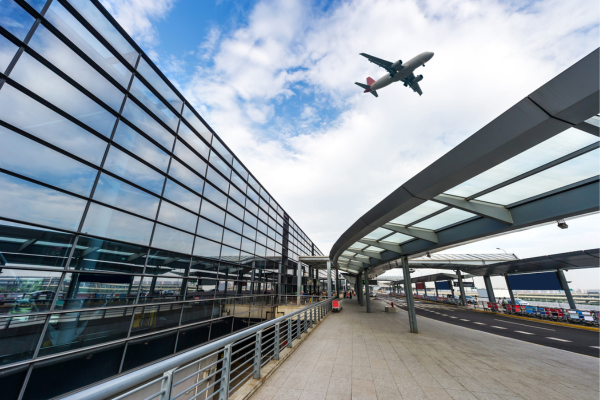
Global logistics company FedEx is committing more than USD 400 million to expand its air cargo infrastructure in India through two fully automated facilities at Delhi and Navi Mumbai international airports. The investment is aimed at increasing cargo handling capacity, improving shipment movement and strengthening connections between Indian businesses and international markets. The plans were outlined by Nitin Navneet Tatiwala, Vice-President of Marketing, Customer Experience and Air Network for the Middle East, Indian Subcontinent and Africa region at FedEx.
The proposed facility at Delhi’s Indira Gandhi International Airport involves an investment of USD 150 million and will cover approximately 230,000 sq. ft. at GMR Cargo City. Designed as an integrated air cargo hub, it will bring international gateway operations and pickup-and-delivery activities under one roof. The facility is intended to strengthen connectivity for northern and eastern India. Its planned infrastructure includes automated sorting equipment, advanced screening systems and technology to improve shipment processing. The hub is designed to increase processing capacity from 600 to 5,000 packages per hour.
At Navi Mumbai International Airport, FedEx plans to develop a fully automated cargo hub spanning approximately 300,000 sq. ft., with a long-term investment exceeding USD 250 million. The facility is expected to serve as a distribution and consolidation centre for western India, while also handling heavyweight freight movements from other parts of the country. Its location within the Mumbai Metropolitan Region is expected to support cargo connectivity with industrial centres, ports and wider transport networks.
Development work has commenced at both locations following groundbreaking ceremonies. FedEx expects the facilities to become operational within approximately 18 months, with a possible difference of three to four months between their respective completion schedules. The company plans to use Boeing 777 freighter aircraft for operations from the hubs, supporting the movement of large consignments and international freight.
The two facilities are also intended to increase transshipment activity through India, allowing shipments to be consolidated and routed to international destinations. FedEx plans to complement the physical infrastructure with digital capabilities, including digital twin technology and predictive shipment visibility, to improve tracking and execution across its logistics network.
Pharmaceuticals, electronics and semiconductors are among the sectors expected to drive demand for the expanded infrastructure. FedEx is seeking to support the movement of high-value semiconductor components, including shipments linked to artificial intelligence and data centre industries. Its pharmaceutical logistics strategy includes strengthening India's role in its global Cold Corridor, which connects markets such as the Netherlands, Ireland, the United States, Japan, South Korea and Singapore. The company uses specialised packaging, monitoring systems and temperature-controlled air freight services for shipments requiring conditions between -20°C and 25°C.
FedEx entered the Indian market in 1997 and currently operates nearly 40 scheduled weekly flights to and from the country, connecting businesses with markets across Europe, Asia and the United States. Its air network operations are concentrated around Delhi, Mumbai, Bengaluru and Hyderabad. The company has also reported high double-digit growth in India and said it has doubled its fleet capacity. The new hubs are intended to support further expansion, improve shipment processing and reduce transshipment time for Indian exports and imports.

17th Nov, 2026

17th Nov, 2026
17th Nov, 2026


16th Nov, 2026


16th Nov, 2026

16th Nov, 2026
16th Nov, 2026
Advertisement








 Facebook
 Whatsapp

