Advertisement






The Gulf conflict has disrupted global supply chains, pushed...
REITs have changed the way commercial real estate is owned a...
What really powers the cloud? Behind every Google search, A...
What really powers the cloud? Behind every Google search, A...
Luxury real estate is one of the most talked-about segments ...
Britain's construction sector contracted at its fastest pace since June in October 2026, with housebuilding recording its sharpest decline of the year, according to the S&P Global UK Construction Purchasing Managers' Index (PMI). The index fell to 43.6 from 46.1 in September, remaining below the 50-point threshold that separates expansion from contraction. Rising borrowing costs, weak consumer confidence and economic uncertainty weighed on housing activity, while demand for data centre projects and work in the energy and utilities sectors provided some support.
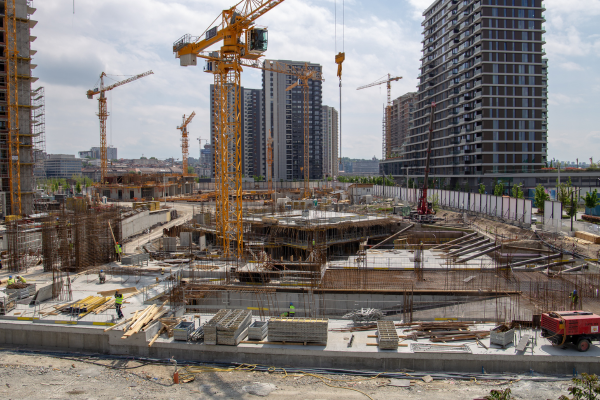
Britain's construction sector recorded a sharper contraction in October, as declining housebuilding activity and weakness across civil engineering and commercial construction weighed on overall output. The S&P Global UK Construction Purchasing Managers' Index (PMI) fell to 43.6 from 46.1 in September, marking the fastest pace of contraction since June. The reading was also below every forecast in a Reuters poll of economists, whose median estimate had indicated that the index would remain unchanged. A reading below 50 indicates contraction, and the sector's PMI has remained in this territory for nearly two years.
The housing segment experienced the steepest decline, with activity falling at its fastest rate of the year and recording its largest monthly drop since December 2025. The survey indicated that only the COVID-19 pandemic and the global financial crisis had produced greater declines in housebuilding activity than those recorded in October and December 2025. Rising borrowing costs, weak consumer confidence and uncertainty over the wider economic outlook were identified as major pressures affecting the sector. These conditions have made it more difficult for prospective buyers to finance purchases and have weighed on demand for newly built homes.
Civil engineering and commercial construction also registered contractions during the month, indicating that the slowdown extended beyond residential development. Tim Moore, economics director at S&P Global Market Intelligence, said construction companies had reported severe headwinds in the housebuilding sector because of higher borrowing costs, subdued consumer confidence and elevated economic uncertainty. The deterioration in housing activity is significant for the wider construction industry because residential development supports demand across building materials, contractors, engineering services and associated supply chains.
However, the survey identified areas of relative strength, particularly in data centre construction and infrastructure-related activity. Respondents reported strong demand for data centre projects, alongside increasing workloads in the energy and utilities sectors. These segments could provide some support to construction companies as residential and traditional commercial projects remain under pressure. The divergence also reflects changing investment patterns, with technology infrastructure and energy-related developments continuing to generate work even as household demand and financing conditions constrain housing activity.
Cost pressures and weaker business confidence added to the challenges facing the industry. The survey's input cost index rose to its highest level since June after increasing by more than 10 points during October, with companies reporting higher fuel surcharges and energy expenses. Business optimism also declined to its lowest level since May, suggesting that firms remained cautious about the near-term outlook. In contrast, the all-sector PMI, which combines construction, manufacturing and services activity, improved to 52.1 in October from 51.5 in September, reaching its strongest level since February. The figures indicate that the wider UK private sector continued to expand even as construction activity weakened.
Source Reuters

13th Nov, 2026

13th Nov, 2026

4th Nov, 2026

4th Nov, 2026

3rd Nov, 2026

2nd Nov, 2026

30th Oct, 2026

25th Oct, 2026


Advertisement








 Facebook
 Whatsapp

