Advertisement






The Gulf conflict has disrupted global supply chains, pushed...
REITs have changed the way commercial real estate is owned a...
What really powers the cloud? Behind every Google search, A...
What really powers the cloud? Behind every Google search, A...
Luxury real estate is one of the most talked-about segments ...
South Korea is working towards establishing regular container shipping services through the Arctic by 2030 after its first container ship completed a round trip between Asia and Europe using the route. The 50-day voyage demonstrated the potential to reduce sailing time by around one-third compared with the Suez Canal route. However, commercial viability remains uncertain due to limited cargo on the return journey, additional operating costs, insurance requirements and geopolitical concerns linked to Russia. The government plans further trial voyages in 2027 before deciding how to develop the route for regular use.
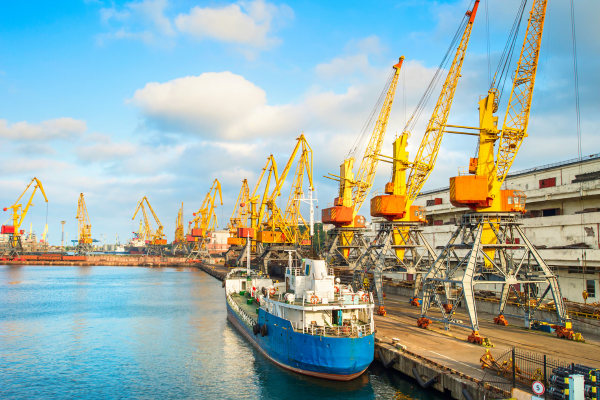
South Korean President Lee Jae Myung has welcomed the return of the country's first container ship to travel to Europe and back through the Arctic, as the government works towards introducing regular services on the route by 2030. The voyage comes as South Korea looks to develop alternative shipping routes amid disruptions to established sea lanes caused by geopolitical conflicts.
At a ceremony in the port city of Busan, Lee presented flower garlands to the captain and crew of the PanStar Acro, which returned to South Korea on Sunday after a 50-day voyage. The ship made stops at Felixstowe in the United Kingdom, Rotterdam in the Netherlands and Gdansk in Poland.
Lee said the disruption to shipping routes caused by the conflict in the Middle East had exposed the risks of relying on existing sea lanes. He described the Arctic route as another option that could be used during a crisis.
The route has become more accessible as warming temperatures reduce ice cover in northern waters. South Korean authorities estimate that it could cut sailing time by around one-third compared with the journey through the Suez Canal.
Oceans Minister Hwang Jong-woo said the government plans to conduct further trial voyages in 2027 using container ships and automobile carriers. The aim is to establish regular services by 2030, although he expects the route to become economically viable only around 2040. He also said that within 15 years, ships could be able to use the route for more than six months annually.
South Korea is also examining the potential of the Northwest Passage, which connects Asia and North America through Arctic waters.
However, the current route follows Russia's Arctic coastline, creating diplomatic challenges for Seoul as Western countries seek to isolate Moscow over its war in Ukraine. Speaking at a cabinet meeting, Foreign Minister Cho Hyun said Russia had been more cooperative than expected but warned that complications could arise if the conflict continued. He also pointed to South Korea's relationship with the United States as a factor that would need to be considered.
Lee said South Korea would develop the route while maintaining the trust of the international community. He added that the country would follow international norms and sanctions principles, addressing concerns over cooperation involving Russian waters.
The voyage has also raised questions about whether the route can attract enough cargo to support regular commercial operations. Data from the Oceans Ministry, provided by the office of opposition People Power Party lawmaker Kang Seung-kyoo, showed that the ship had initially targeted 1,300 twenty-foot equivalent units (TEU) of cargo. However, it departed with 737 TEU of export cargo and returned with 1,743 TEU of empty containers, without carrying any imports.
Lee acknowledged that securing cargo for return journeys after ships unload in Europe remained one of the issues to be resolved.
Analysts said the route's commercial viability would depend on several factors, including reliable sailing schedules, the speed at which ships could navigate through ice, specialised insurance premiums and additional fuel costs. These factors will determine whether the time saved on the Arctic route can translate into a sustainable commercial advantage.
Source Reuters

17th Nov, 2026

13th Nov, 2026



6th Nov, 2026

6th Nov, 2026


3rd Nov, 2026

Advertisement








 Facebook
 Whatsapp

