Advertisement






The Gulf conflict has disrupted global supply chains, pushed...
REITs have changed the way commercial real estate is owned a...
What really powers the cloud? Behind every Google search, A...
What really powers the cloud? Behind every Google search, A...
Luxury real estate is one of the most talked-about segments ...
The Panama Canal Authority is moving forward with its port infrastructure expansion, with the pre-qualified bidders for two proposed container terminals expected to be announced by the end of 2026. The projects form part of a wider investment programme covering port development and energy transportation infrastructure. The authority is also considering a third terminal to address capacity constraints. Alongside the expansion, it is managing vessel movements and water resources amid concerns over reduced rainfall, while monitoring the gradual recovery of LNG shipping traffic.

The Panama Canal Authority plans to announce the pre-qualified bidders for two new container terminal projects by the end of 2026, as it advances a wider USD 8.5 billion expansion programme aimed at strengthening Panama's position as a global shipping, logistics and energy hub.
Canal Administrator Ilya Espino said the authority had evaluated the initial proposals and would issue requests for proposals to the shortlisted companies, taking the tender process into its next stage. Speaking at the Houston International Maritime Conference, she indicated that global shipping companies such as Maersk and MSC could be among the potential bidders, as both already operate ports in Panama. However, she did not disclose the names of the companies that had been pre-qualified.
The proposed container terminals are expected to attract an additional USD 2.6 billion in investment. The broader expansion programme also includes a proposed pipeline project estimated to cost between USD 4 billion and USD 8 billion, which would transport liquefied petroleum gas (LPG). The canal authority is also beginning preliminary planning for a third container terminal, as existing trans-shipment capacity in Panama is already under pressure.
Under the current schedule, concessions for the new terminal projects could be awarded around the middle of 2027, with operations expected to begin in 2030 or 2031.
Companies that have previously expressed interest in the expansion projects include ENEOS, Energy Transfer, Exxon Mobil, Enterprise Products Partners, Chevron, Phillips 66, Targa Resources and ONEOK.
The expansion is being planned alongside measures to manage vessel traffic and water availability. The Panama Canal, which depends on freshwater for its operations, has introduced restrictions on vessel drafts and daily passages in anticipation of a strong El Niño weather pattern that could reduce rainfall in the country.
Espino said the highest amount paid by a vessel to secure a transit through the canal this year reached USD 5.2 million. The authority has also revised its booking and auction systems to distribute demand across different vessel categories while conserving water and reducing waiting times. The current daily passage limit is 33 vessels, although the authority hopes to maintain a minimum of 32 authorised slots per day during the dry season. Maximum vessel draft restrictions could be revised in the coming months depending on rainfall conditions.
Liquefied natural gas (LNG) vessel traffic through the canal has also started recovering after a sharp decline following Russia's invasion of Ukraine. The waterway is currently handling around three LNG vessels per week, compared with approximately two vessels per day before the conflict. Changes in shipping routes have contributed to the slower recovery in LNG traffic.
The canal authority expects 10,750 deep-draft vessel transits during the fiscal year ending September 2027, compared with 12,636 recorded in the previous fiscal year. The projected figure reflects the expected traffic levels as the authority continues to balance shipping demand with restrictions linked to water availability.
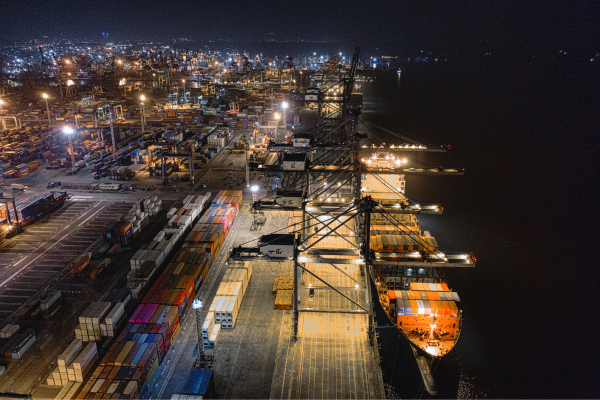
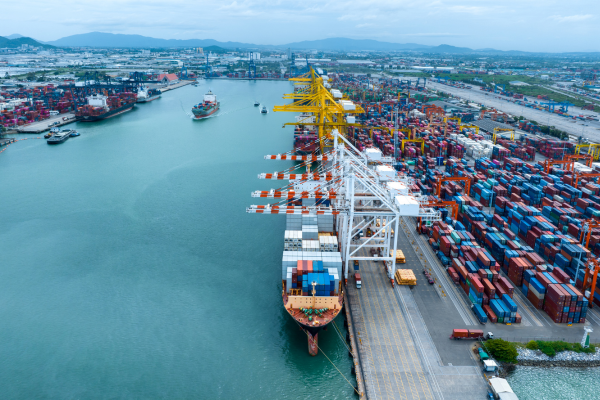
The two proposed terminals, Corozal on the Pacific side and Telfers on the Atlantic side, are expected to add around 5 million to 6 million twenty-foot equivalent units (TEUs) of annual container trans-shipment capacity. This would expand the canal's supporting port infrastructure and provide additional capacity for cargo moving between the Atlantic and Pacific regions.
The proposed terminal developments will be an important part of the Panama Canal's efforts to strengthen its role in international cargo movement. However, the projects will also depend on the successful completion of the bidding process, concession agreements and construction schedules. The authority will need to manage these long-term infrastructure plans alongside the immediate challenge of maintaining reliable canal operations during periods of limited rainfall. The progress of the terminal tenders and the eventual selection of operators will be key developments to watch.
Source Reuters
9th Nov, 2026


5th Mar, 2026
15th Feb, 2026


Advertisement








 Facebook
 Whatsapp

