Advertisement






The Gulf conflict has disrupted global supply chains, pushed...
REITs have changed the way commercial real estate is owned a...
What really powers the cloud? Behind every Google search, A...
What really powers the cloud? Behind every Google search, A...
Luxury real estate is one of the most talked-about segments ...
Germany has expressed interest in partnering with Indian companies to manufacture solar panels and batteries domestically, with the aim of strengthening India's renewable energy supply chain. German Ambassador Jasper Wieck said global energy supply disruptions had highlighted the need to reduce dependence on external sources. The proposal was discussed during the 20th anniversary of the Indo-German Energy Forum in New Delhi. The two countries are also looking to expand cooperation in green hydrogen, industrial capacity and renewable energy technologies.
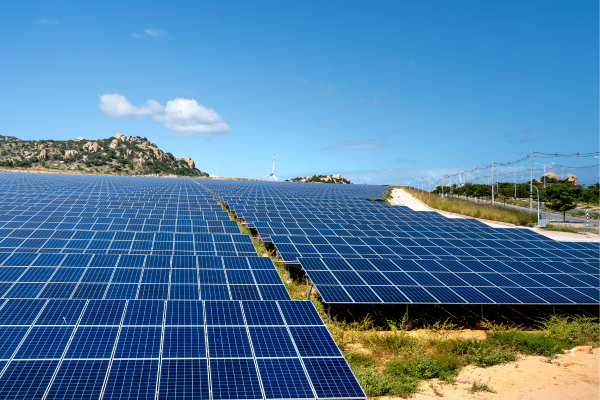
Germany is keen to collaborate with Indian companies to manufacture solar panels and batteries in India, as domestic renewable energy production becomes increasingly important for the country's energy security, German Ambassador to India Jasper Wieck said. He highlighted the need to reduce dependence on overseas suppliers and strengthen local manufacturing during an interaction with PTI on the sidelines of the 20th anniversary of the Indo-German Energy Forum (IGEF) in New Delhi.
Wieck said disruptions to energy supplies in Europe and Asia, including those affecting shipping through the Strait of Hormuz, had underlined the importance of developing domestic renewable energy capacity. He said producing renewable energy within the country would help India strengthen its energy security and reduce its exposure to disruptions in international supply chains.
The ambassador also pointed to the importance of manufacturing the equipment required for the renewable energy sector within India. He said the country needed to ensure that its transition to clean energy did not create a new dependence on imported solar panels and batteries. German companies were ready to work with Indian businesses to establish domestic production capacity for these products.
The proposal was discussed during the Bharat Renewable Energy Summit, which was inaugurated by Prime Minister Narendra Modi on Monday. Wieck said the event offered an opportunity for Indian and German companies to explore partnerships and identify opportunities to expand renewable energy manufacturing in India. He also highlighted the participation of a strong German business delegation at the summit.
The ambassador linked the proposed manufacturing cooperation with India's Atmanirbhar Bharat initiative, saying that greater domestic production would improve self-reliance, strengthen supply chain resilience and reduce dependence on external sources. He said the next phase of cooperation should focus not only on expanding renewable energy use but also on developing the industries and supply chains needed to support the sector.
The need to diversify solar manufacturing has also been highlighted by the International Energy Agency (IEA). According to its findings, China accounts for more than 80% of global manufacturing capacity across the key stages of solar panel production, including polysilicon, ingots, wafers, cells and modules. This concentration has raised concerns about the resilience of global solar supply chains.
The Indo-German Energy Forum, established in 2006 by the governments of India and Germany, has served as a platform for cooperation on energy policy. It brings together government agencies, businesses, financial institutions and research organisations to discuss shared priorities. Over the past two decades, its work has covered renewable energy integration into power plants, energy efficiency, battery storage and green hydrogen.
Green hydrogen is expected to remain an important area of cooperation between the two countries. India and Germany introduced the Indo-German Green Hydrogen Roadmap in October 2024 during the seventh India-Germany Inter-Governmental Consultations in New Delhi. The roadmap focuses on encouraging private sector investment, supporting green hydrogen production and trade, promoting exports and facilitating the exchange of information on industrial applications and certification standards.
Wieck said the next phase of the partnership would involve expanding cooperation in green hydrogen, developing industrial capabilities and establishing future energy value chains. He indicated that the two countries would continue working together to support the development of industries required for the energy transition.
Building a domestic renewable energy manufacturing base will require more than investment in production facilities. Access to technology, manufacturing expertise, financing and reliable supply chains will also influence how quickly India can reduce its dependence on imported equipment. The proposed cooperation with Germany brings these requirements into focus. The extent to which discussions between Indian and German businesses translate into manufacturing partnerships and industrial projects will be an important aspect of the countries' energy cooperation in the coming years.
Source PTI
Advertisement
















 Facebook
 Whatsapp

