Advertisement






The Gulf conflict has disrupted global supply chains, pushed...
REITs have changed the way commercial real estate is owned a...
What really powers the cloud? Behind every Google search, A...
What really powers the cloud? Behind every Google search, A...
Luxury real estate is one of the most talked-about segments ...
The Navi Mumbai Municipal Corporation (NMMC) has completed its two-day night blood survey under the National Filaria Control Programme, collecting all 3,600 blood samples targeted by the Maharashtra government. Conducted on 28 and 29 October 2026 from 10 pm, the Lymphatic Filariasis Remapping Night Blood Survey involved municipal medical officers, health assistants, multipurpose health workers, ASHA workers, police personnel, civic security staff and mosquito-control teams. The collected samples have been stained by the civic body and forwarded to the state government for examination. Further action will be taken based on the test results and subsequent government instructions. The civic administration has also urged residents to adopt mosquito-prevention measures and seek medical attention if they experience symptoms associated with lymphatic filariasis.
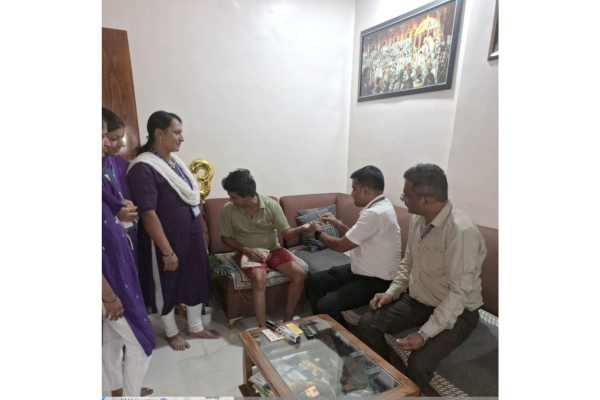
The Navi Mumbai Municipal Corporation (NMMC) has completed its two-day Lymphatic Filariasis Remapping Night Blood Survey, collecting 3,600 blood samples against the target set by the Maharashtra government under the National Filaria Control Programme. Conducted on 28 and 29 October 2026 from 10 pm across the municipal corporation's jurisdiction, the exercise aimed to assess the prevalence of lymphatic filariasis through night-time blood sample collection.
The survey was coordinated by the NMMC health department, with participation from municipal medical officers, health assistants, multipurpose health workers from the civic body and the state government, ASHA workers, police personnel, municipal security staff and mosquito-larvae control and spraying teams. The coordinated exercise enabled the civic administration to achieve the prescribed collection target within the two-day period.
Following collection, the blood samples were stained by the NMMC and forwarded to the state government for examination. Further measures will be undertaken in accordance with the test findings and instructions issued by the government.
Lymphatic filariasis, commonly known as elephantiasis, is a mosquito-borne infectious disease caused by parasitic worms. It primarily affects the lymphatic system, which plays an important role in maintaining the body's fluid balance and immune function. The infection may remain asymptomatic for an extended period, making early identification through surveillance important.
According to the civic body's information, the parasites develop within the lymphatic system after entering the human body. Microscopic parasites may become detectable in the blood after approximately six months to one year. However, visible symptoms can take several years to develop, sometimes appearing only after 5 to 15 years or longer.
The disease spreads through the bite of an infected mosquito and can cause abnormal swelling in the legs, arms, breasts or genital region. Severe swelling of the limbs is commonly associated with elephantiasis. As the condition progresses, affected body parts can become significantly enlarged and heavier, potentially resulting in long-term physical disability. In advanced cases, patients may require assistance with routine daily activities.
To reduce the risk of infection, the NMMC has advised residents to prevent wastewater accumulation around their homes, eliminate mosquito-breeding sites and maintain cleanliness in residential premises and surrounding areas. Residents have also been advised to use mosquito nets while sleeping at night.
The civic administration has urged people experiencing abnormal swelling in the legs, arms or other body parts to seek medical examination without delay. Other symptoms requiring attention include swelling of the scrotum in men, known as hydrocele, fever, pain and inflammation of the lymphatic vessels.
Navi Mumbai Mayor Sujata Patil and Municipal Commissioner Dr Kailas Shinde have appealed to residents experiencing these symptoms to approach their nearest NMMC Urban Primary Health Centre or municipal hospital for examination and medical assistance.

16th Nov, 2026

15th Nov, 2026

15th Nov, 2026


13th Nov, 2026

13th Nov, 2026



Advertisement








 Facebook
 Whatsapp

