Advertisement






The Gulf conflict has disrupted global supply chains, pushed...
REITs have changed the way commercial real estate is owned a...
What really powers the cloud? Behind every Google search, A...
What really powers the cloud? Behind every Google search, A...
Luxury real estate is one of the most talked-about segments ...
Tamil Nadu Chief Minister C Joseph Vijay has urged Prime Minister Narendra Modi to expedite approval for Chennai Metro Rail Phase III, including extensions connecting Airport–Kilambakkam, Poonamallee–Sunguvarchatram and Koyambedu–Pattabiram. The proposed network spans around 65 km. The chief minister also sought approval for an interstate metro link between Hosur and Bommasandra, revival of metro projects in Coimbatore and Madurai, and high-speed rail corridors connecting Chennai with Kanyakumari and Coimbatore. He also raised demands concerning highway expansion, river interlinking and pending central government funds.
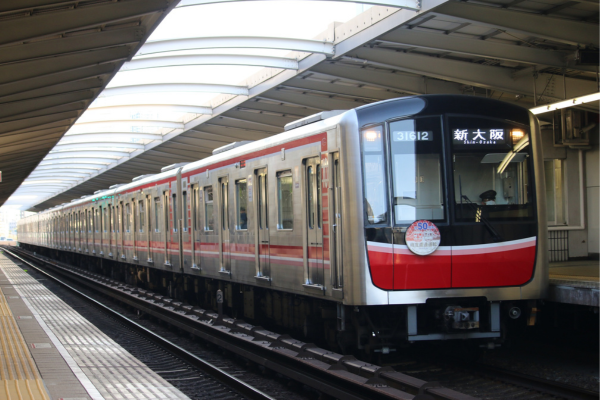
Tamil Nadu Chief Minister C Joseph Vijay has urged Prime Minister Narendra Modi to expedite approval for Phase III of Chennai Metro Rail, seeking better connectivity across the Chennai metropolitan region. He also requested early clearance for additional routes and wider transport infrastructure projects across the state.
The chief minister made the requests at an event attended by Modi, who inaugurated projects and laid foundation stones for works worth INR 13,000 crore.
Vijay sought approval for extending metro connectivity between Chennai Airport and Kilambakkam, as well as between Poonamallee and Sunguvarchatram. He also pressed for the inclusion and early clearance of the Koyambedu–Pattabiram stretch in the approximately 65-km Phase III network to improve coverage across the metropolitan area.
Referring to the progress of the existing network, Vijay noted that Corridor 4 of Phase II, covering 14.64 km between Poonamallee Bypass and Vadapalani, had been opened, while another 104 km of metro infrastructure was under construction. He also sought early approval for an interstate metro connection between Hosur in Tamil Nadu and Bommasandra in Karnataka, which he said would benefit both states.
The chief minister called on the Centre to reconsider metro rail projects proposed for Coimbatore and Madurai, citing the future development needs of western and southern Tamil Nadu.
Vijay also referred to the two high-speed rail corridors connecting Bengaluru, Hyderabad and Chennai announced in the Union Budget 2026. He requested central government approval for additional high-speed rail links between Chennai and Kanyakumari and between Chennai and Coimbatore, stating that these connections could support economic activity and tourism.
Beyond metro and rail connectivity, the chief minister sought priority approval for several highway projects. These include six-laning the Chengalpattu–Tiruchirappalli section of GST Road (NH-32), the Tiruchirappalli–Panchapur–Jayapuram–Karur stretch of NH-81, and the Karur–Coimbatore corridor. He also requested an elevated highway between Madhavaram and Sholavaram on NH-87.
Vijay raised the issue of water-sharing arrangements between states and stressed the need for river interlinking. He urged the Union government to declare the Godavari–Cauvery link project a national project on priority, with the aim of improving water availability across southern India.
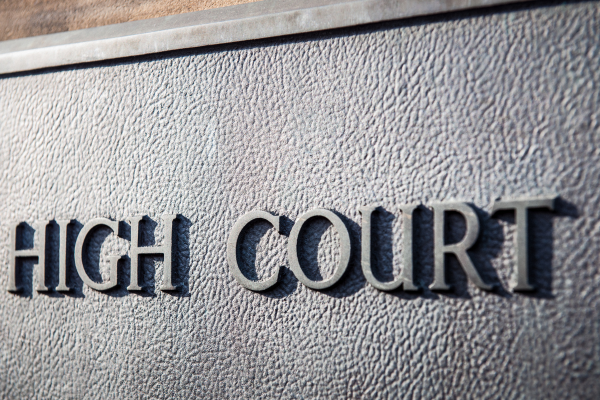
The chief minister also sought early clearance for a proposal submitted for presidential assent following a resolution passed by the Tamil Nadu Legislative Assembly. The resolution calls for Tamil to be the principal language of proceedings in the Madras High Court.
In addition, Vijay requested the immediate and unconditional release of INR 5,110 crore in pending central government funds due to Tamil Nadu under the Samagra Shiksha Abhiyan (SSA).
He said his government, which had completed its first 100 days in office, was committed to transparent administration and social justice. Vijay reiterated the principle that strong states contribute to a strong India and said Tamil Nadu aimed to become a USD 1.5 trillion economy by 2036. He identified innovation, investment and infrastructure development as priorities and stressed that economic progress should extend to districts beyond Chennai.
The proposed transport links would connect Chennai's existing urban network with growing suburban areas and improve access to employment centres, transport terminals and other economic hubs. However, the expansion will depend on central government approvals, funding arrangements and coordination between the Centre and the state. The proposed interstate metro link and high-speed rail corridors would also require cooperation with neighbouring states. For Tamil Nadu, the challenge will be to align these infrastructure projects with urban expansion, regional development and public transport demand while ensuring that improvements are not limited to Chennai alone.
Source PTI


15th Nov, 2026



Advertisement








 Facebook
 Whatsapp

