Advertisement






The Gulf conflict has disrupted global supply chains, pushed...
REITs have changed the way commercial real estate is owned a...
What really powers the cloud? Behind every Google search, A...
What really powers the cloud? Behind every Google search, A...
Luxury real estate is one of the most talked-about segments ...
The Navi Mumbai Municipal Corporation (NMMC) has tightened air pollution control requirements for construction sites ahead of the winter season, warning developers of work stoppages, site sealing and heavy fines for violations. Municipal Commissioner Dr Kailas Shinde issued the directions during a meeting with builders, architects, surveyors and other stakeholders, citing the need to protect public health and comply with High Court and High-Level Committee (HPC) directives. The measures include mandatory 30-foot-high barricades, full-building green-net coverage, tyre-washing facilities, regular water spraying and on-site air quality sensors with air quality index (AQI) display boards. The use of drinking water for construction and dust suppression has been prohibited, with non-potable or treated water required instead. The civic body has also linked compliance documentation to the issuance of Construction Commencement Certificates and initiated joint inspections to identify violations.
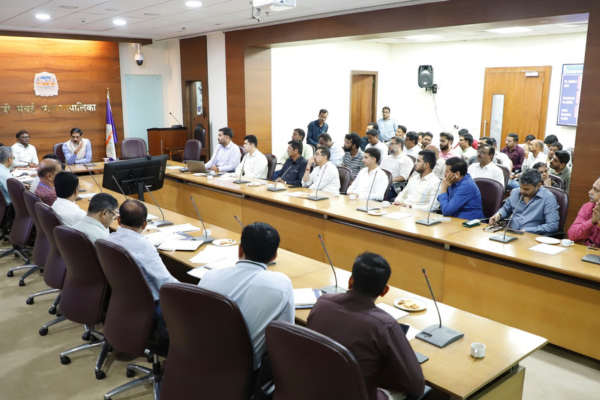
The Navi Mumbai Municipal Corporation (NMMC) has directed construction developers to implement stringent air pollution control measures ahead of winter, warning that sites violating the prescribed requirements could face immediate work stoppages, sealing and heavy fines. The directions were issued by Municipal Commissioner Dr Kailas Shinde during a meeting with builders, architects, surveyors, contractors and other stakeholders in Navi Mumbai, in line with instructions from the High Court and the High-Level Committee (HPC).
The meeting was attended by Somnath Kekan, sixth director of urban planning, Urban Planner Yuvraj Chavan, Executive Engineer Rajesh Pawar, other officers and engineers from the town planning department, and representatives of the construction industry.
Shinde said deteriorating air quality was not merely a regulatory concern but also a public health issue. He highlighted the particular vulnerability of children, senior citizens and people with respiratory illnesses during winter. He stressed that construction professionals must fulfil their environmental and social responsibilities by adhering to pollution control requirements.
Under the new directions, the use of drinking water for construction activities and dust suppression has been prohibited. Developers must use non-potable or treated water for these purposes. The commissioner has directed that work be stopped immediately and the site sealed if this requirement is violated.
Construction sites must also install barricades measuring 30 feet in height and cover buildings completely, from top to bottom, with green netting. Developers are required to provide tyre-washing facilities at site exits to prevent vehicles from carrying dust and debris onto public roads. Regular water spraying must be undertaken to control dust emissions.
The civic body has additionally made on-site air quality monitoring mandatory. Construction sites must install air quality sensors and display boards showing the prevailing air quality index (AQI), allowing residents and other members of the public to view the readings.
The measures also introduce a compliance requirement into the Construction Commencement Certificate (CC) process. Under the directions, certificates will not be issued unless the necessary pollution control measures have been documented through the Building Plan Management System (BPMS) and undertakings have been submitted by the developer and architect.
Kekan said October 10, 2026, had been set as the deadline for implementing the requirements. The town planning department and officials from the municipal corporation's departmental offices are undertaking joint inspections of construction sites. Projects found to have violations or deficiencies may face immediate suspension of work, sealing and substantial financial penalties.
The civic body also plans to conduct an awareness campaign in coordination with CREDAI and other builders' associations to communicate the requirements to developers and architects.
Through these measures, NMMC aims to strengthen compliance at construction sites and prevent a deterioration in air quality during the winter months. The corporation has called on developers, architects and other stakeholders to cooperate with the enforcement drive to protect the environment and public health in Navi Mumbai.

16th Nov, 2026

15th Nov, 2026

15th Nov, 2026

13th Nov, 2026
13th Nov, 2026



Advertisement








 Facebook
 Whatsapp

