Advertisement






The Gulf conflict has disrupted global supply chains, pushed...
REITs have changed the way commercial real estate is owned a...
What really powers the cloud? Behind every Google search, A...
What really powers the cloud? Behind every Google search, A...
Luxury real estate is one of the most talked-about segments ...
Navi Mumbai Municipal Corporation (NMMC) collected 71.990 tonnes of nirmalya, or floral and organic offerings, during the six immersion days of the 2026 Ganesh festival. The material was collected separately from 22 natural and 156 artificial immersion sites and is being transported to the civic body’s Turbhe facility for scientific composting. The resulting compost will be used in municipal gardens. The collection drive formed part of NMMC’s appeal for an environmentally friendly and plastic-free Ganesh festival. Residents also participated in the use of separate containers for wet and dry nirmalya, while many opted for Shadu clay idols and artificial immersion ponds. The civic body arranged dedicated vehicles and sanitation teams to manage collection during the festival, with the initiative covering flower garlands, flowers, leaves, fruit waste and other recyclable organic offerings.
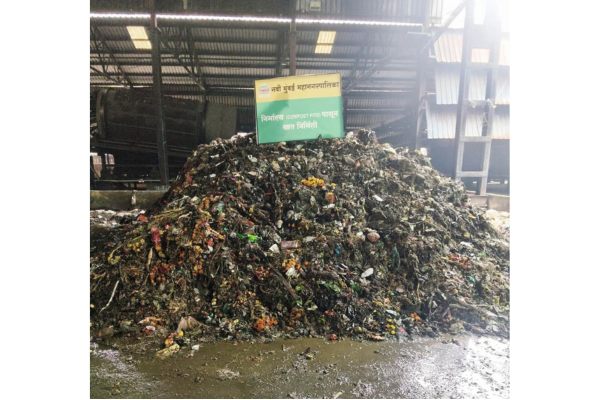
Navi Mumbai Municipal Corporation collected 71.990 tonnes of nirmalya during the 2026 Ganesh festival and is processing the organic material into compost for use in municipal gardens. The waste was gathered over six immersion days from 22 natural and 156 artificial immersion sites across Navi Mumbai as part of the civic body’s environmental management measures.
The Ganesh festival began on 14 September, with NMMC encouraging residents to observe an environmentally friendly and plastic-free celebration. Residents installing Shadu clay idols were recognised with ‘Environment and Cleanliness Friend’ certificates, while a large number of devotees opted for artificial immersion ponds for idols measuring less than six feet.
Separate containers were provided at immersion locations for wet and dry nirmalya. Wet material included flower garlands, flowers, durva, tulsi, shami leaves and fruit peels and pieces that could be processed further. Dry nirmalya included necklaces and decorative material brought with the idols.
The civic body arranged dedicated vehicles to collect the material from immersion sites. The collection operation was conducted under the supervision of Additional Municipal Commissioner Sunil Pawar and through the Solid Waste Management Department, headed by Deputy Commissioner Dr Ajay Gadde. Chief Sanitation Officers Rajusingh Chavan and Naresh Andher, along with sanitation officers, inspectors and sanitation workers, were involved in the operation.
The highest quantity of nirmalya was collected on the seventh-day immersion, including the immersion associated with Gauri celebrations, when 25.990 tonnes were recorded. The first-and-a-half-day immersion generated 14.510 tonnes, while 10.950 tonnes were collected during the 10th-day immersion on Anant Chaturdashi.
The civic body also recorded 12.555 tonnes on the fifth day, 7.155 tonnes on the seventh day and 870 kg on the 10th day as part of its collection data. Across the festival period, the total collection reached 71.990 tonnes.
The collected material was transported in dedicated vehicles to NMMC’s Turbhe project facility, where it is undergoing scientific composting. The compost produced through the process will subsequently be used to support the development and maintenance of gardens within the municipal area.
NMMC said residents responded positively to the separate collection of wet and dry nirmalya. The civic body also highlighted participation in the use of Shadu clay idols, artificial immersion ponds and source segregation of festival waste as part of its environmental measures.
Mayor Sujata Patil and Municipal Commissioner Dr Kailas Shinde thanked residents for their participation in the environmental initiatives undertaken during the festival.
16th Nov, 2026

15th Nov, 2026

15th Nov, 2026

13th Nov, 2026
13th Nov, 2026


Advertisement








 Facebook
 Whatsapp

