Advertisement






The Gulf conflict has disrupted global supply chains, pushed...
REITs have changed the way commercial real estate is owned a...
What really powers the cloud? Behind every Google search, A...
What really powers the cloud? Behind every Google search, A...
Luxury real estate is one of the most talked-about segments ...
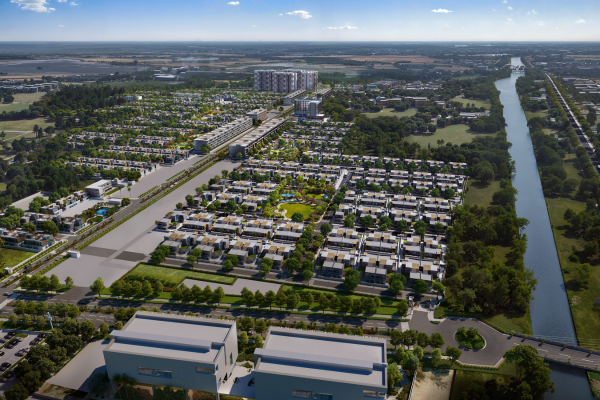
Noida’s real estate market is evolving beyond a focus on residential price appreciation towards a broader ecosystem of integrated assets, including offices, retail, hospitality, leisure and mixed-use developments. The shift is being supported by employment growth, infrastructure expansion, improving connectivity and rising land costs, which are influencing how developers plan and utilise sites. Emerging corridors such as Greater Noida West are also facing the need for supporting social and commercial infrastructure to develop into complete urban destinations. Investors and end-users are increasingly assessing factors such as connectivity, employment centres, amenities, developer delivery records and wider micro-market development alongside historical price growth. This is encouraging developers to move beyond standalone projects towards developments designed around how people live, work and access services.

For most of the last two decades, Noida's property story was told in one currency: price per square foot. Buyers asked how much a locality had appreciated, and developers pointed to the last launch's sell-through. That framing made sense when the market was mostly apartments and plots. It now describes only part of what is happening.
Noida is becoming a more layered real estate market. Residential development continues, but it now sits alongside offices, retail, hospitality, leisure and mixed-use projects.
From a housing market to a complete real estate ecosystem
Noida was planned as an industrial and residential township. The mix is bigger now.
Commercial buildings, retail destinations, serviced and business hospitality formats, entertainment and food-and-beverage formats are part of the city's built form. A city with a range of assets can keep more activity within its boundaries, improving daily convenience while making each asset less exposed to one demand cycle.
Developers are putting residential, retail, hospitality, leisure and commercial space in the same development more frequently for three practical reasons.
The first is consumer expectation. Homebuyers and tenants want work, shopping and leisure nearby; time spent commuting or running errands counts as cost.
The second is land economics: where land is expensive, a single-use project has fewer ways of justifying its cost, whereas combining uses spreads that cost across several income and demand streams.
The third is footfall and utilisation: uses that peak at different times reinforce each other — offices on weekdays, retail and leisure evenings and weekends, and residents throughout.
Employment is what supports demand for the rest of the built environment. Office, IT/ITeS and other commercial developments bring in workers, and workers create demand for housing, retail, food, healthcare, education and services nearby.
Housing near established employment centres tends to attract end-users who plan to stay, rather than buyers looking only for a short-term exit. Commercial development is therefore less a competitor to residential than a supporting layer beneath it.
Infrastructure, connectivity and the rise of new corridors
Infrastructure has always shaped where Noida grows. Expressways, metro lines, arterial roads and utilities determine which areas become practical places to live and work.
Better connectivity can open up a new development corridor and strengthen an existing micro-market by widening its catchment. A road or metro station adds most value when land use around it has been planned to take advantage of it.
Corridors where housing, workplaces and services are planned together tend to mature more coherently than those that grow parcel by parcel.
Newer development zones, including Greater Noida West, face a particular question. The challenge now is to become complete urban destinations.
Residential communities work better when daily needs are met nearby, which means schools, healthcare, retail, workplaces, recreation and reliable transport links. Areas that add these layers can grow into integrated neighbourhoods.
The pace at which social infrastructure and commercial activity arrive will influence how these corridors are perceived, making coordination between developers, planning authorities and infrastructure agencies increasingly important.
Scarcity, investment and the changing definition of value
In established Noida locations, large, well-connected land parcels are getting harder to find, and land costs have risen accordingly. Developers have to decide how densely to build, which uses justify the land price, and how much open space, amenity and infrastructure a site can support while still working commercially.
The way investors look at real estate is also changing. Historical price growth remains a reference point, but it is backward-looking.
Investors and end-users increasingly look at connectivity, employment and commercial activity, retail, healthcare and education infrastructure, developer delivery record, and how the wider micro-market will develop.
Several priorities follow for developers.
The first is to plan for the ecosystem rather than just the plot.
The second is to design for end-users. Assets built for people who will live, work or run businesses in them are more sustainable than those built mainly for resale.
Delivery matters too. Confidence in a market is built by completed, well-run projects as much as by new launches.
Beyond standalone projects
The evolution of Noida's market is pushing developers to think beyond standalone residential projects towards integrated, experience-led and multi-use developments.
Value comes from the whole ecosystem around an asset — how it links with work, services and leisure, and how well it serves people who use it every day.
That is a harder way to build, requiring longer planning horizons, closer alignment with infrastructure and a willingness to design for how people actually live and work.
It is also likely to shape how Noida's real estate will be judged in the years ahead: by the quality of places created, not just by how much prices have risen.
Disclaimer:
The views, opinions, and information expressed in this article are solely those of the author and do not necessarily reflect the views of Prop News Time. The content has not been independently verified or endorsed by Prop News Time. Readers are advised to exercise their own discretion and seek professional advice if required.
17th Nov, 2026

16th Nov, 2026

16th Nov, 2026

16th Nov, 2026



16th Nov, 2026

15th Nov, 2026
Advertisement








 Facebook
 Whatsapp

