Advertisement






The Gulf conflict has disrupted global supply chains, pushed...
REITs have changed the way commercial real estate is owned a...
What really powers the cloud? Behind every Google search, A...
What really powers the cloud? Behind every Google search, A...
Luxury real estate is one of the most talked-about segments ...
Amaravati is beginning to showcase a road design approach that gives greater priority to pedestrians and cyclists alongside conventional vehicular movement. A model stretch along the N-9 road corridor features dedicated footpaths and cycling tracks separated from the carriageway by landscaped green buffers. The Capital Region Development Authority is testing different layouts, surface treatments and utility arrangements before extending the approach across the capital. The wider master plan envisages dedicated infrastructure for non-motorised transport on roads, supported by safe crossings, accessible walkways, cycle facilities and integrated public transport.
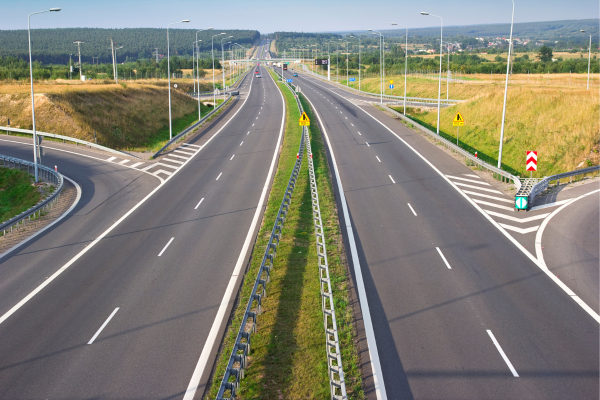
A model stretch of footpath and cycling infrastructure along Amaravati's N-9 road corridor is offering an early indication of how the planned Andhra Pradesh capital is seeking to move away from vehicle-dominated road design.
The Capital Region Development Authority has incorporated dedicated facilities for pedestrians and cyclists into the city's road planning framework. The approach is intended to create a more balanced street network where walking and cycling infrastructure is planned alongside carriageways rather than being added after roads are completed.
Two pilot street designs are currently being examined. Both provide a three-metre-wide pedestrian walkway and a three-metre-wide cycling track running parallel to the road, with a three-metre green belt separating the two. One configuration places the pedestrian walkway at a higher level than the cycling track, while another keeps the two facilities at the same level.
The authority is also testing different materials and visual treatments for the cycle tracks. Although the tracks are being constructed using bituminous surfaces, officials are examining specialised pigmentation that could give cycling routes a distinct colour and make them easier for users to identify. The availability of suitable additives and materials will be considered before a final treatment is selected.
Pedestrian pathways are also being studied for their surface characteristics, particularly their ability to provide adequate grip during rainfall. Tile-grid patterns and other paving solutions are being evaluated to reduce the risk of slipping while maintaining an accessible walking surface.
The final arrangement will not necessarily be identical across every road. Depending on the available right of way and the surrounding development, the position of the pedestrian path, cycle track and green buffer may change. This flexible approach is intended to allow the street design to respond to different road widths and land-use conditions.
The integration of underground utilities is another important element of the planning approach. Cycling tracks are proposed above stormwater drains in certain locations, while pedestrian walkways can be positioned over utility ducts carrying information and communication technology infrastructure and sewer networks. Such coordination could help reduce the amount of road space required for separate utility corridors.
The broader Amaravati planning framework places non-motorised transport at the centre of the city's street design. The urban design guidelines provide for pedestrian walkways, dedicated cycle tracks, green buffers and multi-functional zones, while also emphasising universal accessibility and unobstructed movement.
The framework envisages cycle tracks being separated from vehicle lanes through differences in level, colour and texture. It also provides for secure cycle parking at transit stations and public, commercial and institutional locations, along with facilities for shared bicycles and electric bicycles.
Pedestrian safety is another major component. The planning framework calls for safe street crossings at regular intervals, traffic-calming measures and accessible infrastructure such as ramps and tactile paving. Lower speed limits are also envisaged on collector and local streets to create safer conditions for non-motorised users.
The model stretch therefore represents more than a standalone cycling project. It is effectively a test bed for a broader street-design philosophy that Amaravati intends to apply across its planned road network. If the pilot layouts and materials prove effective, the approach could provide a template for integrating walking, cycling, greenery and utilities into the city's expanding transport infrastructure.

15th Nov, 2026
14th Nov, 2026
13th Nov, 2026


Advertisement








 Facebook
 Whatsapp

