Advertisement






The Uttar Pradesh government has decided to offer a 1% recovery rebate on non-hybrid (coarse) paddy, matching the relaxation already available for hybrid paddy. The initiative is expected to benefit around 15 lakh farmers and will lead to an additional financial burden of nearly INR 166 crore on the state's budget. Officials said the decision will help farmers secure better market prices, improve employment opportunities in the rice milling sector, and provide added stability to the state's paddy production and procurement system.Read more

Declining steel prices are causing serious issues for smaller producers at a time when India is planning large-scale capacity additions. According to Steel Secretary Sandeep Poundrik, around 150 small steel firms have halted production due to weak prices and margin pressure. The government has introduced provisional safeguard duties on steel imports, and implemented Quality Control Orders (QCOs) to protect domestic players while supporting long-term goals around self-reliance, green steel and specialty steel. The industry remains central to India's larger infrastructure and economic ambitions.Read more

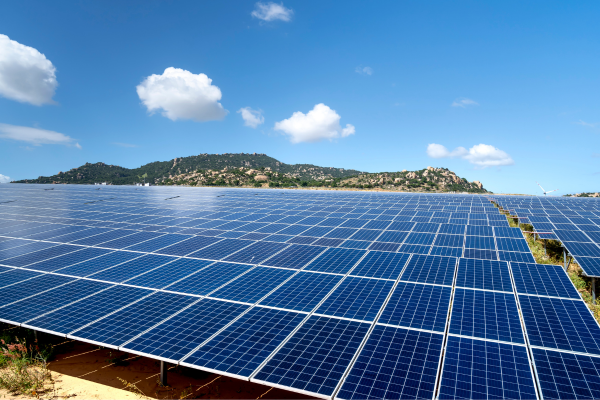
Adani Solar has crossed shipments of over 15,000 MW of solar modules across India and international markets. Out of this, 10,000 MW were deployed within the country and 5,000 MW exported overseas, with 70 percent made using India-manufactured solar cells. The company plans to increase its production capacity from 4,000 MW to 10,000 MW by the next financial year. This expansion supports India's renewable energy goals under the Make in India initiative and the Atmanirbhar Bharat vision.Read more
Prime Minister Shri Narendra Modi urged international investors to back India's shipping and ports sector, highlighting full foreign-direct-investment access and the government's "Make in India, Make for the World" framework. He pointed to the development of mega-ports, a commitment to quadruple capacity at 12 major ports, and noted that over 150 new maritime initiatives have nearly doubled major-port capacity and shortened turnaround times. He also welcomed a nearly INR 8,000 crore investment from the Port of Singapore into India's port infrastructure.Read more
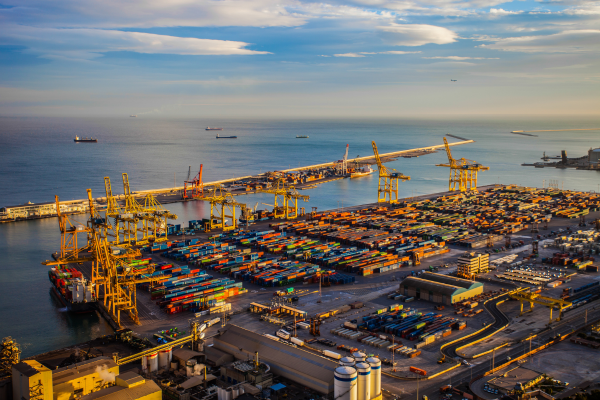
Labour and Employment Minister Mansukh Mandaviya has emphasized the importance of the maritime sector in driving India's journey toward becoming a developed nation by 2047. Speaking at India Maritime Week 2025, he highlighted that the sector has grown steadily over the last 11 years and continues to generate large-scale employment opportunities. He also referred to India's rich maritime history, noting that the country was a major sea power before colonial rule. Currently, around 95% of India's trade by volume and 70% by value take place through sea routes.Read more

Advertisement


In a recent collaboration aimed at strengthening India's skill ecosystem, The Art of Living's Sri Sri Rural Development Programme Trust (AOL-SSRDP) signed an MoU with Svenska Institute of Technology to train youth in heavy vehicle mechanics and operations. The initiative focuses on equipping young individuals, particularly from rural and semi-urban areas, with technical expertise and hands-on experience. With the use of advanced simulators and real machinery, the programme seeks to address the skilled manpower gap in India's growing infrastructure and logistics sectors.Read more

Trinasolar is introducing its new Elementa 2 Pro and Elementa 3 battery energy storage systems at the Energy Storage Summit India 2025 in Greater Noida. With India already surpassing its COP26 renewable capacity target ahead of schedule, these systems aim to strengthen grid reliability, improve renewable integration, and address growing power demand from sectors such as utilities, healthcare, and data centres. Having shipped over 12 GWh of storage systems globally and targeting 8-10 GWh in annual shipments, Trinasolar continues to expand its energy technology portfolio.Read more
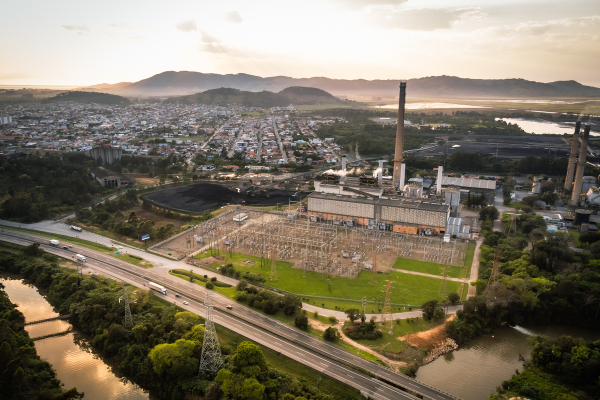
A new study by global energy think tank Ember has found that India can meet its projected electricity demand by 2032 without building additional coal power plants beyond those currently under construction. The report highlights that continued investment in coal would be uneconomical as renewable energy and battery storage are becoming cheaper and more dependable. Ember's analysis indicates that a significant portion of the country's existing and upcoming coal capacity will remain underutilized, increasing costs for distribution companies and consumers.Read more
India has emerged as the world's fourth-largest nation in renewable energy capacity, reaching 257 GW more than triple its capacity in 2014. Union Minister for New and Renewable Energy Pralhad Joshi highlighted the country's rapid solar expansion from 2.8 GW to 128 GW and the growth in solar module manufacturing to 110 GW. He also said India achieved its non-fossil capacity target five years ahead of schedule, making renewable tariffs among the lowest globally. The government now plans a USD 25 million contribution to Africa's solar development through the International Solar Alliance.Read more

Bengaluru-based Sattva Group has collaborated with Chennai-based Innovalus to launch 'GCCBase', a comprehensive platform designed to assist multinational corporations in establishing and scaling Global Capability Centres (GCCs) across India. The initiative aims to simplify the process of setting up GCCs by providing an integrated ecosystem that addresses real estate, compliance, talent acquisition, and operational challenges. This partnership reflects the growing demand for structured solutions to support India's expanding GCC sector, which employs millions and generates significant economic value.Read more

Advertisement