Advertisement






A new study by global energy think tank Ember has found that India can meet its projected electricity demand by 2032 without building additional coal power plants beyond those currently under construction. The report highlights that continued investment in coal would be uneconomical as renewable energy and battery storage are becoming cheaper and more dependable. Ember's analysis indicates that a significant portion of the country's existing and upcoming coal capacity will remain underutilized, increasing costs for distribution companies and consumers.
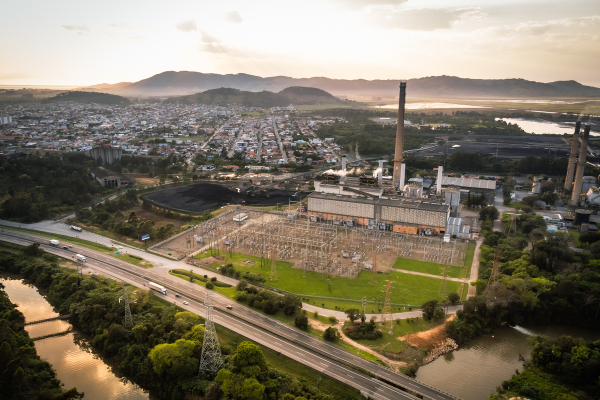
A recent study by global energy research group Ember has stated that India will not need any new coal power projects beyond those already being built to meet its electricity requirements by 2032. The report warned that adding new coal capacity would be economically unviable and could increase electricity tariffs for consumers, as renewable energy and battery storage are becoming more affordable and reliable. Advertisement


The analysis, titled Coal's Diminishing Role in India's Electricity Transition, suggests that India can fully meet its power demand for 2032 through solar, wind, and energy storage targets already laid out in the National Electricity Plan (NEP) 2032. Ember's modelling indicated that if these targets are achieved, about 10% of the additional coal capacity will remain entirely unused, while nearly a quarter of the total coal fleet will operate far below capacity.
According to Neshwin Rodrigues, Senior Energy Analyst for Asia at Ember, India's power system is moving into a new phase where renewable energy is gaining a larger share of the generation mix. He observed that as battery storage becomes cheaper, coal's role will continue to decline, making further coal construction neither essential nor cost-effective for the country.
The report projected that the average utilisation rate of India's coal-based power plants, or the Plant Load Factor (PLF), will decline from 69% in 2024-25 to about 55% by 2031-32. This reduction means many plants may either operate intermittently or remain idle for long periods as solar and wind power meet daytime energy demand.
Coal-based electricity is also expected to become more expensive due to lower usage. The study estimated that as fixed costs are distributed over fewer operating hours, the effective tariff of coal power could rise by nearly 25% by 2031-32. Ember's data suggested that coal-based electricity, which currently costs around INR 6 per unit, could increase to about INR 7.25 per unit for distribution companies once reduced utilisation and operating costs are factored in.
Recent bids for new coal projects have already shown signs of this trend, with tariffs above INR 6 per unit in Bihar and around INR 5.85 per unit in Madhya Pradesh, even in regions close to coal sources. Much of this increase stems from high fixed costs that must still be paid even when plants remain idle.
In contrast, firm and dispatchable renewable energy (FDRE)-which combines renewables like solar or wind with battery storage -- is becoming a cheaper and more reliable option. The report noted that FDRE tariffs now range between INR 4.3 and INR 5.8 per unit, while solar-plus-storage projects are being priced as low as INR 2.9 to INR 3.6 per unit.
Ember's Chief Analyst, Dave Jones, said that India's growing focus on integrating longer-duration battery systems will eventually enable round-the-clock clean power. He added that India could replicate its success in solar manufacturing to become self-reliant in battery production, further strengthening its clean energy sector.
The report also pointed out that battery technology has improved rapidly, with newer sodium-ion batteries offering longer life spans and reducing dependency on critical minerals. Co-author Duttatreya Das remarked that India should avoid repeating past mistakes of overbuilding coal capacity in a changing energy market, stressing that renewables paired with storage now represent a more sustainable and financially sound investment path.
Ember recommended that India focus on scaling up energy storage deployment, upgrading existing thermal power stations for greater flexibility, and improving power dispatch and reserve mechanisms to integrate renewable energy at the lowest possible cost. The study concluded that the next phase of India's power strategy should emphasize reliability and flexibility through renewables and storage, instead of locking the country into costly, underused coal assets.
Source PTI

5th Jun, 2025

25th May, 2023

11th May, 2023

27th Apr, 2023
Advertisement





 Facebook
 Whatsapp