Advertisement






The Gulf conflict has disrupted global supply chains, pushed...
REITs have changed the way commercial real estate is owned a...
What really powers the cloud? Behind every Google search, A...
What really powers the cloud? Behind every Google search, A...
Luxury real estate is one of the most talked-about segments ...
Mumbai-based Antlia Engineering Works, an ISO 9001:2015-certified manufacturer of industrial pumps, has released a technical guide addressing seven common misconceptions about Air Operated Double Diaphragm (AODD) pumps. Titled ‘AODD Pump: 7 Myths vs Facts Every Industrial Manufacturer Should Know’, the guide targets plant engineers, procurement professionals and industrial buyers involved in equipment selection. It covers material compatibility, diaphragm selection, compressed air consumption, applications and the comparison between domestic and imported equipment. The publication also explains the suitability of AODD pumps against alternatives such as centrifugal and barrel pumps. Through the guide, the company aims to help industrial users assess equipment requirements based on operating conditions, chemical compatibility, maintenance needs and lifecycle costs rather than relying solely on purchase price or product specifications.
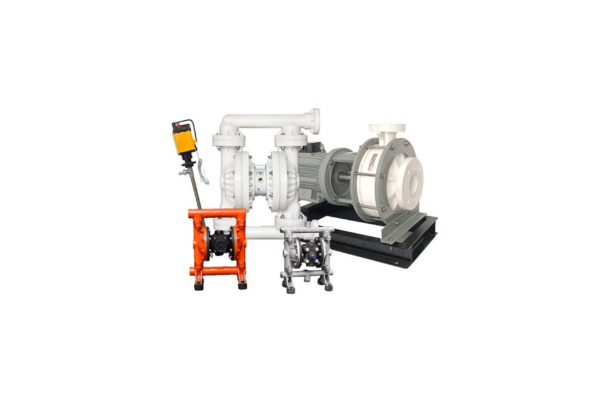
Mumbai-based Antlia Engineering Works has released a technical guide addressing seven common misconceptions about Air Operated Double Diaphragm (AODD) pumps, targeting industrial buyers, plant engineers and procurement professionals across sectors such as chemicals, pharmaceuticals, paints and coatings. The ISO 9001:2015-certified pump manufacturer announced the publication in November 2026, with the guide intended to help users evaluate equipment specifications, material compatibility and operating costs before selecting pumps for industrial fluid-handling applications.
Titled ‘AODD Pump: 7 Myths vs Facts Every Industrial Manufacturer Should Know’, the publication examines the differences between diaphragm pump technologies and explains how AODD pumps use compressed air to operate two diaphragms through an air distribution system. Unlike mechanically or hydraulically actuated diaphragm pumps, these systems use pneumatic operation and are suitable for applications requiring self-priming, variable flow and dry-running tolerance under specified operating conditions.
The guide highlights that pump selection should account for process flow, discharge pressure, fluid viscosity, operating temperature, solids content and chemical compatibility rather than relying only on equipment size or purchase price. It also examines the suitability of different materials of construction, including polypropylene (PP), polyvinylidene fluoride (PVDF), stainless steel SS-316 and aluminium. The company emphasises that material selection must consider the chemical being handled, its concentration, temperature and operating pressure, as no single material is suitable for every application.
Another area covered is the operating cost of pneumatic pumps. Although AODD pumps do not require an electric motor at the pumping point, they depend on compressed air generated by a compressor. Consequently, overall energy expenditure is influenced by compressor efficiency, air consumption, operating pressure, system leakage and operating hours.
The publication also addresses diaphragm selection, noting that polytetrafluoroethylene (PTFE) is not necessarily the most suitable option for every application. While PTFE offers broad chemical resistance, diaphragm performance and service life also depend on flexibility, temperature, pressure cycles and mechanical fatigue. Alternatives such as Santoprene and Neoprene may be more appropriate for certain operating conditions.
The guide identifies applications across pharmaceutical manufacturing, printing and packaging, wastewater treatment, mining, mineral processing, adhesives, specialty chemicals, petroleum-related operations and food and beverage processing, subject to suitable equipment configurations.
It also compares domestic and imported pump manufacturers, arguing that equipment quality should be assessed through design, material specifications, testing standards, quality control, spare parts availability, technical support, delivery timelines and total cost of ownership rather than country of origin. The company has highlighted the growing capabilities of Indian manufacturers in supplying application-specific fluid-handling equipment to domestic industries.
Meet Jain, Founder of Antlia Engineering Works, said buyers sometimes selected pumps primarily on price or size or assumed that a single material or pump configuration would work across different fluids. He noted that incorrect specifications could result in corrosion, leakage and unplanned downtime, making application-specific assessment important.
The guide further explains that AODD pumps are not suitable for every fluid-transfer requirement. Centrifugal pumps may be preferable for continuous transfer of compatible, relatively low-viscosity fluids, while barrel pumps are designed for transferring liquids directly from drums. AODD pumps are more appropriate where pneumatic operation, self-priming, variable flow or the handling of certain viscous and solids-containing fluids is required.
Alongside the technical explanations, the publication provides a buyer's checklist covering required flow and discharge pressure, compatibility of wetted materials, diaphragm selection, compressed air consumption relative to compressor capacity, spare parts availability, servicing requirements and manufacturer support.

20th Oct, 2026

3rd Oct, 2026

28th Sep, 2026

24th Sep, 2026




4th Aug, 2026


Advertisement








 Facebook
 Whatsapp

