SBI Term Loan: RLLR: 8.15 | 7.25% - 8.55%
Canara Bank: RLLR: 8 | 7.15% - 9.85%
ICICI Bank: RLLR: -- | 8.5% - 9.65%
Punjab & Sind Bank: RLLR: 7.3 | 7.35% - 10.75%
Bank of Baroda: RLLR: 7.9 | 7.2% - 8.95%
Federal Bank: RLLR: -- | 7.35% - 9.6%
IndusInd Bank: RLLR: -- | 7.6% - 10%
Bank of Maharashtra: RLLR: 8.05 | 7% - 9.15%
Yes Bank: RLLR: -- | 7.4% - 10.54%
Karur Vysya Bank: RLLR: 8.8 | 8.5% - 10.65%
HDFC Bank: RLLR: -- | 7.75% - 13.2%
Axis Bank: RLLR: -- | 8% - 9.1%
IDBI Bank: RLLR: -- | 7.4% - 10%

Mumbai’s first ropeway proposed from Mulund to Taramati Mata Temple, faces forest clearance hurdles

#Infrastructure News#Infrastructure#India#Maharashtra#Mumbai City
Synopsis

Maharashtra’s Public Works Department (PWD) has invited bids to appoint a consultant for the proposed ropeway connecting the foothills of Mulund to Taramati Mata Temple inside Sanjay Gandhi National Park (SGNP). The project, if approved, could become Mumbai’s first ropeway and include a hilltop observatory offering views of the national park and Tulsi Lake. The consultant will assess the alignment, station locations, land requirements, engineering feasibility and environmental impact. The proposal remains at the planning stage and will require forest and environmental clearances before construction can proceed.
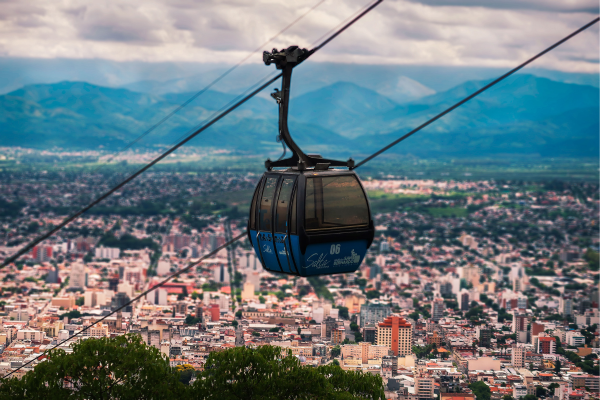
Mumbai could get its first ropeway with the Maharashtra Public Works Department (PWD) initiating the process to appoint a consultant for a proposed connection between the foothills of Mulund and Taramati Mata Temple, located within Sanjay Gandhi National Park (SGNP). The department has invited bids for preparing the project's architectural design and carrying out the technical assessments required to evaluate its feasibility.


The proposal is intended to improve access to the temple, situated on the hills within the national park, while developing the area as a tourism destination. Mulund MLA Shri Mihir Kotecha, who had raised the proposal during the 2024 Assembly election campaign, confirmed that the PWD had floated the consultant tender. He clarified that the proposed route is limited to Mulund and is not a commercial ropeway connecting Mulund with Borivali.

The proposed project also envisages an observatory near the hilltop destination. Visitors could use the facility to view the surrounding landscape of SGNP and Tulsi Lake. The ropeway is expected to provide an alternative means of reaching the temple, potentially reducing the need for visitors to undertake the journey through conventional access routes.

The consultant's responsibilities will extend beyond preparing an architectural concept. The scope includes identifying suitable ropeway alignments, determining the locations of the originating and destination stations, assessing land requirements and studying international ropeway systems for relevant design and operational benchmarks. Technical investigations will include topographical, geotechnical, geodetic and hydrographic surveys, along with reconnaissance studies.

The appointed consultant will also be required to prepare the detailed alignment and system design and estimate the project's overall cost. Assessments of social, environmental, forest and wildlife impacts will form part of the planning exercise. These studies will be important in determining whether the proposed route can be implemented within the ecologically sensitive surroundings of the national park.

The location presents a significant regulatory challenge. SGNP is a protected area, and infrastructure development within its boundaries is subject to stringent forest and environmental regulations. The proposal will therefore require the necessary approvals from the relevant central forest and environment authorities before construction can be considered. The project has not yet received final construction approval, and the consultant's findings will help establish its technical and environmental feasibility.

Environmental concerns are likely to remain central to the project's assessment, particularly because the proposed ropeway would operate within the national park. While ropeways can involve a different land footprint from road infrastructure, their construction and operation still require scrutiny of the impact on forest land, wildlife movement and the surrounding habitat.

The current tender represents an early planning step rather than the commencement of construction. The project cost, final route, station design and implementation schedule have not yet been established. These details will depend on the consultant's studies and the subsequent approval process.

If the proposal secures the required clearances and progresses to implementation, it could add a new tourism and public access facility in Mulund while providing connectivity to Taramati Mata Temple and views of the surrounding natural landscape. However, its development will depend on reconciling the proposed visitor infrastructure with the conservation requirements of Sanjay Gandhi National Park.

Discussion

Have something to say? Post your comment