Advertisement






The Gulf conflict has disrupted global supply chains, pushed...
REITs have changed the way commercial real estate is owned a...
What really powers the cloud? Behind every Google search, A...
What really powers the cloud? Behind every Google search, A...
Luxury real estate is one of the most talked-about segments ...
The CII Indian Green Building Council (IGBC) organised the Green Bengal Summit 2026 in Kolkata on November 13, bringing together government representatives, industry leaders, developers, architects and sustainability experts to discuss climate-resilient development in West Bengal. Discussions focused on sustainable urbanisation, green buildings, urban regeneration, resource efficiency and Net Zero pathways. State ministers highlighted the need to integrate environmental considerations into infrastructure and industrial growth, while IGBC called for wider adoption of green building practices, including in smaller cities and existing developments.
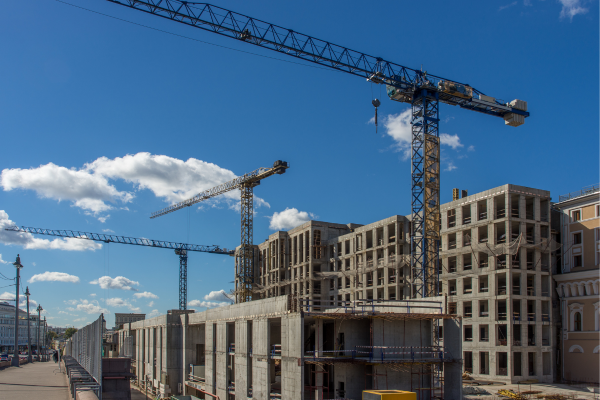
The Confederation of Indian Industry’s Indian Green Building Council (CII IGBC) organised the Green Bengal Summit 2026 at Taj Taal Kutir in Kolkata on November 13, bringing together policymakers, government representatives, developers, urban planners, architects and sustainability experts to discuss sustainable and climate-resilient development in West Bengal.
Held under the theme ‘Future-Proofing Bengal: Vision for Sustainable & Resilient Growth’, the summit focused on integrated climate-resilient development, urban regeneration and pathways towards Net Zero carbon emissions. Discussions examined how urbanisation, infrastructure, housing and industrial expansion could be aligned with environmental sustainability.
West Bengal Urban Development and Municipal Affairs Minister Agnimitra Paul said rapid urbanisation, changing rainfall patterns, urban flooding, heatwaves and deteriorating air quality required a more climate-responsive approach to city planning. She said the government wanted to extend green development initiatives beyond Kolkata to emerging urban centres such as Durgapur, Asansol, Howrah and Siliguri.
Paul also highlighted the need to strengthen municipal waste management, promote circular construction practices, conserve urban wetlands and water bodies, and encourage energy-efficient and Net Zero buildings. She called for participation from industry, developers, institutions and citizens in advancing these objectives.
Vibhu Goel, managing director of WBHIDCO, cited New Town, Kolkata, as an example of an evolving urban ecosystem incorporating climate resilience into development. He highlighted the adoption of Sponge City principles for stormwater management, stronger green infrastructure, passive cooling and the retrofitting of existing buildings. He also pointed to the need to address embodied carbon in construction materials and increase renewable energy integration.
C Shekar Reddy, national chairman of CII IGBC, called for wider adoption of green building practices across West Bengal, including in Tier-II and Tier-III cities. He highlighted the potential for policy incentives and industry participation to expand green building ratings, particularly in manufacturing, micro, small and medium enterprises (MSMEs), and affordable housing.
Reddy also identified building retrofits, Net Zero developments and emerging technologies as areas requiring greater attention. He encouraged stakeholders to undertake at least one Net Zero or green retrofit project over the following 12 months.
Industry Minister Tapas Roy, who also oversees the state’s public enterprises and renewable energy portfolios, said industrial expansion and environmental responsibility needed to progress together. He described sustainability as an opportunity to improve innovation, efficiency and competitiveness, rather than treating it solely as a regulatory requirement. He also cited the ‘My City, I Care’ initiative as an example of collaboration between industry bodies, institutions and communities.
The summit included technical sessions on sustainable cities, resilient urban growth, green retrofits, sustainable building materials, energy and water efficiency, and India’s Net Zero mission. A dedicated plenary examined the challenges and opportunities associated with Net Zero development in Bengal.
The ‘My City, I Care – Innovator’s Showcase’ presented 10 shortlisted ideas from the Green Bengal Innovation Challenge, with the top five showcased and winners recognised. The programme also featured the Green Crusaders Awards 2026, which recognised projects and teams participating in IGBC’s special registration initiative for advancing green building adoption in the state.
The event brought together representatives from government, real estate and industry, including CREDAI Kolkata, CREDAI Bengal, WBHIDCO and IGBC’s Kolkata chapter. Its discussions centred on collaboration among public authorities, developers, technology providers and citizens to support a more resource-efficient and climate-resilient built environment.
Source: CII

17th Nov, 2026
16th Nov, 2026


12th Nov, 2026
10th Nov, 2026


Advertisement








 Facebook
 Whatsapp

