Advertisement






The Gulf conflict has disrupted global supply chains, pushed...
REITs have changed the way commercial real estate is owned a...
What really powers the cloud? Behind every Google search, A...
What really powers the cloud? Behind every Google search, A...
Luxury real estate is one of the most talked-about segments ...
Turkey has set out a long-term energy roadmap that makes electricity the backbone of its economy by 2040. The “National Energy 2040” plan calls for USD 500 billion in total energy investment, with more than USD 330 billion linked to power generation, grids and storage. It targets 175 GW of wind and solar capacity, 10 GW of nuclear power and full self-sufficiency in oil and gas. The government expects the shift to slow energy demand growth, cut emissions by 40% and reduce an annual import bill of USD 65–70 billion.
Turkey’s Energy Minister Alparslan Bayraktar presented the country’s national energy policy for 2040 in Istanbul this week. The plan requires USD 500 billion in energy investments by 2040, of which more than USD 330 billion is for electricity generation, grids and storage, according to Reuters calculations.
The policy is built on supply security and lower emissions. Bayraktar said it would focus on five areas: energy efficiency, nuclear energy, renewables, oil and gas, and mining. He added that Turkey must strengthen its power grid to stay competitive as artificial intelligence changes energy demand.
Installed power capacity is projected to rise from 123 GW to 281 GW by 2040 at a cost of about USD 190 billion, with the share of renewables climbing from 63% to 77%. Wind and solar capacity is targeted at 175 GW, nearly four times the current level, with solar growing from 26 GW to 112 GW and wind from 15 GW to 63 GW. Offshore wind has a separate 6 GW target, and the first tender is planned for April 2027. Another USD 116 billion will go into transmission and distribution networks.
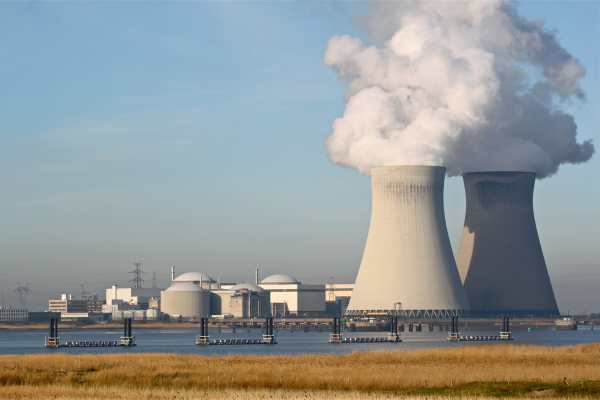
Turkey wants 10 GW of nuclear capacity by 2040, adding 5 GW beyond the Akkuyu plant already under construction. Nuclear is expected to meet 11% of electricity demand. Decisions on two more plants, at Sinop and in Thrace, are planned for 2027, with the aim of bringing them online by 2040.
Electricity consumption is forecast at 680 TWh by 2040, up from 365 TWh last year and well above the business-as-usual estimate of 551 TWh. Electric vehicles, data centres, electrolysers and heat pumps are expected to drive this demand, and the government is targeting 20 million electric vehicles on the road by 2040. Per capita electricity use is expected to double to 7,500 kWh.
Even so, total energy demand is projected at 199 million tonnes of oil equivalent in 2040 instead of 230 million tonnes, as electricity’s share rises to 36%. This is expected to save USD 240 billion.
Natural gas consumption is seen at 57 bcm by 2040, against 59 bcm last year and a business-as-usual estimate of 77 bcm. Crude oil use is forecast at 718,000 barrels per day, down from 993,000 bpd last year and well below the business-as-usual level of 1.2 million bpd. Turkey also aims to meet all its oil and gas needs from domestic production by 2040. Total emissions are expected to fall by 40%.
Turkey’s annual energy import bill has averaged USD 65 billion to USD 70 billion in recent years, and the new policy aims to bring this down while keeping supplies secure. State enterprises will provide up to USD 210 billion of the total investment, and the plan is expected to create 108,000 direct jobs.
The roadmap follows earlier strategies from 2017 and 2022 and comes ahead of the COP31 climate summit, which Turkey is hosting in Antalya.
Much of the plan now depends on execution and timing. The first offshore wind tender in April 2027 and the nuclear decisions on Sinop and Thrace later that year will be early markers of progress. Bayraktar has said the related legislation could reach parliament once budget discussions are over. With state companies expected to fund less than half of the USD 500 billion bill, a large share will have to come from private and foreign investors. How quickly Turkey can attract this money will decide whether the 2040 targets stay on track.
Source Reuters
11th Nov, 2026

27th Oct, 2026

14th Sep, 2026

4th Sep, 2026


31st Jul, 2026


Advertisement








 Facebook
 Whatsapp

