Advertisement






The Gulf conflict has disrupted global supply chains, pushed...
REITs have changed the way commercial real estate is owned a...
What really powers the cloud? Behind every Google search, A...
What really powers the cloud? Behind every Google search, A...
Luxury real estate is one of the most talked-about segments ...
Otto, a voice artificial intelligence (AI) company operated by Ottoverse Inc., has launched a voice-enabled customer relationship management (CRM) platform designed to help field sales representatives manage customer interactions through telephone conversations. Announced on November 2, 2026, the platform aims to eliminate manual CRM data entry after customer visits by automating deal updates, contact management, follow-up emails, task creation and reporting through voice commands. It also provides pre-meeting customer briefings and daily sales leads, along with competitor updates relevant to individual sales territories. Built on voice AI models trained on field sales conversations, the platform is designed to recognise product names, part numbers and different accents, while supporting major languages. Its underlying context layer integrates customer interactions and business records to provide relevant information during conversations.
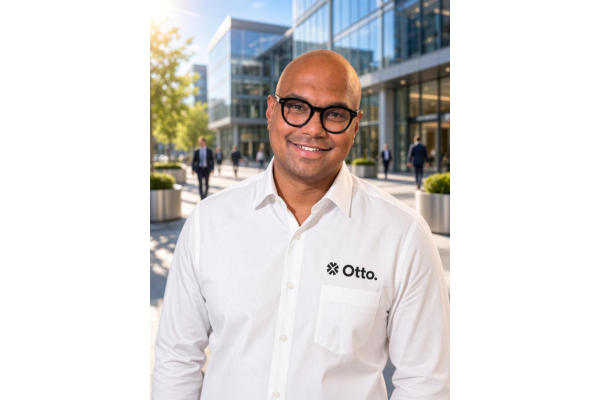
Otto, operated by Ottoverse Inc., has launched a voice AI-powered customer relationship management (CRM) platform for field sales representatives, enabling them to record customer interactions and manage sales activities through telephone conversations. Announced on November 2, 2026, the platform is designed to replace manual CRM data entry after customer visits by automating updates, follow-ups and reporting through voice-based interactions.
Field sales representatives typically spend much of their working day travelling to customer sites, manufacturing facilities and offices, with meeting notes and deal updates often entered into CRM systems after returning to their laptops. Otto seeks to address this process by allowing representatives to call the platform after a meeting and verbally communicate the details of their interaction.
Following the conversation, the system can update the relevant deal record, save new contact information, draft follow-up emails, create tasks and quotations, and prepare a meeting summary for the representative's manager. Before scheduled meetings, Otto can also provide customer briefings. Its daily updates include a new sales lead and information about competitor activity within the representative's assigned territory.
The platform requires representatives to confirm actions before any information is sent or changes are implemented. This confirmation mechanism is intended to retain human oversight over CRM updates and customer communications.
Omkar Pandharkame, Co-founder and CEO of Otto, said his experience as a field sales representative had highlighted the time spent entering CRM information after completing customer visits. He explained that the platform was developed to reduce administrative work and allow sales professionals to devote more time to customer interactions. He described the product as an extension of conventional web-based and mobile CRM systems, with voice serving as the primary interface for accessing and updating sales information.
The platform operates on voice AI models fine-tuned using actual field sales conversations. These models are designed to recognise part numbers, product names and different accents, while handling calls conducted in noisy environments such as roads and manufacturing facilities. Otto also supports all major languages and is designed to respond with minimal delay during conversations.
Supporting the voice interface is an underlying context layer that brings together information from multiple business interactions and systems. This includes telephone calls, meetings, emails, calendar invitations and enterprise resource planning (ERP) records, which contain information relating to orders, pricing and inventory. The platform stores and associates these records with the relevant customers and sales opportunities.
This information is used to provide context-specific responses during conversations. When a representative contacts Otto, the system can access the customer's pricing details, previous orders, ongoing deals and earlier interactions, reducing the need to manually retrieve information from separate business applications.
The company describes this approach as context engineering, which involves providing AI systems with relevant information at the appropriate stage of an interaction. By combining voice-based communication with customer and business records, Otto aims to make CRM updates part of the field sales workflow rather than a separate administrative activity undertaken after customer meetings.

17th Nov, 2026

17th Nov, 2026


17th Nov, 2026




17th Nov, 2026


17th Nov, 2026
Advertisement








 Facebook
 Whatsapp

