Advertisement






The Gulf conflict has disrupted global supply chains, pushed...
REITs have changed the way commercial real estate is owned a...
What really powers the cloud? Behind every Google search, A...
What really powers the cloud? Behind every Google search, A...
Luxury real estate is one of the most talked-about segments ...
The Haryana government is examining five funding models to finance bypass projects aimed at reducing congestion on National Highways passing through urban areas. The options include upfront contributions towards project costs, sharing land acquisition expenses, sharing land acquisition costs with reimbursement of the state’s GST component, land pooling and Value Capture Financing (VCF). Public Works Minister Shri Ranbir Gangwa said the state would assess each project’s financial requirements before selecting a suitable arrangement. The review covers bypass projects in Hisar, Kurukshetra, Narnaul, Jind, Sohna and Palwal, forming part of a wider road infrastructure programme.
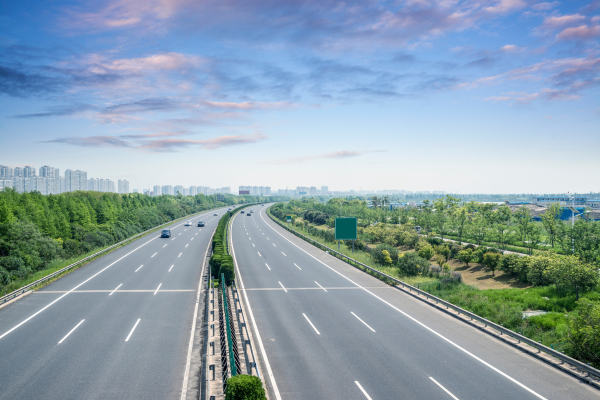
The Haryana government is evaluating five funding models to determine its financial contribution towards bypass projects intended to ease traffic congestion on National Highways passing through urban areas. The state plans to assess the cost, financial implications and implementation requirements of individual projects before selecting an appropriate funding arrangement. Public Works Minister Shri Ranbir Gangwa outlined the options following discussions on the Centre’s policy for decongesting National Highways in urban areas. The government has decided against adopting a uniform funding structure for all projects, instead proposing a project-specific approach.
The five models under consideration are an upfront contribution towards project costs, sharing land acquisition expenses, sharing land acquisition costs along with reimbursement of the state’s GST component, providing land through land pooling and Value Capture Financing (VCF). These alternatives will be examined to determine how the state can meet its share of project expenditure while managing the impact on public finances. The final arrangement for each bypass will depend on its estimated cost, land requirements and other financial considerations.
The funding assessment covers bypass projects in Hisar, Kurukshetra, Narnaul and Jind, along with projects at Sohna and Palwal. The infrastructure programme includes a proposed Hisar bypass connecting the Hisar-Rajgarh Road, or NH-52, with the Hisar-Delhi Road and Hisar-Kaithal Road. The Kurukshetra-Ladwa bypass has a prepared detailed project report. The Narnaul city bypass is planned to extend approximately 11 km and connect with NH-148B, while Jind is proposed to receive an outer ring road and a four-lane bypass on NH-352. The Sohna-Palwal bypass is planned for upgrading and redevelopment as a four-lane road over approximately 24 km.
A committee of senior officials from the Public Works, Finance, Town and Country Planning, Excise and Taxation, and Urban Local Bodies departments will examine the proposed funding models. The panel will assess their suitability, financial implications and implementation mechanisms on a project-by-project basis. Its findings are expected to help the government determine the state’s contribution and the funding structure required to take the bypass projects forward. No final model or project-wise financial allocation has been announced.
The bypass programme forms part of Haryana’s broader plan to develop outer ring roads and National Highways outside cities and towns with populations exceeding one lakh, in line with the Centre’s policy framework. The state has previously estimated an investment of around INR 9,700 crore for major bypass projects covering Hisar, Kurukshetra, Narnaul, Jind and Sohna-Palwal. The wider programme also includes plans for greenfield connectivity linking the Delhi-Mumbai Expressway and other road corridors with Jewar International Airport. The current exercise focuses on determining how the state will finance its share of the proposed infrastructure works, with implementation dependent on the outcome of the financial assessment and subsequent project-level decisions.
Source: CM Press Release

17th Nov, 2026





15th Nov, 2026


Advertisement








 Facebook
 Whatsapp

