Advertisement






The Gulf conflict has disrupted global supply chains, pushed...
REITs have changed the way commercial real estate is owned a...
What really powers the cloud? Behind every Google search, A...
What really powers the cloud? Behind every Google search, A...
Luxury real estate is one of the most talked-about segments ...
Tata Power has asked the West Bengal government to introduce additional subsidies for rooftop solar installations under the Centre's PM Surya Ghar Muft Bijli Yojana. The company has installed around 6,000 rooftop solar systems in the state, where nearly 22,000 households have been covered under the programme. It has also introduced a zero-down-payment scheme with banking partners. Separately, Tata Power is exploring solar projects with a combined capacity of 500 MW, involving a potential investment of INR 2,500 crore, subject to land availability and project feasibility.
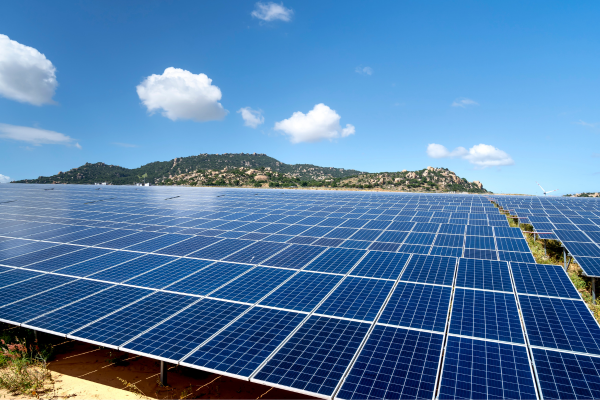
Tata Power has urged the West Bengal government to provide additional subsidies for rooftop solar installations to increase adoption under the Centre's PM Surya Ghar Muft Bijli Yojana. The company is also exploring solar power projects with a combined capacity of around 500 MW in the state, which could involve an investment of approximately INR 2,500 crore.
Sanjay Banga, CEO and managing director of Tata Power Renewable Energy Ltd, said an additional state subsidy, similar to those offered by Odisha, Bihar and Assam, could make rooftop solar systems more affordable, particularly for low-income households. He said the upfront installation cost remained a major barrier despite the financial assistance available under the central government scheme.
According to company data, Tata Power has installed around 6,000 rooftop solar systems in West Bengal out of nearly 22,000 households covered under the programme in the state so far. Banga said rooftop solar adoption in West Bengal remained among the lowest in the country.
Banga said the Centre provides a subsidy of INR 30,000 for a 1-kilowatt rooftop solar system, INR 60,000 for a 2-kilowatt system and INR 78,000 for a system with a capacity of 3 kilowatts or more, subject to the scheme's subsidy limit.
He suggested that West Bengal introduce additional support, particularly for smaller 1–2-kilowatt systems, to encourage more households to adopt rooftop solar.
Tata Power also introduced a zero-down-payment scheme for residential rooftop solar projects on Thursday in partnership with a panel of banks. The initiative is intended to address the initial cost of installation, which the company identified as a major obstacle for households considering solar energy.
Separately, Tata Power CEO and managing director Praveer Sinha said the company was exploring multiple solar power projects across West Bengal with a combined capacity of around 500 MW. The proposed projects could involve an investment of approximately INR 2,500 crore.
Sinha said land availability remained a challenge and that the company had approached the state government for assistance. The projects were at a preliminary stage, with the government having identified three to four locations for the company to assess. Tata Power will examine the suitability and viability of these sites before deciding on the next steps.
The company is considering projects across multiple locations, depending on land availability, rather than concentrating the entire capacity at a single site.
Banga also proposed that the state identify non-agricultural land for solar parks, develop the necessary infrastructure and invite renewable energy developers to establish projects. Under this model, the state government could develop the solar parks, while private companies would install solar generation facilities and supply electricity to the West Bengal State Electricity Distribution Company Ltd (WBSEDCL) through long-term power purchase agreements.
According to Banga, electricity generated through these projects could be supplied at around INR 3 per unit, compared with WBSEDCL's current average power procurement cost of INR 4–5 per unit. He said Tata Power Renewable Energy would be interested in participating if the state provided suitable land and grid connectivity, citing similar approaches adopted by Rajasthan and Karnataka.
The proposed projects will depend on whether suitable land and grid connectivity can be secured, along with the state's willingness to support solar park development. The estimated supply cost of INR 3 per unit could make the proposed projects worth examining against WBSEDCL's existing procurement costs, although actual savings would depend on project costs, contractual terms and implementation. For rooftop solar, additional state subsidies could reduce the initial expense for households, particularly those considering smaller systems. The next steps will be the assessment of identified sites and any decision by the state government on further incentives.
Source PTI

17th Nov, 2026

16th Nov, 2026

16th Nov, 2026



12th Nov, 2026

12th Nov, 2026

10th Nov, 2026

10th Nov, 2026

10th Nov, 2026
Advertisement








 Facebook
 Whatsapp

