Advertisement






The Gulf conflict has disrupted global supply chains, pushed...
REITs have changed the way commercial real estate is owned a...
What really powers the cloud? Behind every Google search, A...
What really powers the cloud? Behind every Google search, A...
Luxury real estate is one of the most talked-about segments ...
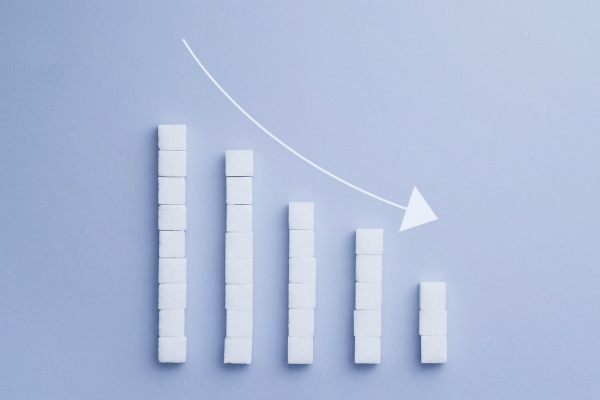
Australia’s housing market is facing a difficult period as house prices decline while the Reserve Bank of Australia (RBA) is expected to raise interest rates again. Unlike previous housing downturns, falling prices may not prompt the central bank to cut rates because inflation remains under pressure from higher oil prices, strong investment in data centres, government spending and other supply-side factors. National house prices have already fallen nearly 4% from their peak, while economists are increasingly expecting a larger decline in this cycle. The higher-rate environment could therefore put further pressure on housing demand and household finances.

Australia’s housing market is weakening at a time when the country’s central bank is preparing to tighten monetary policy further. In previous housing downturns, falling property prices were often followed by interest-rate cuts that helped support household spending and economic activity. This time, the Reserve Bank of Australia is moving in the opposite direction, with another rate increase expected next week.
The RBA is expected to raise its interest rate for the fourth time this year, taking the cash rate to 4.6%, its highest level in 15 years. The expectation is based on market pricing and a survey of economists conducted by Reuters.
Several factors are making it harder for the central bank to respond to weaker housing conditions through lower rates. An overseas conflict is adding uncertainty to the inflation outlook, while the rapid expansion of data centres is increasing demand for goods and services. Government spending on areas such as defence and healthcare is also expected to remain high, contributing to longer-term borrowing costs.
RBA Governor Michele Bullock has said the economy is operating in a different environment from the period of low inflation and relatively open global trade. She has also pointed to the difficulty monetary policy faces when inflation is being driven by supply-side shocks rather than only by domestic demand.
This means that a fall in house prices alone may not be enough to trigger an immediate reduction in interest rates. Inflation is expected to remain elevated for longer than it normally would during an economic slowdown.
At the same time, Australia’s labour market has remained relatively resilient. While households are facing financial pressure, continued income growth has allowed some consumers to maintain spending, including on electric vehicles despite higher oil prices.
Luke Yeaman, chief economist at Commonwealth Bank of Australia, expects another rate increase and said inflation control could require interest rates to remain higher than in previous periods. He indicated that a slowing economy may therefore provide limited immediate relief to households through lower borrowing costs.
The RBA has already raised rates three times this year, taking the cash rate to 4.35%. Earlier monetary tightening had helped bring inflation down from a peak of 7.8%. However, policymakers are now assessing whether further action is required despite the impact already being seen in the housing market.
National house prices have fallen by nearly 4% from their peak. The decline has also been affected by a government tax change involving investment properties, which has reduced lending activity among property investors.
Economists are increasingly forecasting a peak-to-trough fall of around 10% in Australian house prices during the current cycle. If that happens, it would represent the largest housing decline in about three decades. HSBC has forecast a 13% fall if interest rates are increased twice more.
However, the RBA has indicated that falling property prices do not automatically translate into a sharp reduction in household spending. Assistant RBA Governor Sarah Hunter said earlier this month that house prices would need to decline by 10% on a sustained basis before having a substantial effect on household spending.
She also indicated that a lack of recovery in house prices over a one- to two-year period would be unusual when compared with historical trends.
Financial markets are already pricing in further increases in borrowing costs. Traders are fully pricing another increase to 4.85%, while market pricing also indicates a 70% probability of rates reaching 5.1%. These are market expectations rather than confirmed RBA decisions.
When the RBA kept rates unchanged at its August meeting, it identified the conflict involving the US and Israel and Iran, along with the rapid expansion of data centres, as important inflation risks.
Oil prices have moved back above USD 100 a barrel, raising the possibility of higher costs spreading through other parts of the economy. RBA Deputy Governor Andrew Hauser also returned from the United States with greater concerns about rising costs after observing the scale of investment linked to artificial intelligence and data centres.
The structure of economic growth has also changed. According to Lachlan Dynan, macro strategist at Deutsche Bank, much of the activity supporting the Australian economy this year is coming from data centre investment, government spending and immigration. These areas are less sensitive to interest rates than household spending was before the pandemic.
As a result, the housing sector could face a larger share of the adjustment required to bring overall demand and inflation under control. Dynan said it was possible to expect weaker housing conditions while also expecting the RBA to continue raising rates.
Source Reuters

17th Nov, 2026


12th Nov, 2026
12th Nov, 2026

11th Nov, 2026



10th Nov, 2026
Advertisement









 Facebook
 Whatsapp

