Advertisement






The Gulf conflict has disrupted global supply chains, pushed...
REITs have changed the way commercial real estate is owned a...
What really powers the cloud? Behind every Google search, A...
What really powers the cloud? Behind every Google search, A...
Luxury real estate is one of the most talked-about segments ...
Bengaluru’s next phase of real estate growth could depend increasingly on livability as infrastructure expansion connects peripheral corridors and reduces the importance of location alone. NBR Group founder, CEO and managing director Nagabhushana Reddy argues that water security, green spaces, everyday mobility and effective long-term maintenance will become key considerations for homebuyers and developers. He points to the city’s traffic congestion, declining tree cover and dependence on groundwater and tankers as mounting challenges. Citing market data showing rising residential prices alongside growing unsold inventory, Reddy suggests that buyers are becoming more discerning about the quality of homes and communities. He sets out five tests for assessing livability, covering water, open ground, mobility and handover responsibilities, and contends that sustained community planning will shape Bengaluru’s future real estate market.

As infrastructure pushes the city’s growth outward, developers will be tested on how well they create communities that people can live in not simply on how much they build.
Three decades ago, when I began building in this city, the first question a buyer asked was about distance how far to the office, the school, the main road. That question has changed. Today I am asked where the water will come from in April, how much open ground will be left when the last tower is finished, and who maintains this place in fifteen years. These are not amenity questions. They are livability questions, and they are about to become the single most important competitive variable in Bengaluru real estate.
The outward push is now a funded programme
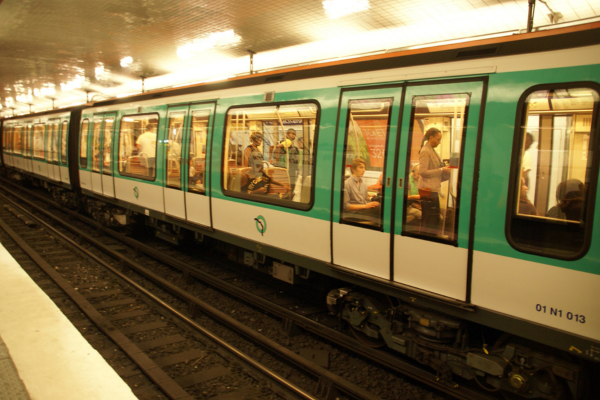
The case for Bengaluru’s peripheral corridors used to rest on announcements. Not anymore. The Karnataka government’s 2026-27 budget carried a 4.48 lakh crore outlay and a continuing 7,000 crore annual grant for the city, approved 40,000 crore of tunnel corridors under a build-operate-transfer model, and committed 41 km of new Namma Metro within the year. Governance has changed too: the BBMP was dissolved on 2 September 2025 and replaced by the Greater Bengaluru Authority, which now coordinates five new city corporations across 712 sq km. On the eastern corridor, the 37 km Hebbal–Sarjapur metro line has cleared the state cabinet and awaits Union approval.
This is the largest reshaping of Bengaluru’s geography in a generation — and it quietly commoditises location. When six corridors connect to the same employment nodes and ring roads, proximity stops being a differentiator. Everyone will be twenty minutes from something. The premium has to come from somewhere else.
The livability deficit is compounding faster
The TomTom Traffic Index 2025 placed Bengaluru as the world’s second most congested city, with commuters losing 168 hours a year — nearly a full working week — to rush-hour traffic. Research from the Indian Institute of Science records an approximately 88% decline in the city’s tree cover over five decades, leaving roughly one tree for every seven residents, with urban heat island effects now spanning about three-quarters of the city. And the Bangalore Water Supply and Sewerage Board meets barely half of Bengaluru’s water demand from the Cauvery, leaving the rest to groundwater and tankers — which is precisely why treated, reused water is now a serious cost lever for communities, not a sustainability slogan.
Infrastructure is arriving. Habitat is degrading. A home is bought at the intersection of the two.
The market has already started to vote
Knight Frank’s H1 2026 report recorded Bengaluru prices rising 9% year-on-year, with launches outpacing sales. ANAROCK’s numbers are starker: unsold inventory rose 34% year-on-year to roughly 79,180 units by June 2026 — the steepest rise among India’s top seven cities — even as, across those cities, first-quarter 2026 launches of 1,26,265 units outpaced sales of 1,01,675, the first time that has happened in the post-pandemic cycle.
Prices rising and inventory rising faster is not a demand problem; it is a differentiation problem. ANAROCK’s sentiment surveys show steadily climbing demand for larger, 3BHK-and-above homes. Buyers are not refusing to buy — they are refusing to buy indifferently.
“Livability” only means something if it can be specified and audited. I hold every project to five tests. The water test: what is the twenty-year source mix, and how much treated water is genuinely reused on site? The ground test: what share of open-to-sky ground survives the final phase of construction, measured against the IISc benchmark of 30% green cover? The mobility test: not just metro access, but whether daily life — the school run, groceries, a clinic visit — can happen without joining the arterial road. And the handover test: does the residents’ association inherit documented systems and a funded sinking fund, or a handsome façade and an unbudgeted problem?
On the growth corridors, the developer is effectively the first-mile civic authority for a community’s first decade. That is a responsibility the industry has accepted implicitly and rarely discharged explicitly.
A commercial argument, not a moral one
For twenty years, Bengaluru rewarded developers for being early to a location; land arbitrage was the business model. With 40,000 crore of tunnels and 41 km of new metro landing in a single year, the state is systematically closing that arbitrage. What it cannot manufacture is well-planned, water-secure, low-density living, because that scarcity comes from discipline, not geography. Globally, wellness real estate has grown from $584 billion in 2024 towards a projected $1.1 trillion by 2029; that capital is chasing confidence that a home will still be a good place to live two decades on.
Bengaluru has absorbed more change in fifty years than most cities absorb in two hundred, and it has been generous to those of us who build here. The developers who matter in the next decade will not be the ones who built the most square feet on the best-connected land. They will be the ones whose communities are still cool, green, watered and walkable twenty years from now. Location built this city. Livability will decide what kind of city it becomes.
Disclaimer:
The views, opinions, and information expressed in this article are solely those of the author and do not necessarily reflect the views of Prop News Time. The content has not been independently verified or endorsed by Prop News Time. Readers are advised to exercise their own discretion and seek professional advice if required.


16th Nov, 2026

13th Nov, 2026


12th Nov, 2026


Advertisement








 Facebook
 Whatsapp

