Advertisement






The Gulf conflict has disrupted global supply chains, pushed...
REITs have changed the way commercial real estate is owned a...
What really powers the cloud? Behind every Google search, A...
What really powers the cloud? Behind every Google search, A...
Luxury real estate is one of the most talked-about segments ...
South Korea has selected a gas-fired power plant in Texas as the first project under its USD 350 billion investment commitment to the United States, while preparing plans for nuclear and liquefied natural gas projects. The move comes as Seoul and Washington work to implement a trade agreement that reduced US tariffs on South Korean goods to 15%. The Texas project is expected to support electricity demand from AI data centres and semiconductor plants. However, South Korean lawmakers have raised concerns about the commercial viability of the investments, with the government saying the Texas project could generate returns over a 20-year period.
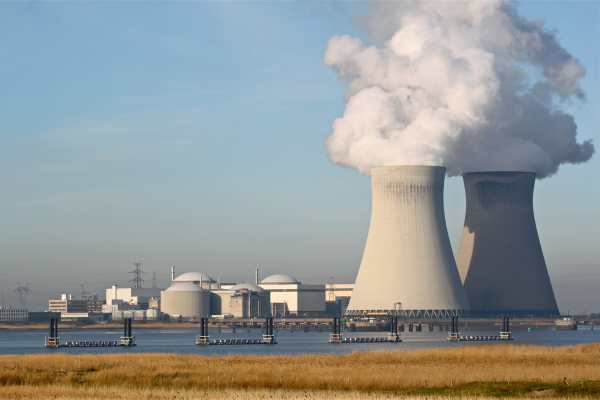
South Korea has selected a gas-fired power plant in Texas as its first investment project under the USD 350 billion package agreed with the United States. Seoul is also considering investments in US nuclear projects and an Alaska liquefied natural gas project.
The announcement came as Industry Minister Kim Jung-kwan briefed lawmakers on the implementation of the investment package. The two countries are working to finalise the broader trade agreement under which US tariffs on South Korean goods were reduced to 15%.
The Texas project involves a 6.3-gigawatt gas-fired power plant in Encinal, valued at more than USD 20 billion. The plant is expected to supply electricity to AI data centres and semiconductor manufacturing facilities as power demand in Texas increases. Earlier reports put South Korea’s investment in the project at around USD 22.3 billion.
The investment plans still require approval from a US government investment committee, along with further discussions with US Commerce Secretary Howard Lutnick. US President Donald Trump is expected to make the final announcement on the investment plan.
South Korea has also prepared plans for a wider nuclear investment programme involving as many as eight large reactors in the US. Two could use South Korea’s APR1400 technology, while the other six would use Westinghouse’s AP1000 design. Seoul is separately considering acquiring a 5% to 10% stake in Westinghouse.
The country is also considering participation in an Alaska LNG project, although no final decision has been made on that investment. Yonhap reported that the government plans to limit investment to USD 20 billion a year and USD 200 billion overall for the strategic investment portion.
The investment package has faced pressure from Washington over the pace of implementation. US officials have criticised Seoul for moving more slowly than countries such as Japan, while Trump has also raised concerns over South Korea’s approach to other bilateral issues.
South Korean President Lee Jae Myung has said that commercial viability has become a key issue as negotiations move from the broad investment commitment to individual projects. Seoul has sought to ensure that the investments are commercially reasonable rather than proceeding solely because of the broader agreement.
South Korean lawmakers from the opposition have also questioned whether the proposed projects can generate adequate returns. The government has told them that the Texas power plant should be commercially viable under a 20-year profit-return structure.
Under South Korea’s investment legislation, the government does not require parliamentary approval for projects it considers commercially reasonable, although it must brief lawmakers. Projects that are not commercially viable but are pursued for reasons such as national security or supply-chain stability would require parliamentary approval.
A separate concern is the impact of the investment on South Korea’s currency. A source familiar with the negotiations said Seoul was seeking to cap annual investment at USD 20 billion to limit possible pressure on the won.
The Texas project could also provide opportunities for South Korean companies to expand in the US energy and technology markets. Analysts cited in the report said nuclear projects and a possible Westinghouse stake could help South Korea protect its nuclear technology and intellectual property while supporting future opportunities in markets including Europe and the Middle East.
The latest developments give the USD 350 billion commitment a more concrete structure, but several projects remain subject to further negotiations and approvals. The commercial returns from these investments will remain an important issue as Seoul and Washington move towards implementation of the wider agreement.
Source Reuters

17th Nov, 2026


13th Nov, 2026



6th Nov, 2026

6th Nov, 2026


3rd Nov, 2026

Advertisement








 Facebook
 Whatsapp

