Advertisement






The Gulf conflict has disrupted global supply chains, pushed...
REITs have changed the way commercial real estate is owned a...
What really powers the cloud? Behind every Google search, A...
What really powers the cloud? Behind every Google search, A...
Luxury real estate is one of the most talked-about segments ...
The board of Indian Oil Corporation has approved an investment of INR 2,448.70 crore for the construction and operation of a 424.65-km natural gas pipeline connecting Kochi in Kerala with Thoothukudi in Tamil Nadu. The Kochi-Kanyakumari-Thoothukudi Pipeline will have a system capacity of 6.84 million standard cubic metres a day, with at least 1.71 mmscmd available as common-carrier capacity for third-party access. The project will strengthen the natural gas pipeline network along India's southern coast, connecting existing gas infrastructure in Kerala with demand centres in southern Tamil Nadu.
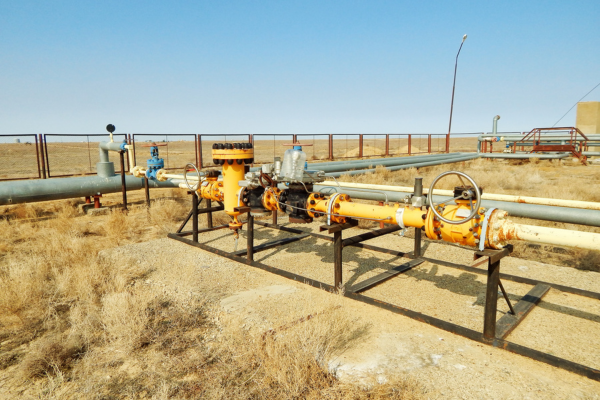
The board of directors of Indian Oil Corporation (IOC) has approved an investment of INR 2,448.70 crore for the construction and operation of a 424.65-km natural gas pipeline connecting Kochi in Kerala with Thoothukudi in Tamil Nadu, according to a regulatory filing.
The Kochi-Kanyakumari-Thoothukudi Pipeline (KTPL) will run from Kochi to Thoothukudi and will have a system capacity, including common-carrier capacity, of 6.84 million standard cubic metres a day (mmscmd), the company said. At least 1.71 mmscmd of the pipeline's capacity will be available as common-carrier capacity, allowing third parties access to the network in line with applicable regulations.
The investment approval was granted at a board meeting held on Monday, the company said.
The project will strengthen the natural gas pipeline network along India's southern coast, connecting existing gas infrastructure in Kerala with demand centres in southern Tamil Nadu.
Natural gas pipeline infrastructure of this scale typically involves multi-year construction timelines spanning right-of-way acquisition, environmental clearances and the laying of underground pipeline infrastructure across varied terrain. The southern coastal stretch between Kochi and Thoothukudi passes through a mix of urban, semi-urban and rural areas in Kerala and Tamil Nadu, requiring extensive coordination with state authorities and landowners along the route.
The common-carrier provision built into the pipeline's design, which reserves a portion of capacity for use by third parties rather than IOC alone, reflects the regulatory framework governing India's gas pipeline network, under which pipeline operators are required to provide open access to ensure competitive gas marketing and broader access to natural gas infrastructure for other users in the region.
The project adds to a broader expansion of India's gas pipeline infrastructure along the southern peninsula, an area that has historically had less extensive pipeline connectivity compared with northern and western India. Strengthening this connectivity is expected to support the growth of natural gas consumption in southern Tamil Nadu, including for industrial, commercial and city gas distribution uses, as the region continues to develop its demand base for cleaner-burning fuel alternatives to support both industrial growth and environmental objectives.
Pipeline projects of this nature also carry implications for industrial real estate and manufacturing investment along their route, since reliable access to piped natural gas is often a key consideration for industries evaluating new facility locations, particularly in sectors such as ceramics, glass, chemicals and food processing that rely on gas as a primary fuel source. The Kochi-Kanyakumari-Thoothukudi corridor passes through several districts with existing and emerging industrial clusters, and improved gas connectivity along this stretch could support future industrial land development and facility investment decisions in the region over the coming years.
Source PTI





11th Nov, 2026


7th Nov, 2026



Advertisement








 Facebook
 Whatsapp

