Advertisement






The Gulf conflict has disrupted global supply chains, pushed...
REITs have changed the way commercial real estate is owned a...
What really powers the cloud? Behind every Google search, A...
What really powers the cloud? Behind every Google search, A...
Luxury real estate is one of the most talked-about segments ...
University College London (UCL) and the Mumbai Metropolitan Region Development Authority (MMRDA) have entered into a strategic collaboration to support climate-resilient urban development in the Mumbai Metropolitan Region (MMR). The partnership proposes a metropolitan-scale Centre of Excellence focused on climate-resilient urban systems and sustainable urban and regional development. UCL will bring expertise in artificial intelligence, digital twins, climate analytics and resilient asset management. The collaboration will also cover research, professional training, academic exchanges, climate-risk assessment, infrastructure monitoring, sustainable mobility and nature-based solutions for the MMR.
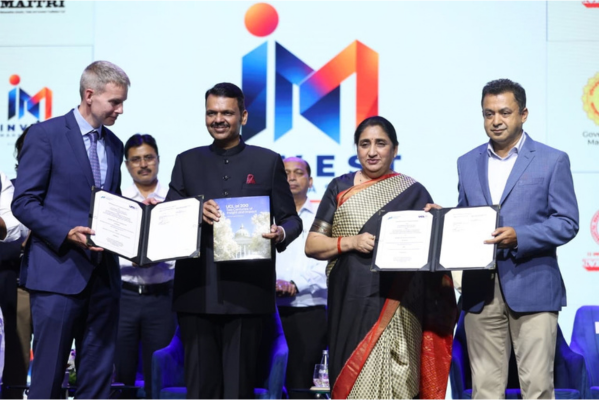
University College London (UCL) and the Mumbai Metropolitan Region Development Authority (MMRDA) have entered into a strategic collaboration to bring global research and urban planning expertise to the Mumbai Metropolitan Region.
The partnership proposes a Centre of Excellence on Climate-Resilient Urban Systems and Sustainable Urban and Regional Development. It is proposed as the first metropolitan-scale Centre of Excellence of its kind in India, with an international university serving as its knowledge partner.
The proposed centre will provide a platform for joint research, innovation, capacity building and knowledge exchange focused on the planning and development challenges of the MMR.
UCL’s expertise in artificial intelligence, climate analytics, digital twins and environmental data systems will be used to support planning for climate-resilient infrastructure and urban systems. The areas covered will include transport networks, public utilities, buildings and ecological assets, along with climate-adaptive and nature-based solutions.
The collaboration will also focus on climate-resilient asset management, including predictive maintenance, infrastructure health monitoring, risk-based decision-making and AI-enabled monitoring systems. Other areas will include emissions reduction, energy efficiency, climate-risk resilience and regional environmental sustainability.
Joint research will cover energy mapping, climate-risk modelling, environmental impact assessment, carbon-footprint optimisation, nature-based solutions and circular-economy practices. The partnership will also facilitate the sharing of international benchmarks and methodologies aligned with India’s Nationally Determined Contributions under the Paris Agreement and the United Nations Sustainable Development Goals.
The two institutions will also develop professional training and capacity-building programmes covering climate science, resilient planning, environmental governance, disaster-risk reduction and sustainable mobility. These will include Continuing Professional Development programmes, training and exchange initiatives.
Academic collaboration will include joint research projects, grant applications, staff exchanges, visiting scholar programmes, research fellowships and student mobility. The institutions will also explore Masters and Doctoral-level programmes, including PhD co-supervision and potential 1+1 programmes.
UCL and MMRDA plan to jointly organise workshops, seminars and conferences and explore joint publications. The partnership will also focus on inclusive climate transitions by incorporating the needs of marginalised communities into infrastructure planning and decision-making.
The collaboration follows the signing of a Memorandum of Understanding (MoU) between MMRDA and UCL at the Invest Maharashtra launch. The MoU was signed by MMRDA Metropolitan Commissioner Dr. Sanjay Mukherjee, IAS, with Professor Geraint Rees, Vice-Provost (Research, Innovation & Global Engagement), and Sam Balch, Director for UCL.
Maharashtra Chief Minister Devendra Fadnavis said the collaboration would combine global academic expertise with regional development experience and support research, innovation and capacity building for climate-resilient urban and regional development.
Deputy Chief Minister and MMRDA Chairman Eknath Shinde said the proposed centre would support areas such as infrastructure health monitoring, predictive maintenance and risk-informed decision-making, with the aim of preparing the MMR for changing urban and climate-related requirements.
Dr. Sanjay Mukherjee said the MoU would bring academic expertise, research and global knowledge into sustainable urban and regional development in the MMR. He said the proposed centre would focus on climate resilience, sustainable infrastructure, climate-risk assessment, resilient asset management, AI, climate analytics and digital twins, with the objective of applying research to practical planning and operational requirements.
The proposed Centre of Excellence places research and technical expertise at the centre of MMR’s approach to climate resilience and urban planning. Its work is expected to connect academic research with infrastructure planning, asset management and professional capacity building. For MMRDA, the partnership also creates a framework for continued collaboration with an international institution across research, training and knowledge exchange. The focus on climate risks, infrastructure monitoring and sustainable development will be relevant as the region continues to plan and manage large-scale urban infrastructure.
Source MMRDA

20th Oct, 2026

3rd Oct, 2026

28th Sep, 2026
24th Sep, 2026


4th Aug, 2026


Advertisement








 Facebook
 Whatsapp

