Advertisement






The Gulf conflict has disrupted global supply chains, pushed...
REITs have changed the way commercial real estate is owned a...
What really powers the cloud? Behind every Google search, A...
What really powers the cloud? Behind every Google search, A...
Luxury real estate is one of the most talked-about segments ...
Only one of 15 Bangalore Development Authority (BDA) apartment complexes surveyed in Bengaluru has an operational community electric vehicle (EV) charging facility, despite 61% of residents already owning an EV. The BDA Apartment Owners’ Forum survey, conducted in August across properties covering 5,000 flats, found that most EV-owning households currently depend on public or commercial charging stations, regular home sockets or workplace facilities. The survey also indicated substantial prospective demand, with all respondents who did not yet own an EV saying they planned to purchase one within two years.
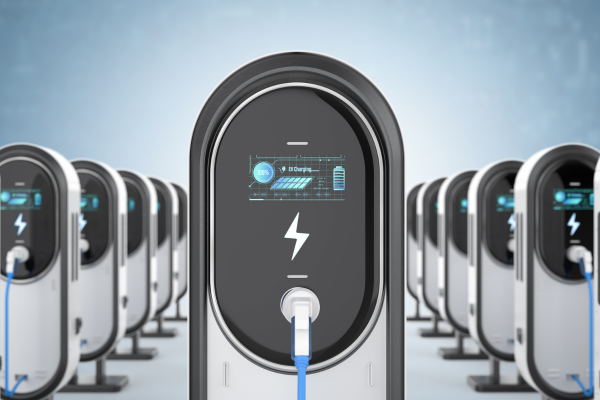
Only one of 15 Bangalore Development Authority (BDA) apartment complexes surveyed in Bengaluru had an operational community electric vehicle (EV) charging facility in August, despite 61% of residents across the surveyed properties already owning EVs. The survey covered 5,000 flats and was conducted by the BDA Apartment Owners’ Forum to assess EV ownership, charging patterns and infrastructure requirements across its residential developments.
The survey found that electric two-wheelers account for the majority of EV ownership in the complexes. Among EV-owning households, 70% had only an electric two-wheeler, while 20% owned both an electric two-wheeler and a four-wheeler. The remaining 10% had only an electric four-wheeler.
With community charging facilities largely unavailable, residents have been using a combination of public and private options. About 41% of respondents said they used public or commercial charging stations, while 28% charged through regular home sockets and 17% used workplace facilities. Only 11% had a dedicated charger at their parking space, while 2% relied on battery-swapping facilities.
The lack of a dedicated charging point was identified as the biggest challenge, cited by 51% of respondents. Other reported constraints included the absence of covered or closed parking, mentioned by 17%, and parking spaces being located far from electrical connections, cited by 16%.
Demand for community charging is also expected to increase. Among residents who did not currently own an EV, all respondents said they were considering purchasing one within the next two years. Of these prospective buyers, 40% expected to purchase within six months to one year, while 32% had not fixed a purchase timeline. Four-wheelers were the preferred vehicle type for 56% of prospective buyers, compared with 37% who indicated a preference for two-wheelers.
The survey also found that 56% of respondents expected to use a community charger daily, while 33% expected to use one three to five times a week. Overall, 89% anticipated using community charging facilities at least three times a week.
A senior BDA official said the authority intended to provide EV charging stations across its apartments and that the BDA chairperson had directed officials to undertake charging projects in existing residential complexes. However, no specific completion timeline for installing the facilities across the surveyed properties has been announced.
The BDA Apartment Owners’ Forum has urged the authority to address the infrastructure gap and facilitate the approvals required for charging installations, particularly in projects that remain under BDA’s control. The forum said the survey was intended to identify existing infrastructure gaps and help determine how they could be addressed to support wider EV adoption among residents.
The findings point to a mismatch between EV ownership and shared charging availability across the surveyed BDA developments. With prospective buyers showing a preference for electric four-wheelers, which generally require more substantial charging arrangements than two-wheelers, future infrastructure planning will need to account for both existing demand and anticipated growth in EV ownership.


16th Nov, 2026

13th Nov, 2026


12th Nov, 2026



Advertisement








 Facebook
 Whatsapp

