Advertisement






The Gulf conflict has disrupted global supply chains, pushed...
REITs have changed the way commercial real estate is owned a...
What really powers the cloud? Behind every Google search, A...
What really powers the cloud? Behind every Google search, A...
Luxury real estate is one of the most talked-about segments ...
The Mumbai Metropolitan Region Development Authority (MMRDA) has operationalised a Safety & Response Co-ordination Centre (SRCC) to coordinate safety concerns, emergencies, public grievances and incident monitoring across its infrastructure projects in the Mumbai Metropolitan Region. The centre provides a 24×7 control room through which citizens can report construction-related safety hazards, barricading and traffic management issues, road damage, dust and other public concerns. Complaints will be registered, assessed, verified and monitored until closure. A central dashboard will allow MMRDA’s senior management to track complaints, recurring issues, response patterns and accountability across projects, contractors and consultants.

The Mumbai Metropolitan Region Development Authority (MMRDA) has established a Safety & Response Co-ordination Centre (SRCC) as a central mechanism to handle safety coordination, emergency response, public grievances and incident monitoring across its infrastructure projects. The centre is now operational and will serve as a single point of contact for project-related concerns across the Mumbai Metropolitan Region.
The SRCC will operate through a 24×7 control room at 1800-22-8801. Citizens can use the toll-free number to report project-related emergencies, potential safety hazards and public grievances. These include concerns about construction-site safety, inadequate barricading, traffic management around project works, road conditions or damage caused by construction activity, dust and other inconvenience linked to ongoing projects.
The system is designed to connect citizens with MMRDA’s project teams, engineers, contractors, consultants and other concerned agencies through a common coordination mechanism. Once a complaint is received, it will be registered and assessed according to its nature and urgency before being sent to the relevant project or engineering team for verification and action.
Issues requiring immediate safety intervention will be prioritised and escalated to the appropriate level. The SRCC will also coordinate with the concerned officials, engineers, contractors, consultants and agencies instead of simply forwarding the complaint. It will monitor the response and corrective action until the issue has been addressed and closed.
The response mechanism will broadly follow six stages: report, assess, verify, respond, monitor and close. This is intended to give MMRDA a clearer view of whether complaints are being acted upon and resolved after they are reported.
The SRCC will review complaints, action taken and pending matters on a daily basis. A dedicated dashboard will give senior management a consolidated view of complaints received across MMRDA projects, including their nature, status and recurrence.
The dashboard will also track trends linked to individual projects, contractors and general consultants. This will allow the authority to identify recurring safety concerns, delays in response and areas where corrective action may be required.
The information collected through the system will also be used to identify common safety issues and response patterns across different projects. MMRDA can use lessons and corrective measures from one project to strengthen preventive measures at other relevant project sites.
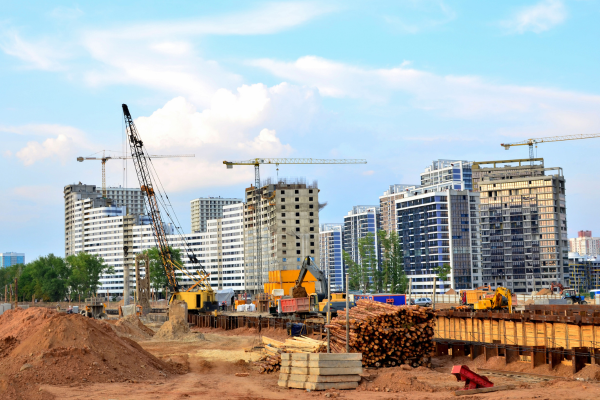
MMRDA is currently implementing Metro corridors, roads, bridges, tunnels, flyovers and other infrastructure projects across the Mumbai Metropolitan Region. With several contractors, consultants, engineers and agencies involved in these works, the SRCC will provide an authority-wide layer of coordination and monitoring.
However, responsibility for maintaining prescribed safety standards and taking necessary action at individual sites will continue to rest with the respective contractors, consultants, engineers and project teams. The SRCC is intended to strengthen these existing arrangements by ensuring that concerns reported to the authority are centrally tracked and followed up until closure.
The approach also builds on MMRDA’s existing emergency-response arrangements. During the 2026 monsoon preparedness exercise, the authority had planned a 24×7 Disaster Control Room for complaint registration, emergency coordination and communication with agencies including the municipal corporation, police and state government departments. The same toll-free number, 1800-22-8801, was listed among the helplines for that system.
MMRDA Metropolitan Commissioner Dr Sanjay Mukherjee, IAS, said the scale of infrastructure work across the region requires safety and response systems that are coordinated across projects. He said the SRCC creates a clear process covering reporting, verification, action and closure.
According to Mukherjee, the daily review and central dashboard will help MMRDA get a consolidated view of concerns across projects, identify recurring issues, ensure accountability and intervene where necessary.
The SRCC will operate on the principle of “Verify. Respond. Resolve.”, with the broader objective of improving coordination, response and monitoring across MMRDA’s infrastructure portfolio.
The centre gives citizens a direct channel to flag problems connected with ongoing infrastructure works, while also creating a mechanism for MMRDA to monitor what happens after a complaint is received. Its effectiveness will depend on how consistently complaints are verified, acted upon and closed by the respective project teams and agencies.
Source MMRDA

20th Oct, 2026

3rd Oct, 2026

28th Sep, 2026
24th Sep, 2026



4th Aug, 2026

Advertisement









 Facebook
 Whatsapp

