Advertisement






The Gulf conflict has disrupted global supply chains, pushed...
REITs have changed the way commercial real estate is owned a...
What really powers the cloud? Behind every Google search, A...
What really powers the cloud? Behind every Google search, A...
Luxury real estate is one of the most talked-about segments ...
Mumbai Port Authority handled three over-dimensional cargo packages with a combined weight of 1,452 metric tonnes through a specialised Barge Roll-Off operation. The consignment arrived by barge from Dahej, Gujarat, and is meant for onward export to Abu Dhabi National Oil Company in the UAE. The cargo included a 718 MT PG Cooler, a 502 MT Riser and Downcomer and a 232 MT Steam Drum. Due to their size and weight, conventional ship gear and shore cranes could not be used. The port used hydraulic puller trailers and a berth inside its lock gate to safely move the packages ashore.
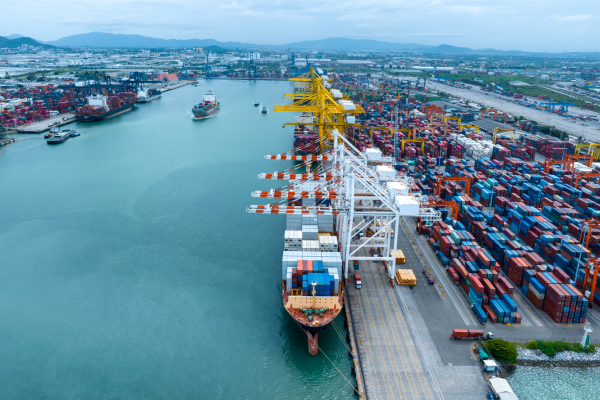
Mumbai Port Authority handled three exceptionally heavy over-dimensional cargo (ODC) packages with a combined weight of 1,452 metric tonnes through a specialised Roll-Off operation. The consignment was transported by barge from Dahej, Gujarat, to Mumbai Port and is intended for onward export to Abu Dhabi National Oil Company in the UAE.
The three packages comprised a PG Cooler weighing 718 MT, a Riser and Downcomer weighing 502 MT and a Steam Drum weighing 232 MT. The equipment forms part of a coastal consignment and was brought to Mumbai for the next stage of its international movement.
Because of the exceptional size and weight of the packages, conventional unloading methods using the ship's gear or shore cranes were not suitable. Mumbai Port therefore used a specialised Barge Roll-Off method to transfer the equipment from the barge to the wharf.
Under the operation, the barge was positioned perpendicular to the berth, with its deck brought level with the surface of the wharf. Hydraulic puller trailers were then moved onto the barge and positioned beneath the cargo packages. The trailers used their hydraulic systems to take the weight of the equipment and carefully roll the packages from the barge onto the wharf.
The availability of a berth inside Mumbai Port's lock gate was an important factor in carrying out the operation. The relatively calm water conditions within the lock gate provided the stability needed to maintain alignment between the barge and the quay while the heavy packages were being transferred.
The cargo is expected to remain at Mumbai Port until an onward vessel is available for shipment to Abu Dhabi. The movement combines coastal shipping, specialised cargo handling, storage and international maritime connectivity within the same logistics chain.
The operation also reflects the role of Mumbai Port in handling project and heavy-lift cargo that requires specialised infrastructure. It enables large industrial equipment manufactured in India to move from production centres through coastal routes to a major port before being shipped to overseas markets.
Source PTI

20th Oct, 2026

3rd Oct, 2026

28th Sep, 2026

24th Sep, 2026




4th Aug, 2026


Advertisement








 Facebook
 Whatsapp

