Advertisement






The Gulf conflict has disrupted global supply chains, pushed...
REITs have changed the way commercial real estate is owned a...
What really powers the cloud? Behind every Google search, A...
What really powers the cloud? Behind every Google search, A...
Luxury real estate is one of the most talked-about segments ...
Construction activity on Kochi Metro Phase 2 is progressing along the JLN Stadium–Kakkanad–Infopark corridor, with authorities directing agencies to take measures to minimise traffic disruption at key stretches including Palarivattom, Alinchuvadu and Vazhakkala. The 11.2-km Phase 2 corridor, comprising 11 elevated stations, is being developed to connect central Ernakulam with Kakkanad, SmartCity and Infopark. During a recent site inspection, officials were instructed to remove temporary barricades where feasible, expedite land acquisition and station-related works, and complete pending utility shifting to support the next stages of construction.
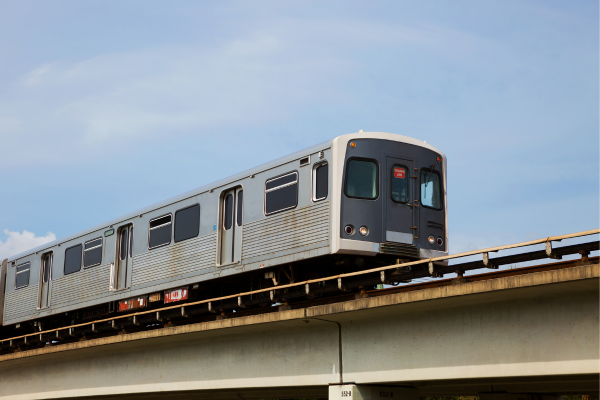
Work on Kochi Metro’s Phase 2 corridor is moving forward along the JLN Stadium–Kakkanad–Infopark alignment, with traffic management emerging as a key priority as construction activity expands across busy stretches of the city. Kochi Metro Rail Ltd managing director G Priyanka recently inspected construction locations between JLN Stadium and SmartCity and directed officials to introduce measures to ease congestion at Palarivattom, Alinchuvadu and Vazhakkala. The directions include reviewing temporary barricading and removing it wherever possible without compromising the safety of workers and road users.
The Phase 2 project involves an 11.2-km Metro corridor with 11 stations, linking JLN Stadium with Infopark through Kakkanad. The alignment is intended to improve connectivity to some of Kochi’s major employment and institutional clusters, including Infopark, SmartCity, the district headquarters, Cochin Special Economic Zone, KINFRA and Rajagiri Vidyapeetham. According to KMRL, the corridor is designed to connect central Ernakulam with the residential, commercial and employment areas around Kakkanad and the major IT hubs located further east.
Traffic management has become particularly important as construction takes place along existing urban roads that already carry significant volumes of commuter traffic. At Palarivattom, Alinchuvadu and Vazhakkala, authorities have been asked to coordinate with the regional transport office to address congestion and maintain smoother vehicle movement. The review of barricades is intended to balance construction safety with road capacity, allowing temporary obstructions to be reduced or removed where construction conditions permit. The measures are being implemented as civil works continue along different sections of the corridor.
Alongside traffic-related measures, the authorities have directed agencies to speed up land acquisition and associated civil procedures required for station construction. Particular attention has been given to the proposed station structures on the right side of the corridor at Palarivattom and Padamugal. Utility shifting has also been identified as an important preparatory activity, with agencies including the Kerala State Electricity Board, Public Works Department and Kerala Water Authority asked to complete their respective works without delay. These activities are necessary to clear the corridor and enable construction to progress without prolonged interruptions.
KMRL’s project-status information shows that the Phase 2 project has already moved beyond several preparatory stages. Road-widening work is listed as completed, while soil investigation has also been completed and the general consultant for the project has been appointed. Detailed design consultants for stations and traction have commenced work. Construction contracts have also been awarded for entry and exit structures at the proposed Kakkanad and SEZ stations, where piling activity is under way, while tendering has been initiated for similar structures at Chittethukara, KINFRA Park and Infopark stations.
The project received approval from the Union Cabinet in September 2022, following an earlier in-principle approval from the Centre. The approved project cost is INR 1,957.05 crore, including expenditure related to land, rehabilitation and resettlement, interest during construction and the public-private partnership component. Of the core project cost excluding these additional components, 60% is proposed to be financed through loans from bilateral and multilateral agencies, while the Centre and Kerala government are each contributing equity.
Once completed, Phase 2 is expected to provide a direct mass-transit connection between central Ernakulam and Kakkanad’s expanding residential, commercial and technology clusters. The corridor is also planned with multimodal integration, including connections with bus services, Kochi Water Metro and public bicycle-sharing facilities at suitable locations. In the near term, however, the focus remains on managing the impact of construction on existing road users while land, utility and station-related works are completed. Effective coordination between KMRL, civic agencies, utility providers and traffic authorities will be important as the project moves into more intensive construction stages.
Source Kochi Metro Rail



11th Nov, 2026

7th Nov, 2026



Advertisement








 Facebook
 Whatsapp

