Advertisement






The Gulf conflict has disrupted global supply chains, pushed...
REITs have changed the way commercial real estate is owned a...
What really powers the cloud? Behind every Google search, A...
What really powers the cloud? Behind every Google search, A...
Luxury real estate is one of the most talked-about segments ...
The Mumbai Metropolitan Region Development Authority (MMRDA) has achieved 60% physical progress on a 600 Tonnes Per Day integrated solid waste processing facility being developed at Badlapur under the KfW-supported Mumbai Metropolitan Region Urban Infrastructure Improvement Programme. The facility will serve Ambernath, Kulgaon-Badlapur and Ulhasnagar and will include a Material Recovery Facility, biodegradable waste processing units and a sanitary landfill. The project is designed around waste minimisation, resource recovery and scientific disposal, with the aim of reducing open dumping, improving sanitation and supporting recycling and resource recovery across the three urban local bodies.
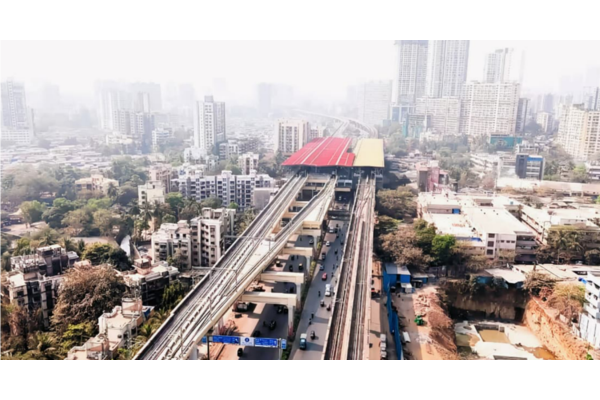
The Mumbai Metropolitan Region Development Authority (MMRDA) has achieved 60% physical progress on a 600 Tonnes Per Day (TPD) Integrated Solid Waste Processing Facility at Badlapur. The project is being supported under the KfW-funded Mumbai Metropolitan Region Urban Infrastructure Improvement Programme (MMRUIIP) and is being developed to serve Ambernath, Kulgaon-Badlapur and Ulhasnagar.
The facility is planned as an integrated and scientific waste management system for the three participating Urban Local Bodies (ULBs). It is based on waste minimisation, resource recovery and scientific disposal, with the aim of addressing waste management challenges while supporting cleaner urban development in the region.
The project will include a Material Recovery Facility (MRF), facilities for processing biodegradable waste and a sanitary landfill. It is being developed on a Design-Build-Operate-Transfer (DBOT) basis at Badlapur.
Once operational, the facility will be capable of scientifically processing 600 TPD of municipal solid waste generated across the three ULBs. The system is expected to reduce open dumping and dependence on landfills by increasing the amount of waste that can be processed and recovered.
The biodegradable waste processing component will also help reduce methane emissions associated with unmanaged organic waste. Scientific treatment of leachate is planned to help protect soil and groundwater, while material recovery will allow recyclable resources to be separated and reused.
The facility is also designed to support a circular economy by recovering materials such as paper, plastics, metals and glass. Biodegradable waste will be converted into compost, while Refuse Derived Fuel (RDF) will also be produced as part of the waste processing system. This approach is intended to maximise resource recovery and reduce the quantity of waste ultimately sent for landfill disposal.
The project is expected to improve sanitation and neighbourhood conditions by reducing odour, vector breeding and fire hazards associated with unmanaged waste. It is also expected to improve environmental quality and contribute to greater climate resilience in the three participating urban areas.
In addition to its environmental benefits, the facility is expected to generate direct and indirect employment during its construction and operation. The project also seeks to create more organised and safer livelihood opportunities for informal waste pickers by integrating them into the formal waste management system. This could support the regional recycling industry while creating more structured employment opportunities around waste recovery and processing.
Implementation of the project has involved coordination between MMRDA, the three participating ULBs, KfW Development Bank, the Project Management Consultant, the contractor, technology providers and various statutory authorities.
MMRDA has been coordinating several requirements during construction, including regular stakeholder reviews, phased development of the site, statutory approvals, removal of legacy waste, controlled blasting activities and the development of supporting infrastructure. The authority has also been monitoring the procurement and installation of equipment required for the facility.
The project uses a milestone-based payment mechanism, along with independent technical verification and continuous supervision by the Project Management Consultant. These measures are intended to maintain quality and accountability during execution. MMRDA has also been engaging regularly with KfW Development Bank to ensure that applicable environmental, social and governance (ESG) requirements are followed.
Source MMRDA

20th Oct, 2026

3rd Oct, 2026
28th Sep, 2026
24th Sep, 2026


4th Aug, 2026


Advertisement









 Facebook
 Whatsapp

