Advertisement






The Gulf conflict has disrupted global supply chains, pushed...
REITs have changed the way commercial real estate is owned a...
What really powers the cloud? Behind every Google search, A...
What really powers the cloud? Behind every Google search, A...
Luxury real estate is one of the most talked-about segments ...
Redevelopment has become the dominant force behind Mumbai's housing market, with more than 1,000 projects launched since 2020 and its share of residential sales rising to 15% during 2025-H1 2026, up from around 6% in 2016-21. Limited greenfield land, ageing housing stock and policy support have pushed developers towards larger, cluster-led projects. The shift is expected to unlock around 59,000 homes worth INR 1.5 lakh crore by 2031, making redevelopment the city's primary housing supply engine.
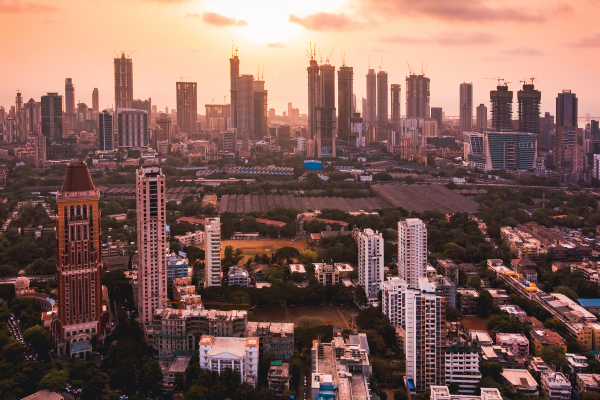
Mumbai's residential market is undergoing a structural shift as redevelopment overtakes greenfield construction to become the city's primary source of new housing supply, driven by severe land scarcity, ageing buildings and growing demand for modern residential infrastructure.
According to industry reports, more than 1,000 redevelopment projects have been launched across Mumbai since 2020, signalling a sustained transformation in how new housing is being created in India's most expensive property market. Redevelopment now accounts for around 13% of the city's residential supply, while its contribution to housing sales has risen sharply to 15% during 2025 and the first half of 2026, compared with about 6% between 2016 and 2021.
The changing landscape reflects Mumbai's unique urban constraints. With very little vacant land available for large greenfield developments, housing societies and ageing residential buildings have emerged as the main source of future supply, encouraging developers to focus increasingly on rebuilding existing neighbourhoods rather than acquiring new land parcels.
The redevelopment model itself is also evolving. Instead of isolated building-by-building projects, developers are increasingly pursuing cluster-led redevelopment, where multiple adjoining properties are combined into larger integrated developments capable of supporting improved roads, open spaces, community amenities and higher-density housing.
Industry estimates indicate that the current redevelopment pipeline could deliver around 59,000 new homes worth nearly INR 1.5 lakh crore by 2031, underlining the sector's growing importance to Mumbai's long-term housing strategy. The projects are also expected to generate substantial economic activity, including stamp duty collections, construction employment and supporting infrastructure investments.
The momentum is being reinforced by policy measures such as Development Control and Promotion Regulations (DCPR) 2034, self-redevelopment initiatives and cluster redevelopment frameworks that have made larger redevelopment projects more commercially viable while encouraging coordinated urban renewal.
Mumbai's ageing housing stock has further accelerated the trend. Civic data cited in industry reports indicate that nearly 1.6 lakh buildings across the city are over 30 years old, increasing the need for structural upgrades, improved safety standards and modern infrastructure.
The redevelopment boom is also reshaping suburban markets, with areas such as Borivali, Andheri, Pali Hill and Breach Candy witnessing heightened developer interest in multi-building projects. These developments are expected to deliver larger apartments, upgraded amenities and improved urban infrastructure while creating additional sale inventory that helps fund rehabilitation housing for existing residents.
As Mumbai continues to face land constraints and rising housing demand, redevelopment is increasingly becoming the city's principal mechanism for expanding residential supply while renewing ageing neighbourhoods through integrated urban transformation.
20th Oct, 2026

3rd Oct, 2026

28th Sep, 2026
24th Sep, 2026

4th Aug, 2026

Advertisement









 Facebook
 Whatsapp

