Advertisement






The Gulf conflict has disrupted global supply chains, pushed...
REITs have changed the way commercial real estate is owned a...
What really powers the cloud? Behind every Google search, A...
What really powers the cloud? Behind every Google search, A...
Luxury real estate is one of the most talked-about segments ...
The Institution of Engineers (India) will hold its 41st National Convention of Architectural Engineers in Mumbai this weekend, focusing on how Indian cities can become more inclusive, sustainable, resilient and people-centric. The convention, themed “Reimagining Urban India: Pathways to Livable Cities”, will bring together architects, engineers, urban planners, policymakers, administrators and industry leaders. Discussions will cover mobility, housing, pedestrian infrastructure, public spaces, sustainability, technology and urban governance. Mumbai’s challenges, including congestion, pollution, housing pressures and long commuting times, are expected to form an important part of the discussions on improving everyday urban life.
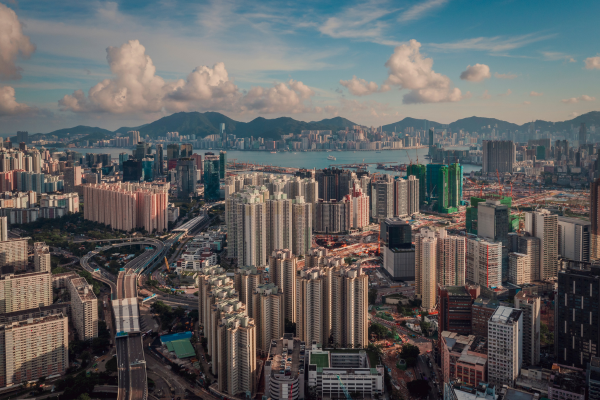
The Institution of Engineers (India) (IEI) will hold its 41st National Convention of Architectural Engineers at Nehru Centre, Worli, Mumbai, this weekend, with the focus on how Indian cities can become more livable and people-centric.
The two-day convention, organised by the Architectural Engineering Division Board and Maharashtra State Centre of IEI, will be held on September 12 and 13 under the theme “Reimagining Urban India: Pathways to Livable Cities”. Maharashtra Chief Minister Devendra Fadnavis is expected to attend as the Chief Guest. IEI Maharashtra has also confirmed the dates and theme on its official website.
The convention will bring together architects, engineers, urban planners, policymakers, administrators, industry leaders, academics and other stakeholders to discuss ways to make Indian cities more inclusive, efficient, resilient, sustainable and responsive to citizens.
Mumbai will be an important backdrop to the discussions. While the city remains one of India’s key economic centres, residents continue to deal with congestion, inadequate pedestrian infrastructure, pollution, housing pressures, limited public spaces and long commuting times.
Er. Suresh Babu, Founder and Principal of Suresh Babu and Partners, Architecture + Planning, and Organising Secretary of the convention, said the focus should move beyond simply building roads, bridges, Metro lines and skyscrapers. He said the larger question was how these investments could help people live, work, move, breathe, play and grow with dignity.
The convention will therefore examine urban development not only in terms of infrastructure creation but also in terms of the quality of life that infrastructure provides. Mobility, housing, public spaces, pedestrian infrastructure, sustainability, technology, urban governance and integrated planning will be among the key areas of discussion.
A major focus will be on putting people at the centre of urban planning. The experiences of pedestrians, commuters, street vendors, sanitation workers, senior citizens, students and other citizens are expected to form part of the discussions on how urban design and planning can be improved.
Pedestrian infrastructure is also likely to receive attention. Mumbai has introduced policy measures aimed at improving pedestrian infrastructure, but implementation, maintenance and protection of footpaths continue to remain challenges. The convention will examine the need for pedestrian spaces that allow people to walk safely and comfortably.
The city’s dabbawalas are another example that could offer lessons in urban mobility. Their coordinated movement across homes, roads, railway stations, trains and workplaces demonstrates how different parts of a city’s transport network can work together, even as congestion and limited cycling infrastructure continue to affect urban movement.
Dr. Niranjan Hiranandani, Chairman of Hiranandani Group, has also shared his perspective on building livable cities beyond infrastructure and towards integrated ecosystems. Drawing on his experience in township development, he has highlighted the need to view economic activity, infrastructure, housing, community, sustainability, technology, governance and inclusion as connected parts of urban development.
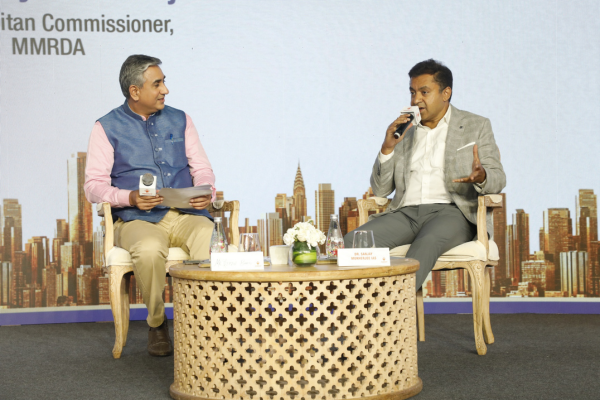
The programme will also include perspectives from Maharashtra Minister of State for Home, Housing, School Education, Co-operation and Mining Pankaj Bhoyar and Brihanmumbai Municipal Corporation Municipal Commissioner Ashwini Bhide, IAS. Er. Manish Kothari, President, IEI, and Er. Sandip Kumar Deb, Chairman, Architectural Engineering Division Board, IEI, will also be part of the convention.
Technology and artificial intelligence in urban planning will form another area of discussion, along with questions around data, transparency, ethics and public participation. The convention will also look at better integration between rail, Metro, buses, walking, cycling and last-mile connectivity, as well as coordination between employment centres and housing.
The convention’s broader focus is on moving urban planning towards integrated development rather than treating individual infrastructure projects in isolation. The idea is that roads, transit, housing, public spaces, technology and governance should work together to improve everyday life.
The event follows earlier preparations by IEI Maharashtra, including the release of the convention brochure by Maharashtra Governor Jishnu Dev Varma in July. The Governor’s office said the convention is being organised by IEI Maharashtra State Centre under the Architectural Engineering Division Board.
As India continues to urbanise and work towards its developed-nation ambitions, the discussions are expected to focus on whether the success of a city should be measured only by the infrastructure it creates or also by how safely, comfortably and efficiently people can use it.
20th Oct, 2026
3rd Oct, 2026

28th Sep, 2026
24th Sep, 2026

4th Aug, 2026
Advertisement








 Facebook
 Whatsapp

